
A bus suspension typically consists of five core elements: the guiding mechanism, elastic element, damper, stabilizer, and bump stops. In some designs, a single component handles more than one function. A classic example is a longitudinal steel leaf spring, which serves as both the spring and the axle-locating linkage.
Bus suspensions are generally classified into two categories:
- By guiding mechanism: Dependent (solid axle) vs. Independent
- By elastic element: Steel leaf springs, coil springs, torsion bars, air springs, and composite leaf springs
This overview covers the most common configurations, using front axles and front suspensions as the primary reference.
1. Bus Suspension Classification by Guiding Mechanism
Dependent (Solid Axle) Suspension
Advantages:
- Simple structure, easy to manufacture and maintain, low overall cost.
- Highly reliable with a long service life under heavy operating conditions.
- Wheel track and toe theoretically stay constant during suspension travel, keeping tire wear low.
- Camber remains unchanged as the body rolls, maintaining lateral grip.
- Higher roll center with a shorter roll moment arm, which helps reduce body roll.
- Understeer tendencies can be tuned through the geometric layout of the brackets and shackles.
Disadvantages:
- The axle beam and wheels bounce together, taking up substantial vertical and lateral space beneath the chassis and restricting low-floor packaging.
- Packaging constraints often force front leaf springs to be relatively short, resulting in higher stiffness and lower ride comfort.
- High unsprung mass (especially on drive axles), which degrades ride quality and tire-to-road contact.
- On uneven roads, different deflection on the left and right wheels forces both the axle and the body to tilt.
- Asymmetric wheel deflection on straight, uneven roads causes axle steer (roll steer), which disrupts straight-line stability.
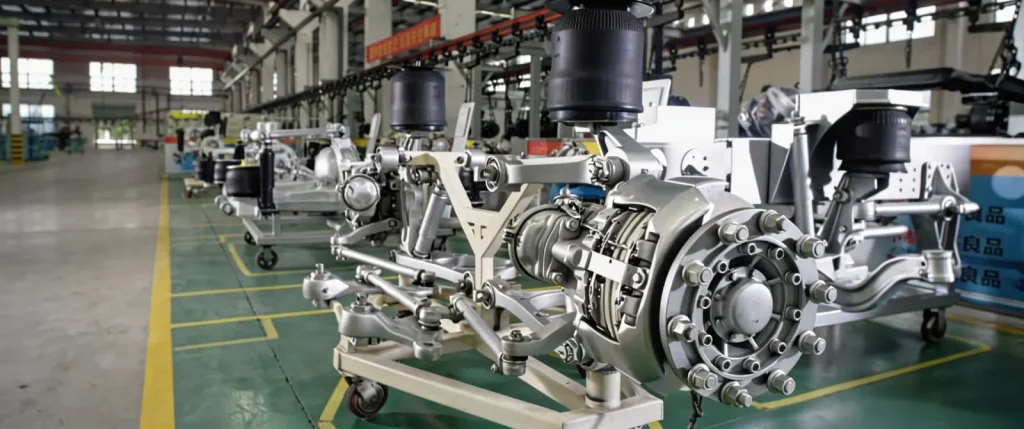
Independent Suspension
The pros and cons of an independent suspension are essentially the reverse of a solid axle:
- Trade-offs: Where a solid axle is strong—cost, simplicity, durability, and stable tire wear geometry—an independent suspension is more complex, more expensive, and requires more linkage joints.
- Benefits: Where a solid axle falls short—chassis packaging, ride harshness, high unsprung mass, and axle steer—an independent layout offers clear packaging freedom for lower floors, lower unsprung mass, and better ride comfort.
2. Classification by Elastic Element
1. Steel Leaf Springs
Steel leaf springs can be configured as longitudinal or transverse, symmetric or asymmetric, multi-leaf or parabolic (few-leaf), uniform or variable cross-section, and constant or variable stiffness.
- Simple design, low cost, straightforward maintenance, and durable.
- When mounted longitudinally, they also act as the guiding mechanism, transferring longitudinal and lateral forces as well as torque while offering solid angular stiffness.
- Common mounting configurations:
- Upright shackle brackets: Typically used on buses with two or more entry steps.
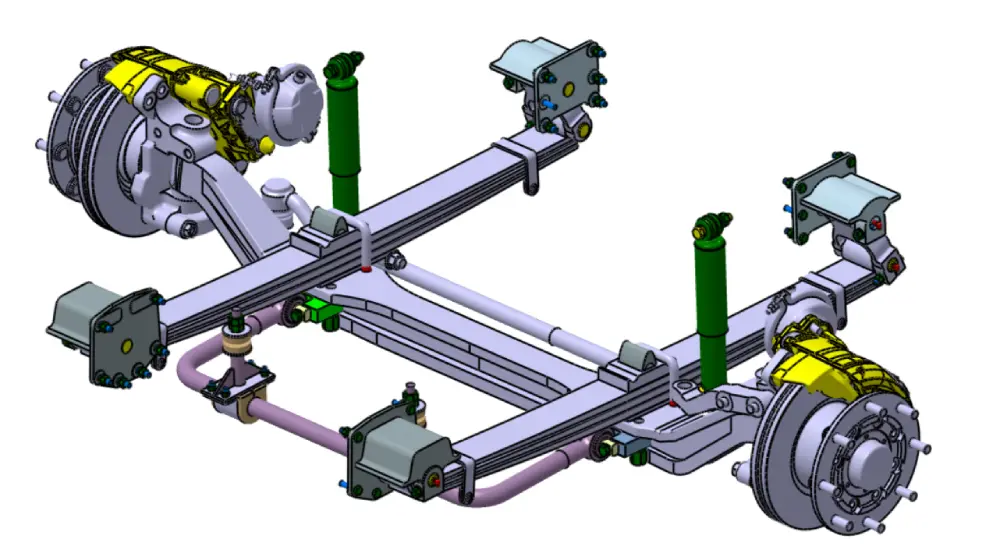
- Inverted shackle brackets: Used on single-step (low-entry) buses to lower the chassis frame, typically paired with a dropped portal front axle.
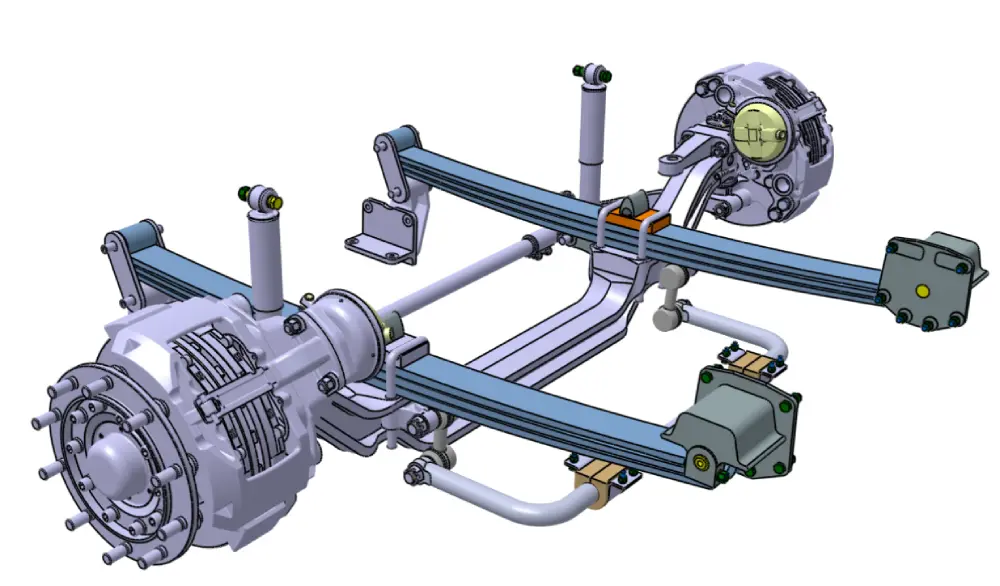
2. Coil Springs
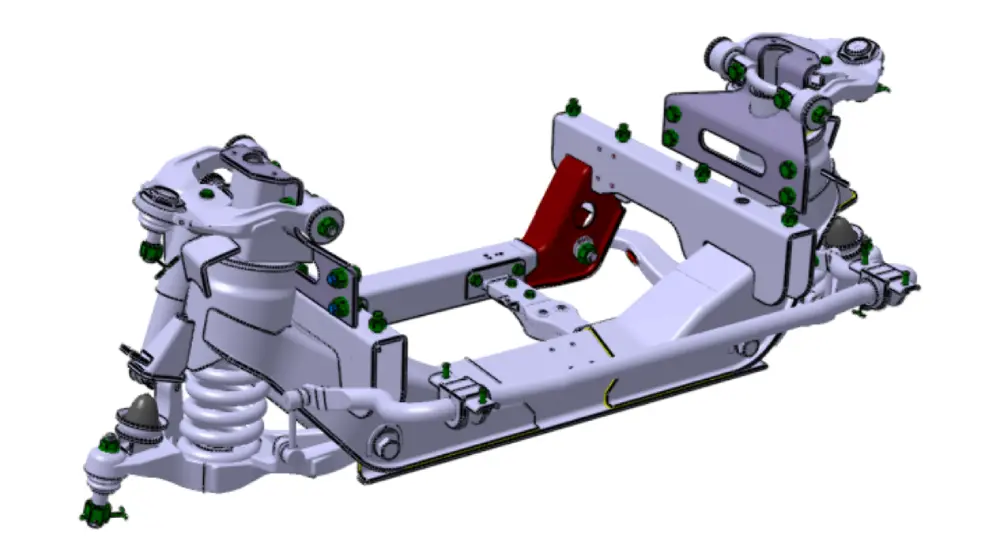
- Simple construction, mature manufacturing process, and easy maintenance.
- Spring stiffness can be tuned across a wide range by adjusting four primary parameters: wire diameter, coil diameter, pitch, and helix angle.
- Variable wire diameter designs provide high load capacity per unit weight, making efficient use of the material.
- Limitation: Coil springs cannot take lateral loads or moments on their own and require a dedicated linkage mechanism for wheel location.
3. Torsion Bar Springs
Torsion bars can be solid round bars, tubes, or laminated plates, set up as single bars or combined assemblies in parallel or series. They can be mounted longitudinally or transversely.
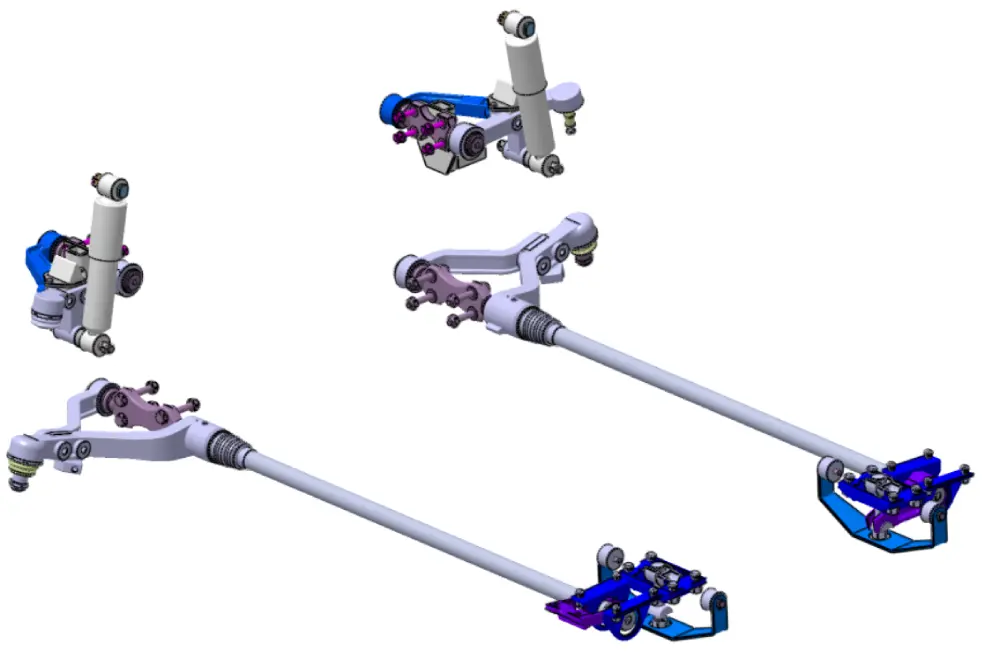
- Compact packaging, low mass, reliable operation, and simple servicing.
- High energy storage capacity per unit mass and efficient material utilization.
4. Air Springs
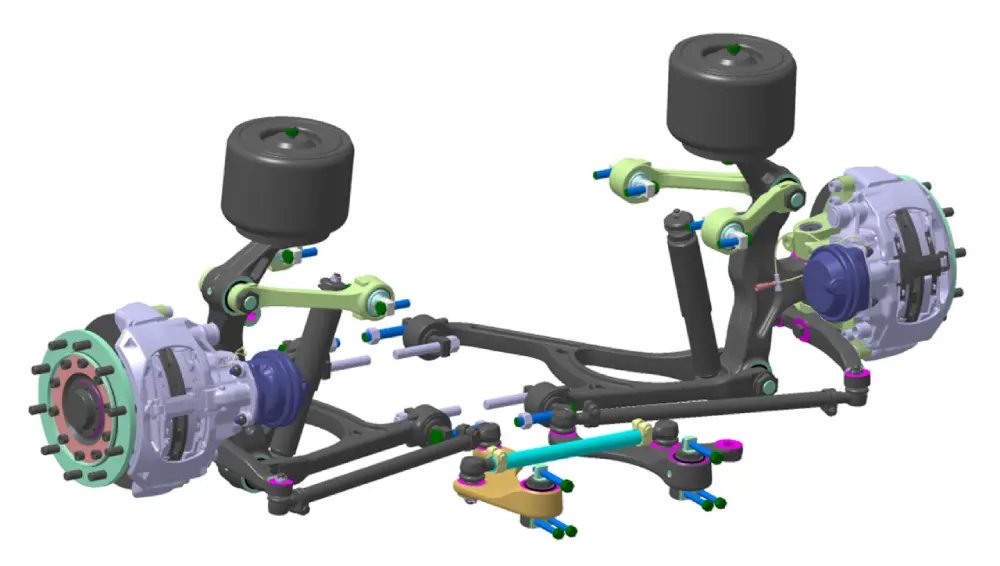
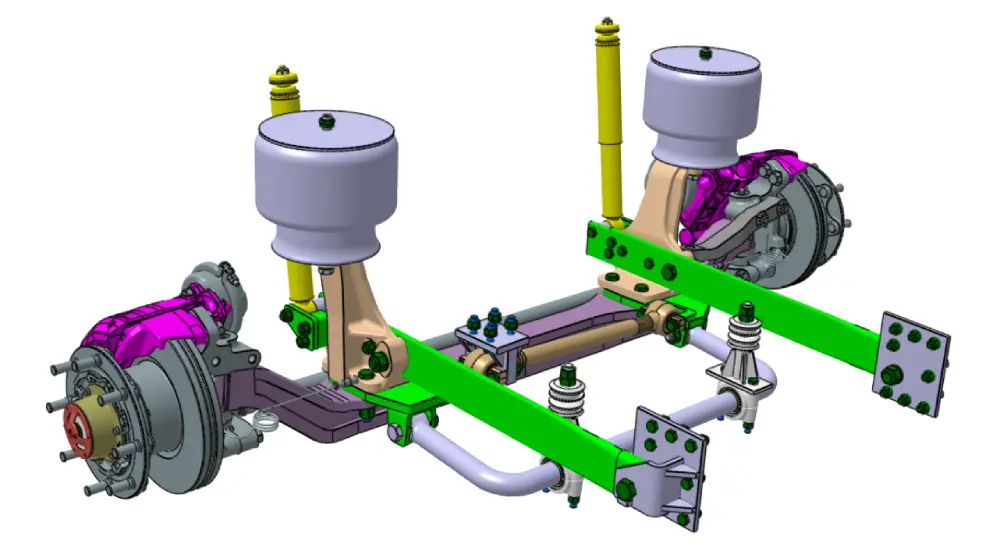
- Low system weight, long service life, low natural operating frequency, and consistent tire-to-road contact.
- Maintains a constant vehicle ride height regardless of passenger load.
- Transit bus application (Kneeling): City buses often integrate a kneeling function. When pulling into a bus stop, the air springs on the door side exhaust air independently, tilting the bus toward the sidewalk to reduce the step-in height for easier passenger boarding.
5. Composite Leaf Springs
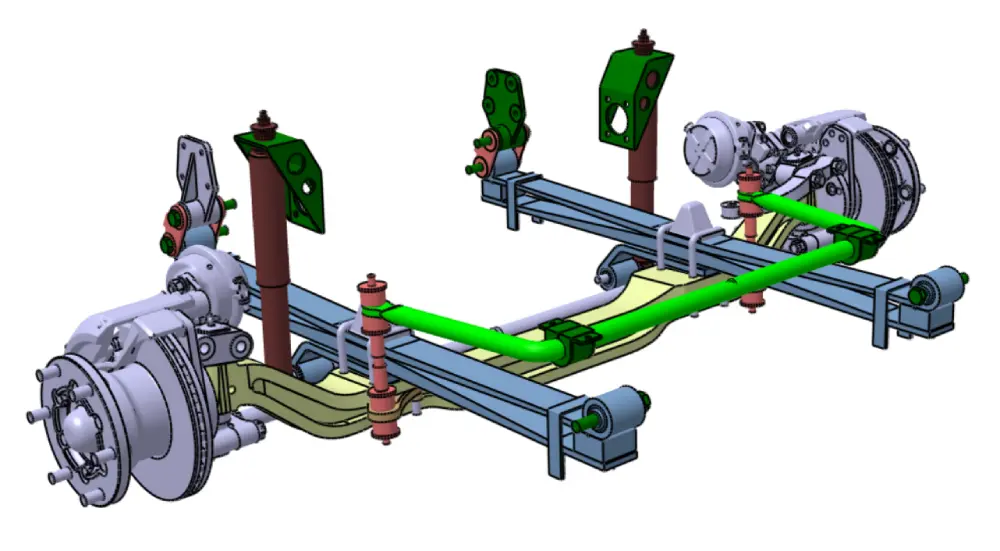
- Provides long suspension travel, quiet and smooth operation, and high resistance to impact loads.
- Delivers good ride smoothness, structural compliance, and natural damping characteristics, with the potential for maintenance-free service.
Industry Trend
In the bus segment, air spring suspension has steadily become the mainstream choice, particularly where low floors, passenger comfort, and kneeling functions are standard requirements.
Integrating Electric Drive Systems for Low-Floor Bus Platforms
As commercial bus architectures shift toward low-floor layouts and optimized passenger space, powertrain and suspension packaging become closely linked.
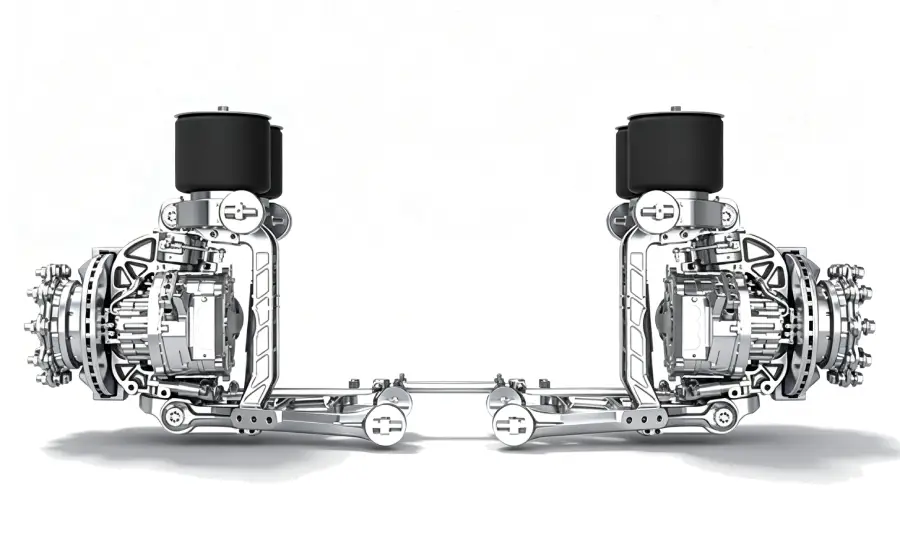
Jenwyn Tech supplies independent suspension eAxles with integrated traction motors, eliminating conventional driveline intrusions to support low-entry and low-floor bus designs while reducing unsprung mass.
Discuss Your Vehicle Platform Requirements
Evaluating electric drive or eAxle configurations for an electric bus or commercial vehicle platform? Contact our team at contact@jenwyntech.com or fill in the form below to discuss your chassis packaging, axle load, and powertrain integration requirements.