
An electric heavy-duty truck central drive system must deliver the torque and power required for demanding operating conditions while balancing efficiency, installation space, and system cost. As electric trucks expand into mining, construction, and heavy-load transportation, motor winding technology, cooling methods, system integration, and motor configuration are becoming important areas of powertrain development.
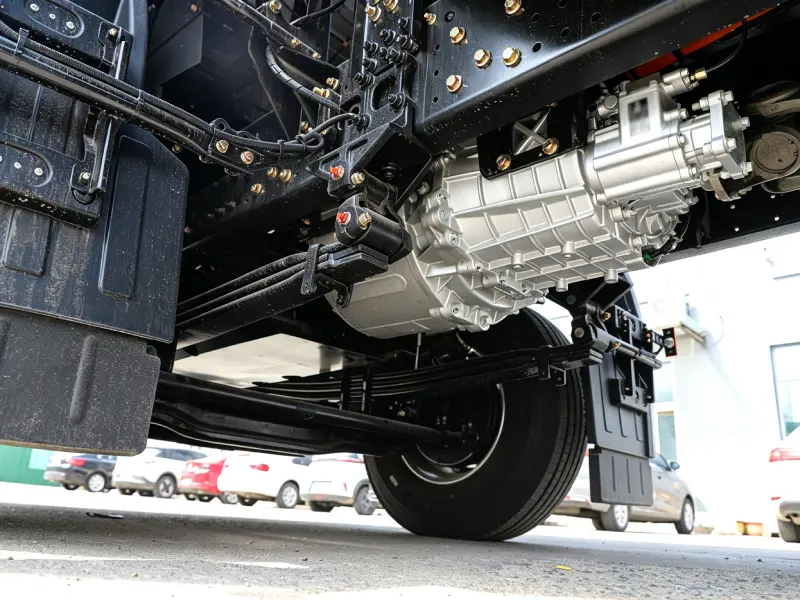
This article examines four key technologies shaping the electric heavy-duty truck central drive system and explains their main advantages and trade-offs.
1. Hairpin Windings in an Electric Heavy-Duty Truck Central Drive System
Hairpin winding technology uses rectangular copper conductors instead of conventional round wires in the motor stator. Its main advantage is a higher slot fill factor, allowing more copper to fit within the available stator space.
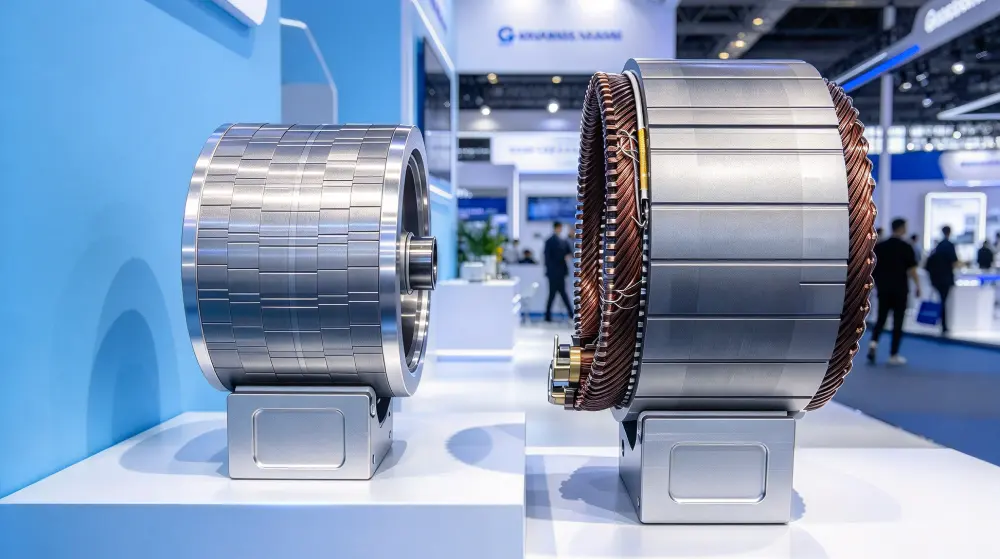
With more effective use of the slot area, hairpin windings can support higher power density and torque density. They can also help reduce winding resistance and improve heat dissipation, depending on the motor design. These characteristics make hairpin windings worth considering for an electric heavy-duty truck central drive system that requires high output within limited installation space.
However, hairpin windings involve more complex manufacturing processes, including conductor forming, insertion, and welding. The required equipment and process control can increase manufacturing costs compared with conventional round-wire windings.
As manufacturing technology matures, hairpin windings are becoming an option for high-power applications, including heavy-duty and mining trucks. The final choice depends on motor performance requirements, production conditions, and cost targets.
2. Cooling Options for an Electric Heavy-Duty Truck Central Drive System
Cooling design affects an electric motor’s ability to manage heat during operation. Water-jacket cooling and oil cooling differ mainly in how they transfer heat away from the motor’s internal components.
Water-Jacket Cooling
Water-jacket cooling removes heat through passages in the motor housing. Heat from the windings passes through the stator structure and housing before reaching the coolant.
This is an established cooling method for electric traction motors. However, the heat-transfer path can limit how directly the coolant removes heat from certain internal components.
Oil Cooling
Depending on the design, oil cooling can bring cooling oil into more direct contact with the windings or rotor-end regions. This shortens the heat-transfer path and can improve heat removal from areas that are difficult to cool through the housing alone.
For heavy-duty trucks operating under sustained high loads, oil cooling can help manage motor temperatures and support continuous power output. It can therefore be a suitable option for an electric heavy-duty truck central drive system designed for demanding operating conditions.
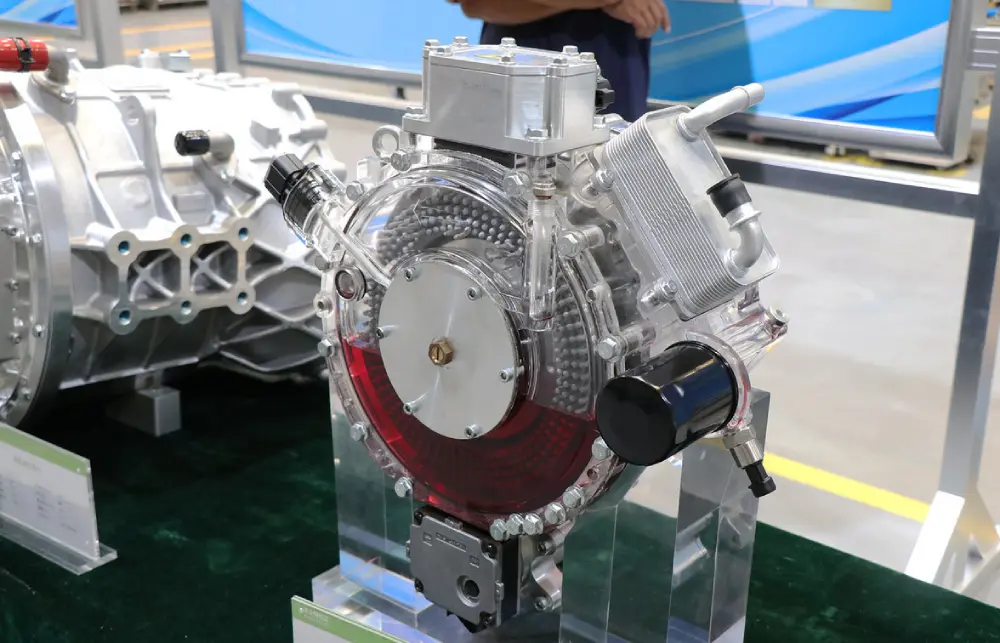
The trade-off is a more demanding cooling system, which may require oil circulation, filtration, sealing, and a heat exchanger. Where the motor and transmission share an oil circuit, their respective cooling and lubrication requirements must also be considered.
The choice between oil cooling and water-jacket cooling depends on the motor’s thermal requirements, operating conditions, and overall system design.
3. 3-in-1 Integration in an Electric Heavy-Duty Truck Central Drive System
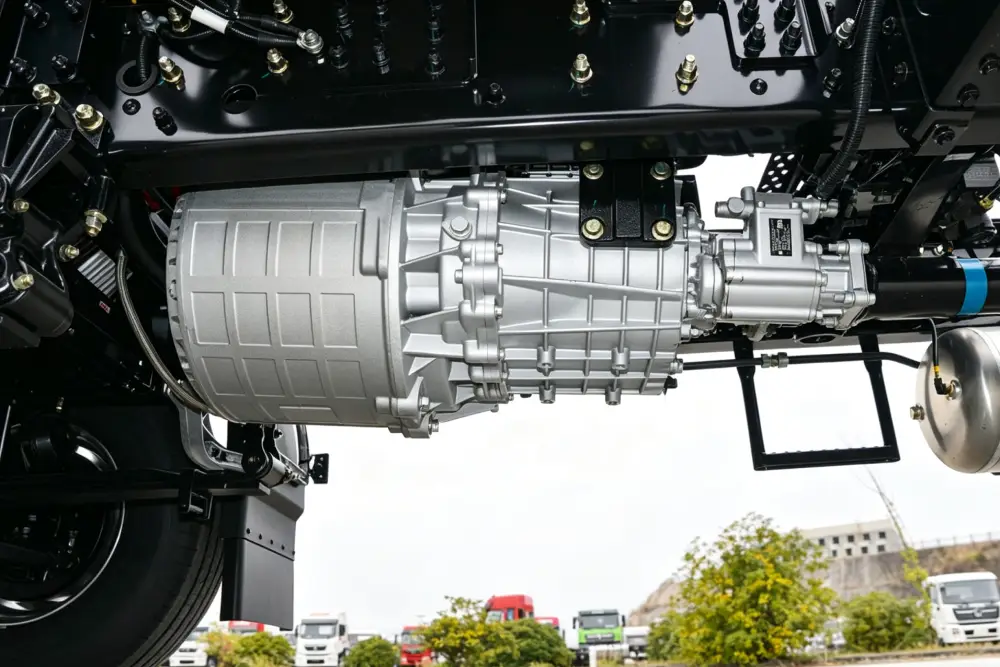
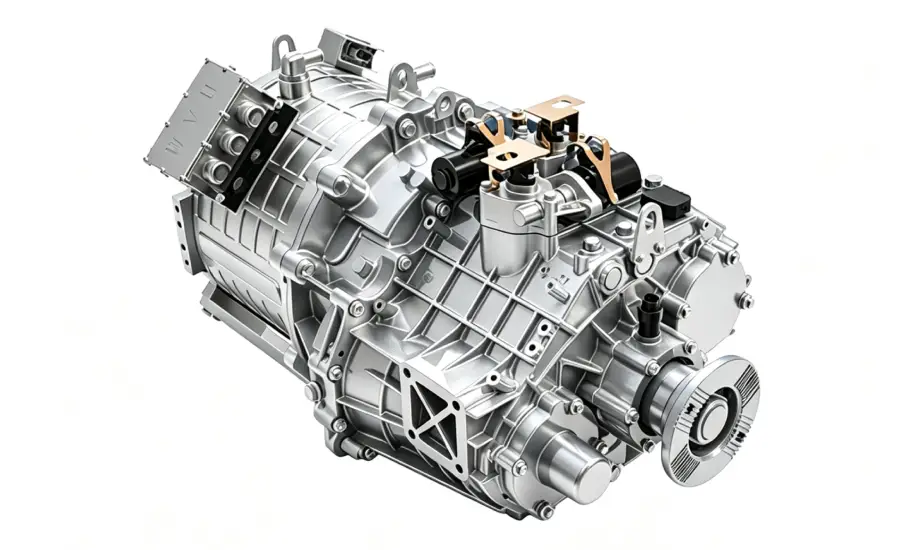
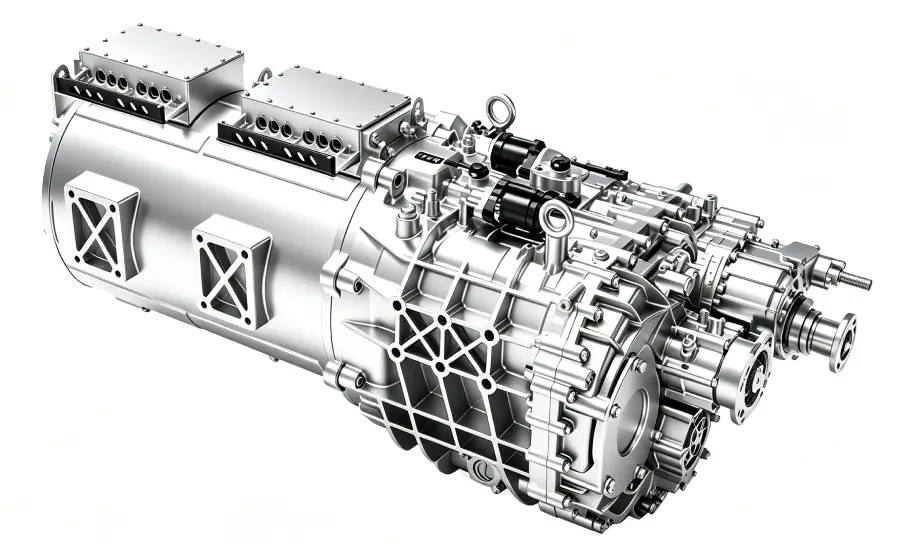
Integrating the motor, controller, and transmission into one assembly helps simplify the electric powertrain layout. This 3-in-1 architecture combines key drive components into a compact unit rather than installing them separately.
Reduced Installation Space and External Connections
Compared with separately installed components, a 3-in-1 system can reduce external high-voltage cabling, mechanical interfaces, and installation space. It can also simplify assembly and, depending on the design, support more coordinated thermal management.
For an electric heavy-duty truck central drive system, these advantages can help simplify powertrain packaging and reduce the number of external connections required for vehicle integration.
Multi-Speed Transmission for Heavy-Duty Operation
Integrating a multi-speed transmission provides flexibility in matching motor output to different operating conditions.
At low speeds, a lower gear can multiply output torque, helping the truck start under load or climb steep gradients. At higher speeds, a different gear ratio can support road-speed requirements.
This is particularly relevant to heavy-duty trucks that operate under varying loads and across both low-speed work sites and public roads. The transmission configuration must match the motor’s output characteristics and the vehicle’s operating requirements.
Integration and Engineering Challenges
Integration also places greater demands on structural design, sealing, and maintenance access. The motor, controller, and transmission must be properly matched to ensure reliable operation as a complete assembly.
The benefits of a 3-in-1 electric heavy-duty truck central drive system therefore depend on the quality of the overall design, not simply on combining several components into one housing.
4. Single-Motor vs. Dual-Motor Electric Heavy-Duty Truck Central Drive Systems
Choosing between a single-motor and dual-motor configuration requires consideration of motor speed and torque characteristics, not just rated power.
Single-Motor Configuration
A conventional single-motor central drive system may use a lower-speed, high-torque motor connected to a transmission and the vehicle’s driven axle. This configuration can suit a wide range of commercial truck applications.
However, achieving high torque directly from a low-speed motor can require a larger motor structure and more copper, electrical steel, or permanent magnet material, depending on the design.
Dual-Motor Configuration
An alternative is to use two smaller, higher-speed motors with suitable reduction gearing. Under some design conditions, this arrangement can reduce the size of each motor and the amount of active material required, potentially lowering overall system weight or material cost.
For an electric heavy-duty truck central drive system, however, these benefits are not guaranteed. The comparison must include both motors, controllers, transmission components, and supporting systems.
Dual-motor configurations may be worth considering for demanding applications such as mining trucks, where high traction and substantial power output are important. For other applications, a single-motor system may provide a more suitable balance of performance, cost, and system complexity.
The right configuration depends on the vehicle’s operating conditions and the requirements of the complete powertrain.
Jenwyn Tech Electric Heavy-Duty Truck Central Drive Systems
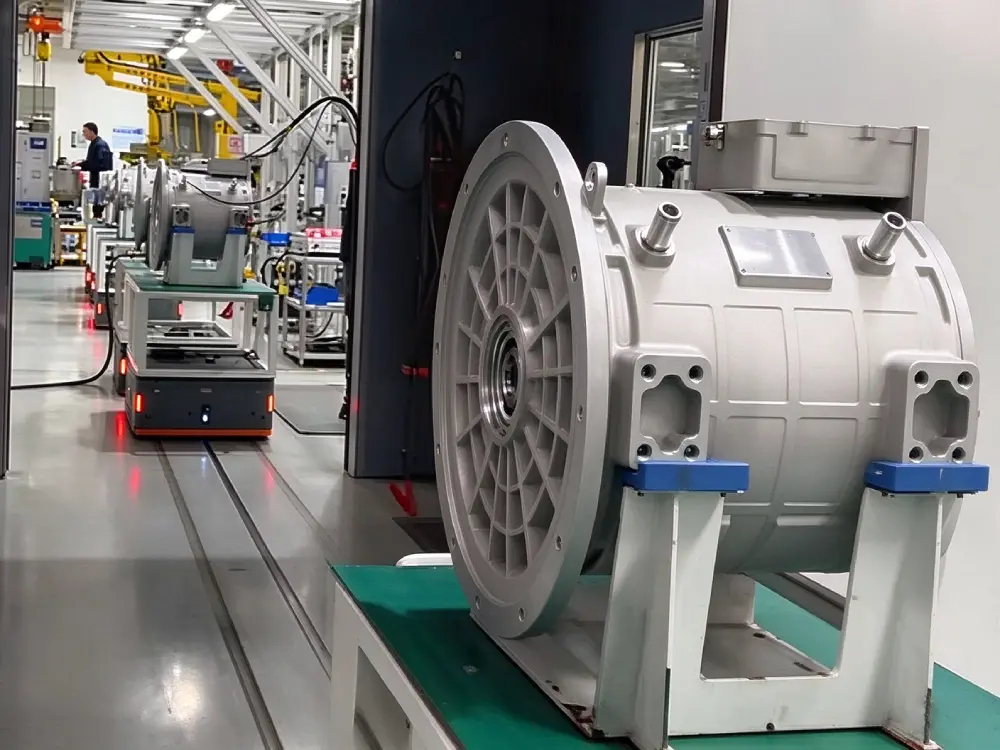
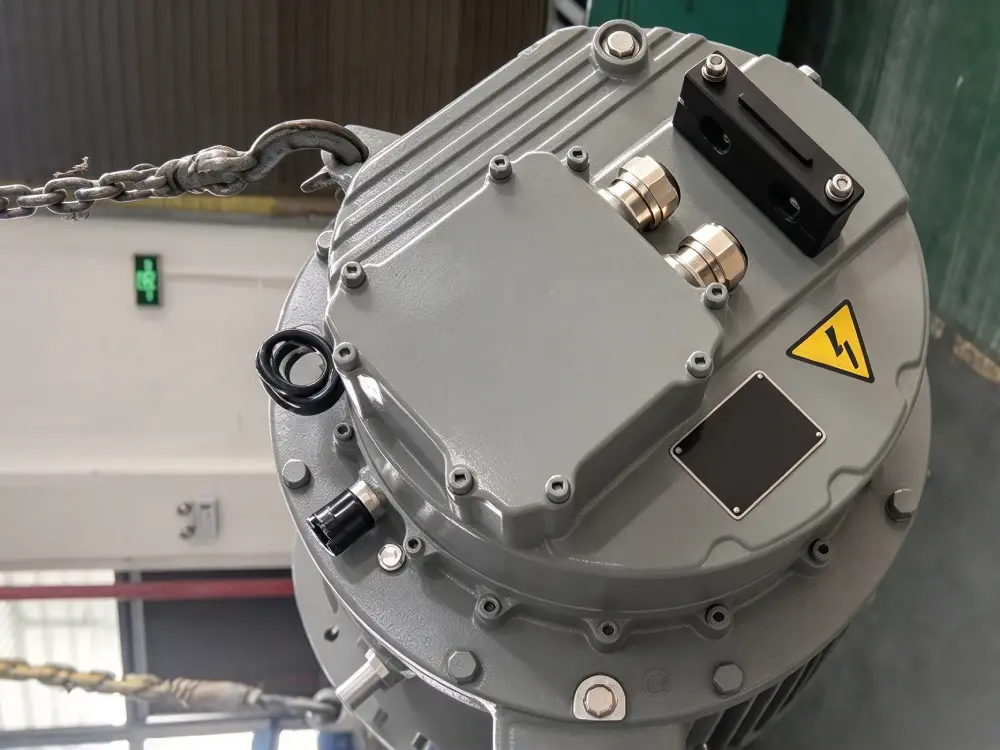
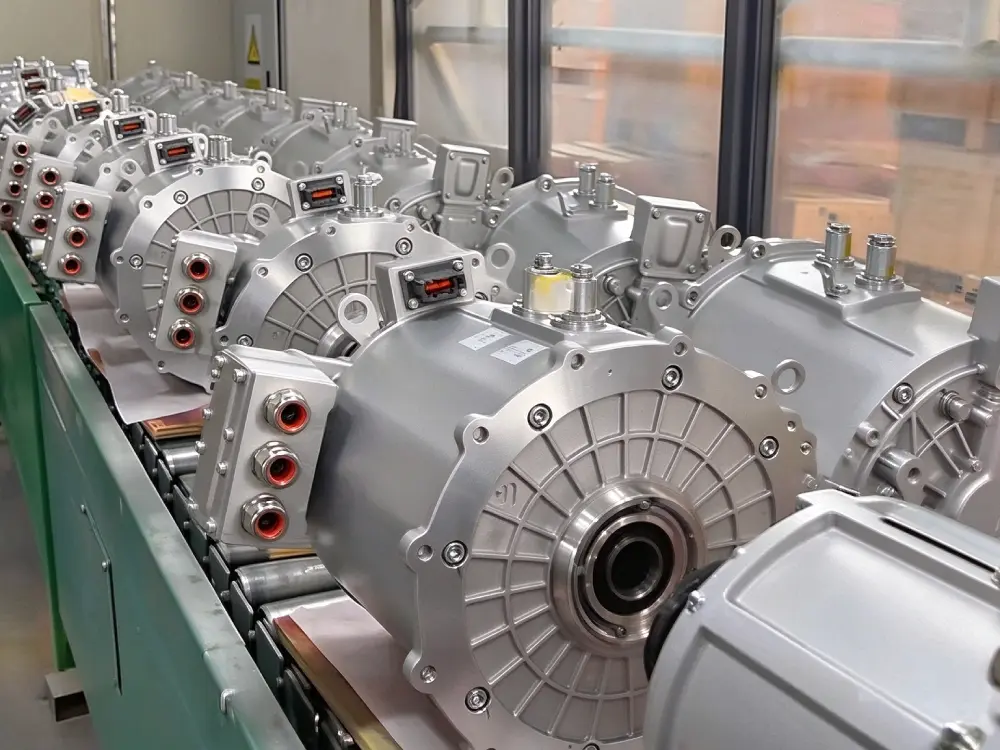
Jenwyn Tech supplies electric central drive systems for medium-duty trucks, heavy-duty trucks, dump trucks, and mining vehicles. The portfolio combines high-speed permanent magnet synchronous motors (PMSMs) with multi-speed automated manual transmissions (AMTs), with different power and transmission configurations available for different vehicle requirements.
The central drive system connects to the propeller shaft and driven axle, making it suitable for truck platforms using a conventional central driveline layout. Multi-speed transmission options support torque multiplication for heavy-load operation and climbing, while selected configurations also support power take-off (PTO) applications.
Jenwyn Tech’s electric heavy-duty truck central drive system solutions are selected according to vehicle weight, payload, gradeability, operating conditions, and chassis layout. Established central drive solutions are already in batch production for commercial vehicle applications.
Lean more here: Electric Central Drive Systems for Commercial Vehicles
Get in touch with Jenwyn Tech to discuss your electric heavy-duty truck project and component requirements. You can contact our team at contact@jenwyntech.com or complete the form below.