
The right electric light truck braking system depends primarily on vehicle load, driving speed, road conditions, braking frequency, and vehicle architecture.
- For light- and standard-load vehicles operating mainly in urban areas or on highways, front disc/rear drum brakes or electro-hydraulic braking (EHB) can be considered.
- For higher-load vehicles operating on mountainous routes with frequent or prolonged braking, drum brakes and air-brake systems may be more suitable depending on the vehicle design.
For EV manufacturers and engineering companies, the braking system should be specified as part of the complete vehicle architecture rather than selected as an isolated component. Key decisions include brake type, air supply capacity, mechanical actuation, hydraulic or electronic control, and parking-brake integration.
1. Electric Light Trucks Brake Types
The two main brake types used on electric light trucks are disc brakes and drum brakes.
Disc brakes provide responsive braking, good linearity, and effective heat dissipation. They are widely used on passenger vehicles and are also commonly used on the front axle of commercial vehicles.
Drum brakes can provide high braking force and are widely used on commercial vehicles. Their main limitation is heat dissipation during prolonged braking.
Electric light trucks commonly use two configurations:
- Front disc brakes + rear drum brakes
- Front and rear drum brakes
For light- or standard-load vehicles that mainly operate in urban areas or on highways, a front-disc/rear-drum configuration can be considered.
For higher-load vehicles operating on mountainous roads with long downhill sections and frequent braking, an all-drum configuration may be considered according to the vehicle’s braking requirements.
The selection should be based on the vehicle’s actual operating conditions rather than on brake type alone.
2. Air Brakes in Electric Light Truck Braking Systems
An air-brake system uses compressed air to transmit braking force. Typical components include:
- Air compressor
- Air tank
- Air valves
- Brake chambers
- Brake shoes
- Brake drums
For an electric light truck braking system, the capacity and configuration of the air supply system are important when the vehicle is expected to operate under frequent or prolonged braking conditions.
Single-Cylinder vs. Dual-Cylinder Air Compressors
Air compressors can use either single-cylinder or dual-cylinder configurations. The number of cylinders affects air delivery capacity and charging speed.
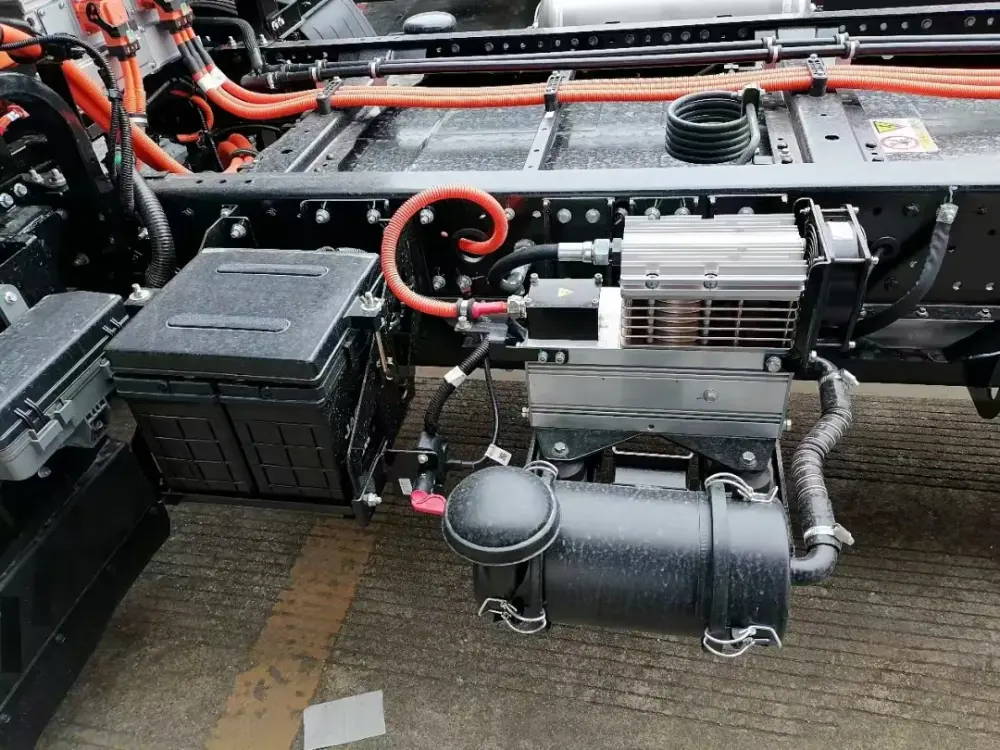
Charging speed is particularly important in two situations.
The first is after extended parking. Air-brake parking systems commonly use a spring-applied, air-released parking brake. When air pressure in the tank drops during extended parking, sufficient pressure must be restored before the parking brake can be released.
The second is during prolonged downhill operation. Repeated brake applications consume compressed air. If air pressure falls significantly, braking performance can be affected.
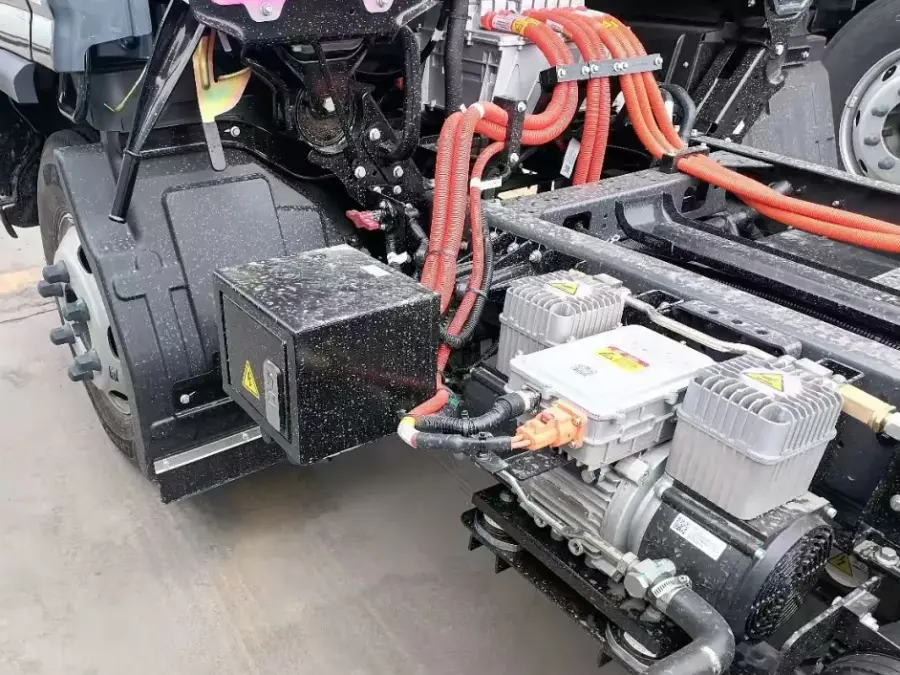
A dual-cylinder compressor can provide higher air delivery capacity and faster pressure recovery than a single-cylinder configuration. For electric light trucks that frequently encounter long downhill sections or repeated braking, compressor capacity should therefore be considered during system specification.
Cam Brakes vs. Wedge Brakes
Air brakes can use different mechanical actuation mechanisms, including cam brakes and wedge brakes.
In a conventional cam-type brake, the brake chamber drives a push rod and slack adjuster, rotating a camshaft that pushes the brake shoes outward against the brake drum.
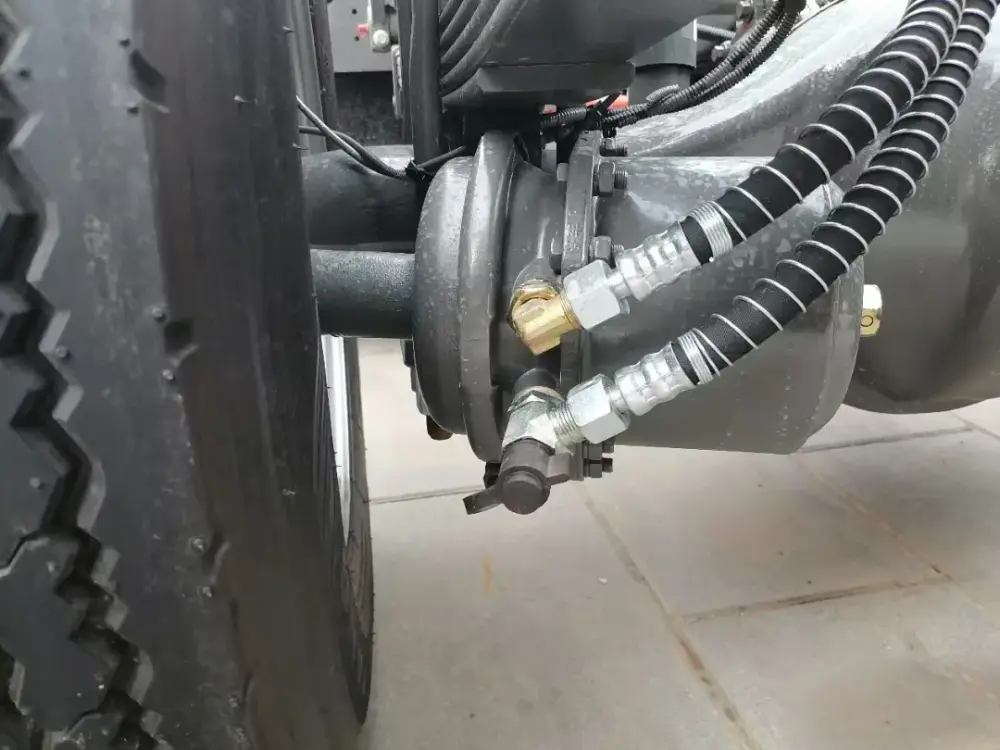
A wedge brake uses a linkage and wedge mechanism to push the brake shoes outward against the drum.
Wedge brakes can offer:
- Simple mechanical structure
- Fast brake response
- High braking force
- Lower system weight
The choice between the two depends on the vehicle’s braking requirements and overall mechanical architecture.
3. Hydraulic Brakes and EHB for Electric Light Trucks
Hydraulic brakes use brake fluid to transmit braking force. A conventional hydraulic system typically includes a vacuum booster, hydraulic pump, pistons, and disc or drum brakes.
In a traditional system, the brake pedal activates the vacuum booster, which generates hydraulic pressure to actuate the brake mechanism.
Electro-Hydraulic Braking (EHB)
Electro-hydraulic braking (EHB) replaces the conventional vacuum booster with an electronically controlled braking system.
An electronic control unit receives signals from vehicle sensors and controls braking pressure through an electric pump. Depending on the system architecture, inputs such as vehicle speed and brake pedal position can be used to control braking force.
During emergency braking, the electric pump can rapidly generate high hydraulic pressure.
For light- or standard-load electric light trucks operating at relatively high road speeds, EHB can be considered where precise braking control and electronic integration are required.
EHB can also provide closer integration with other electronic vehicle systems than a conventional hydraulic braking system.
4. Electronic Parking Brakes for Electric Light Trucks
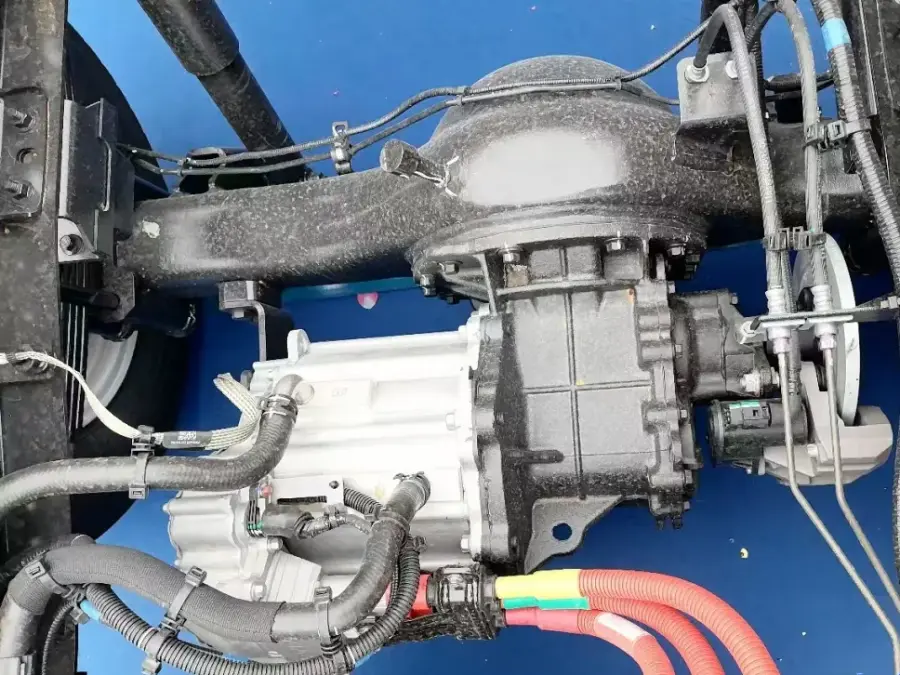
Many electric light trucks use an electronic parking brake system (EBS) instead of a conventional mechanical parking brake lever.
In addition to the basic parking function, an electronic parking brake can be integrated with other vehicle control functions, including:
- AUTO HOLD
- Hill-start assistance
- Electronic parking control
This integration can be useful for electric light trucks operating on slopes or in stop-and-go conditions.
For vehicles operating frequently in mountainous areas, where hill starts are common, an electronic parking brake can provide additional functionality within the vehicle’s electronic control architecture.
5. Key Considerations When Selecting an Electric Light Truck Braking System
For EV manufacturers and engineering companies, the selection of an electric light truck braking system should be evaluated against the vehicle’s intended operating conditions.
Vehicle Load
Vehicle GVW, typical payload, and axle loads influence braking requirements.
Light- and standard-load vehicles may use different brake configurations from vehicles that regularly operate at higher payloads.
Driving Speed
Urban vehicles and highway vehicles have different braking requirements.
At higher speeds, braking response and control become increasingly important. EHB can be considered for applications where precise electronic braking control is required.
Road Conditions
Road conditions have a direct influence on braking requirements.
Urban operation involves frequent braking, while mountainous routes can involve repeated braking and long downhill sections.
For vehicles operating on long downhill routes, the braking system and, where applicable, air supply capacity should be evaluated for sustained braking requirements.
Braking Frequency
Frequent braking affects the operating conditions of the braking system.
For air-brake systems, repeated brake applications consume compressed air, making compressor capacity and pressure recovery important considerations.
For hydraulic and electronically controlled systems, braking response, control characteristics, and thermal conditions should also be evaluated.
Vehicle Architecture
The braking system should be integrated with the vehicle’s mechanical and electronic architecture.
For example, an electronic parking brake can support functions such as AUTO HOLD and hill-start assistance, while EHB can be integrated with electronic vehicle control systems.
The braking system should therefore be defined together with the vehicle’s overall architecture, rather than treated as an independent component.
Conclusion
There is no single electric light truck braking system that fits every vehicle platform.
For EV manufacturers and engineering companies, the appropriate configuration depends on vehicle load, driving speed, road conditions, braking frequency, and vehicle architecture.
The main options include:
- Disc or drum brakes for different braking and thermal requirements
- Air brakes where compressed-air braking is appropriate
- Dual-cylinder compressors where higher air delivery and faster pressure recovery are required
- Wedge brakes for specific mechanical braking architectures
- EHB where electronically controlled hydraulic braking is preferred
- Electronic parking brakes where parking control needs to be integrated with vehicle functions
The braking system should ultimately be selected as part of the complete electric light-truck platform, with the braking hardware, control system, and vehicle operating conditions evaluated together.