
Bus body structure types can be classified by load-bearing design and construction method. Common structural types include body-on-frame and monocoque bus bodies, while manufacturing methods include fully stamped sheet-metal bodies and frame-and-skin bodies. Understanding these differences helps bus manufacturers evaluate body construction options and their compatibility with the chassis platform.
1. Bus Body Structure Types by Load-Bearing Design
Based on how structural loads are carried, bus bodies can be classified into two main types: body-on-frame and monocoque.
1.1 Body-on-Frame Bus Body
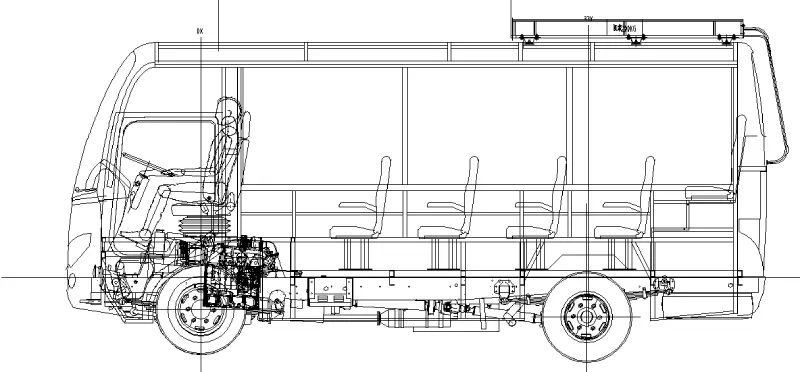
In a body-on-frame bus, the chassis frame carries all or most of the vehicle’s structural loads. The body structure is mounted on the chassis through brackets or supports and generally does not serve as the primary load-bearing structure.
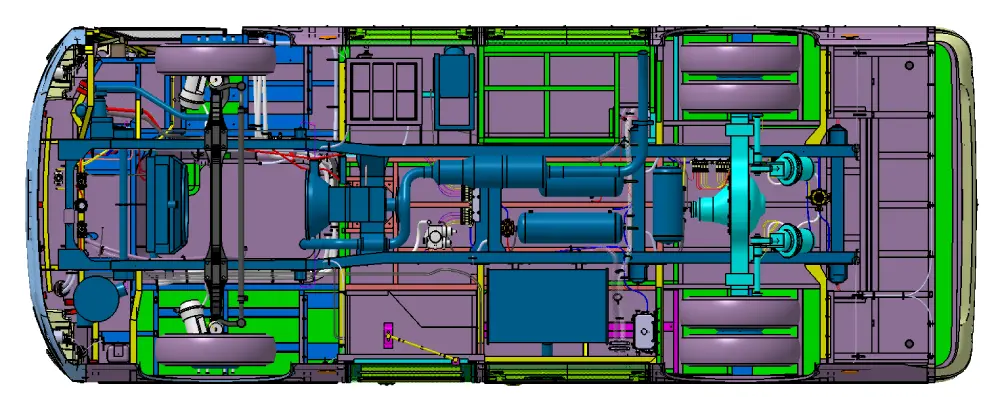
Body layout is based largely on the chassis dimensions and mounting points. In some projects, 2D layout drawings are sufficient, particularly when the chassis manufacturer provides 2D drawings but no 3D model.
1.2 Monocoque Bus Body
A monocoque bus body uses an integrated structural design in which the body structure carries the vehicle’s main structural loads. In a typical steel-framework design, the structure forms a three-dimensional framework consisting of six interconnected sections: the floor frame, left and right sides, front, rear, and roof.
The motor or engine and the front and rear suspension systems are mounted directly to designated points on the body structure. The integrated structure carries the vehicle’s structural loads as a whole.
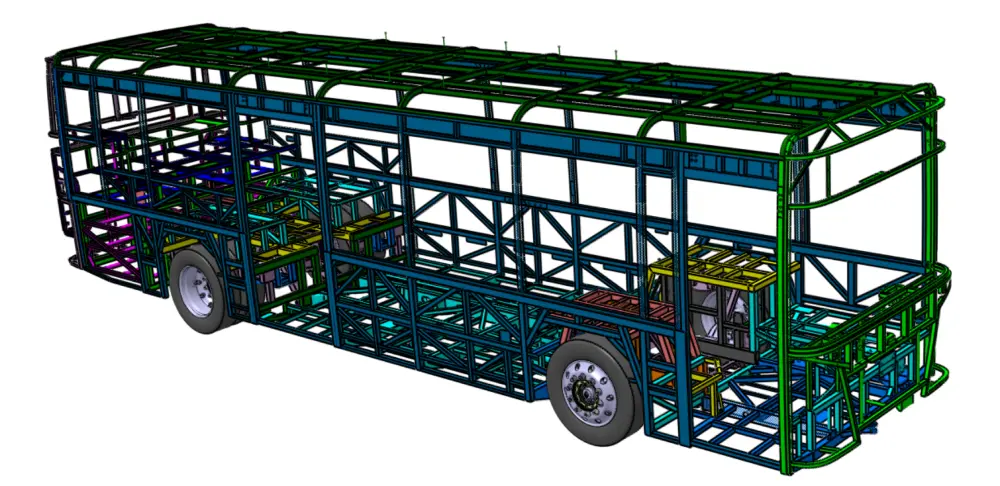
The mounting points for the powertrain and suspension systems are incorporated into the body structure. Their positions must be coordinated with the structural layout.
2. Bus Body Construction Methods
From a manufacturing perspective, bus bodies can be classified into fully stamped sheet-metal bodies and frame-and-skin bodies.
2.1 Fully Stamped Sheet-Metal Body
A fully stamped sheet-metal body is assembled from stamped inner and outer sheet-metal panels joined by welding. The panels form the load-bearing body structure without a separate conventional tubular framework.
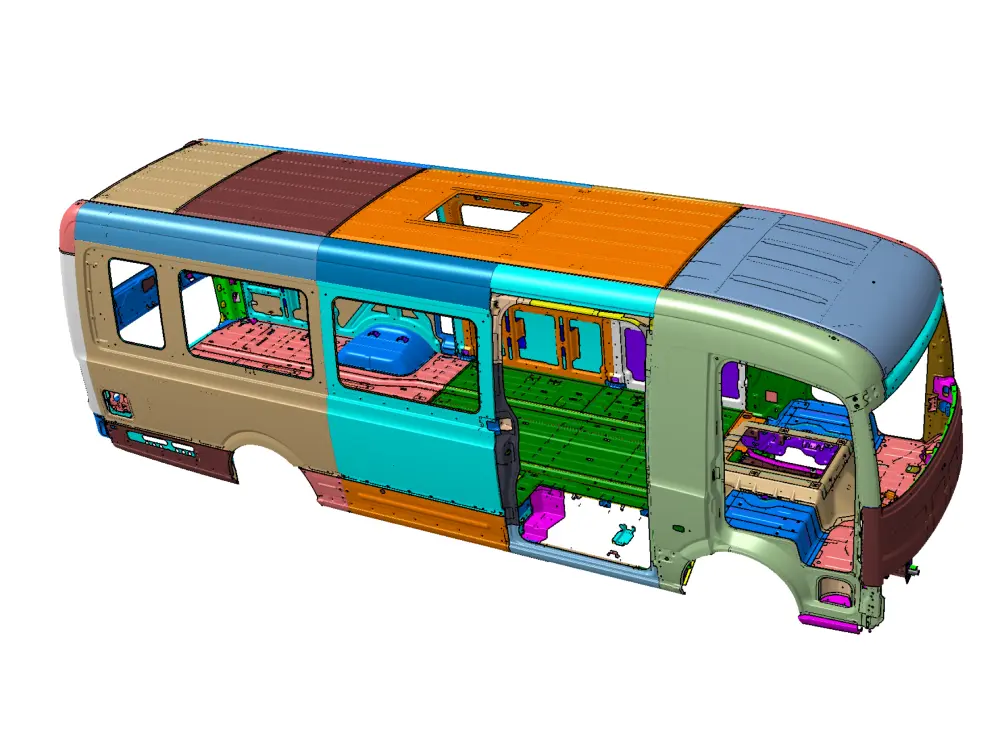
This construction method has two main manufacturing characteristics:
- High tooling investment: Panel shapes are produced using dedicated stamping dies, often requiring a large number of dies.
- Precision welding fixtures: Accurate fixtures are needed to maintain panel positioning and assembly tolerances. The process supports standardized, high-volume production and is broadly similar to passenger-car body manufacturing.
2.2 Frame-and-Skin Bus Body
A frame-and-skin bus body uses a welded framework, typically made from rectangular steel tubes, with exterior skin panels attached to it. The framework carries the main structural loads, while the exterior skin generally serves as the outer covering.
Two common configurations differ mainly in how the exterior panels are manufactured.
Type A: Frame-and-Skin Body with Stretch-Formed Panels
This configuration is widely used in large buses, mid-size buses, and city buses. The body framework is welded from rectangular steel tubes. Stretch-formed sheet metal is used for the roof and side panels, while only selected front and rear exterior panels require dedicated moulds.
Aluminium or composite materials may also be used for the exterior panels, depending on the design.
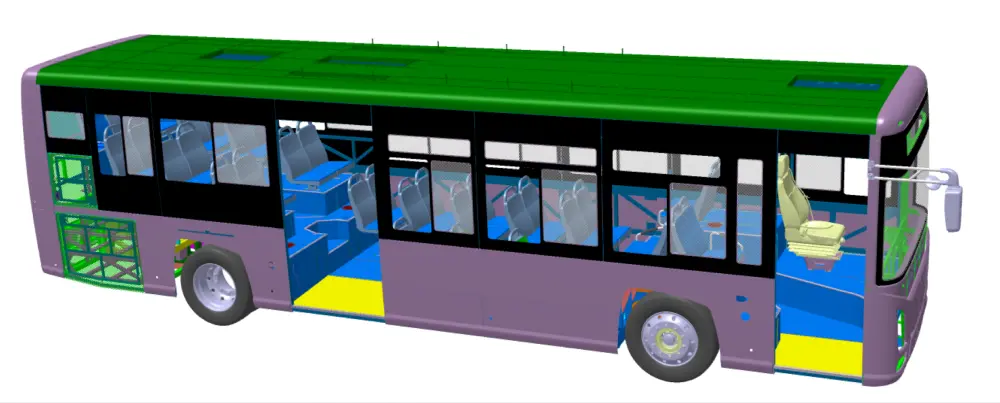
This configuration requires relatively limited tooling for exterior panels and has a comparatively straightforward manufacturing process.
Type B: Frame-and-Skin Body with Fully Tooled Exterior Panels
This configuration also uses a welded rectangular-tube framework, but all exterior skin panels are produced using dedicated moulds or forming tools. It is commonly used for modified buses with a Coaster-style appearance.
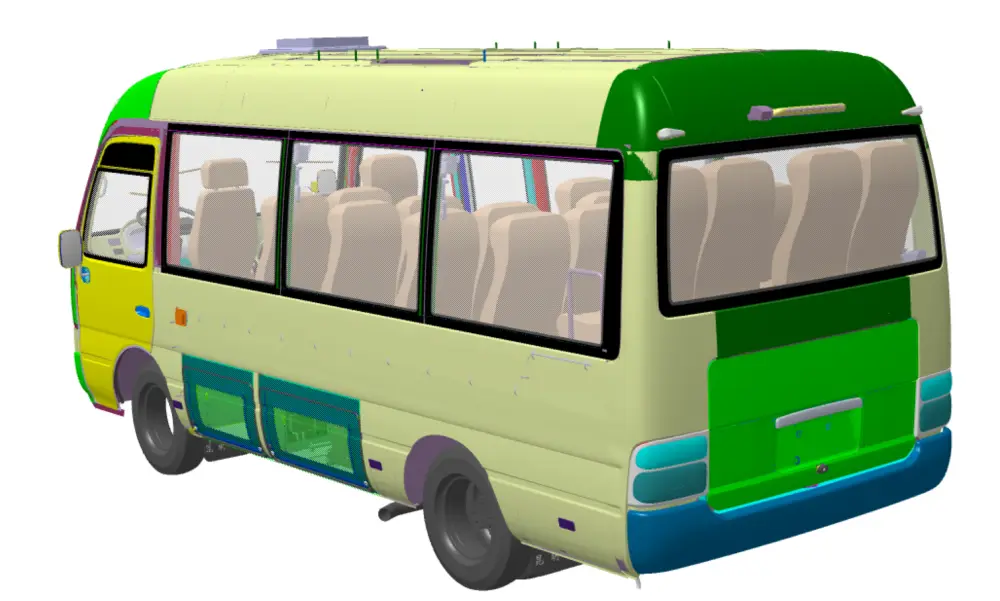
Compared with Type A, this configuration requires more extensive tooling for exterior panels. Maintaining consistent panel fit and exterior surface quality can also be more challenging.
3. Comparison of Bus Body Structure Types
The following table summarizes the main bus body structure types and their defining characteristics.
| Bus body type | Main structural feature | Main manufacturing or design consideration |
|---|---|---|
| Body-on-Frame Bus Body | Chassis frame carries all or most structural loads | Body-to-chassis mounting points |
| Monocoque Bus Body | Integrated body structure carries the main structural loads | Powertrain and suspension mounting points |
| Fully Stamped Sheet-Metal Body | Stamped and welded panels form the load-bearing body | Stamping dies and precision welding fixtures |
| Frame-and-Skin Bus Body | Welded framework carries the main structural loads | Framework fabrication and exterior panel production |
The first two bus body structure types are classified by load-bearing design, while the latter two are classified by construction method.
4. Electric Bus Chassis Solutions for Different Body Structures
The bus body structure and electric chassis need to be considered together during vehicle development. Body mounting points, frame dimensions, floor height, suspension layout, and the positions of major EV components all affect how the body and chassis fit together.
Jenwyn Tech provides integrated electric bus chassis solutions for bus manufacturers and vehicle developers working with different body designs and commercial passenger transport applications.
An Integrated Platform for Electric Bus Development
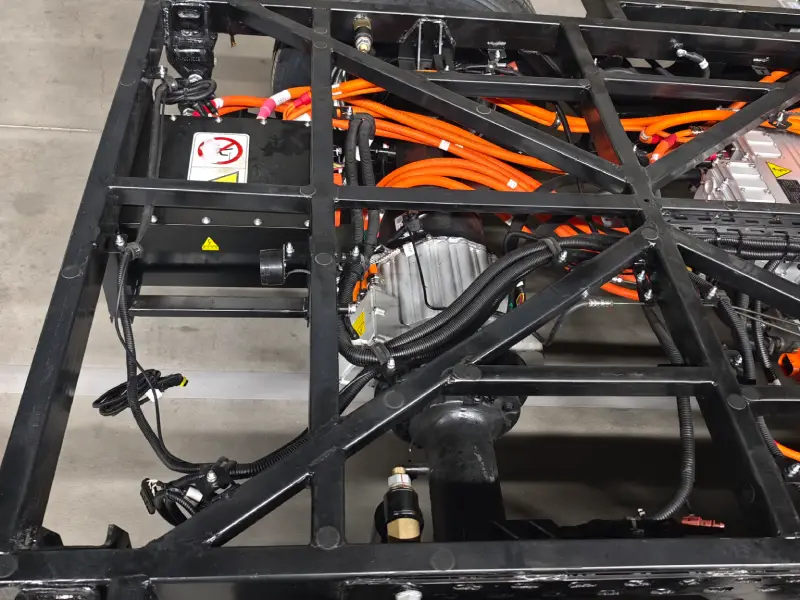
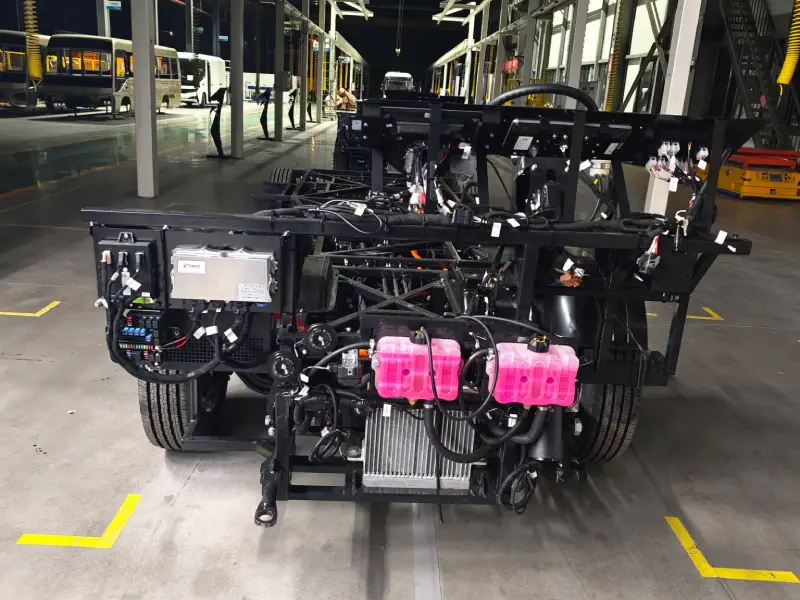
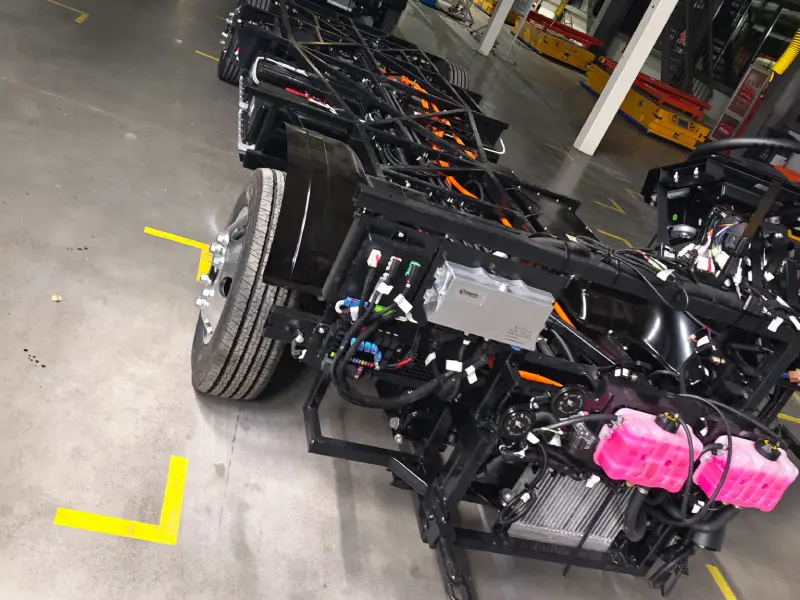
Rather than sourcing and coordinating every major EV system separately, customers can use a rolling chassis platform that integrates key systems, including:
- Electric traction motor and motor controller
- Battery system and high-voltage components
- Braking and suspension systems
- Thermal management system
- Auxiliary electrical systems
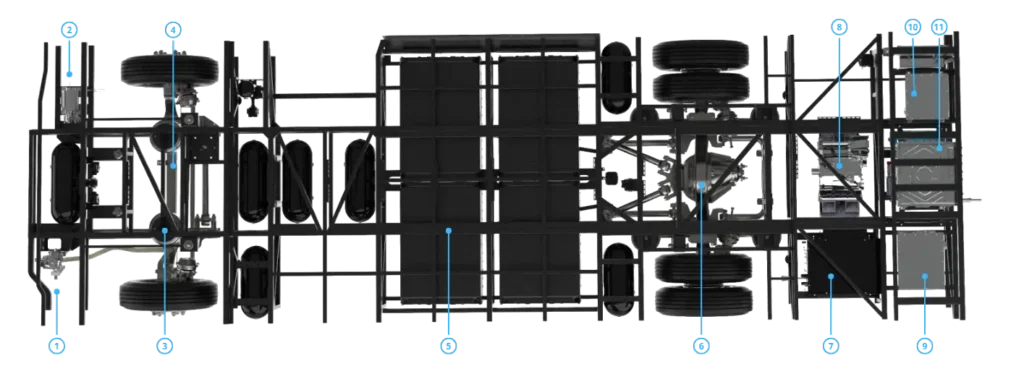
Integrating these systems at the chassis level provides a coordinated technical foundation for vehicle development. It helps simplify component matching and system interfaces, while allowing customers to focus on body design, vehicle configuration, and market-specific requirements.
Explore Jenwyn Tech Electric Bus Chassis Solutions
Chassis Platforms for Different Bus Sizes
Jenwyn Tech offers electric bus chassis platforms covering 6–9 m and 10–12 m vehicle lengths.
- 6–9 m electric bus chassis: Suitable for shuttle buses, tourist buses, and other mid-size passenger transport applications. Configurations can support different body layouts, with left-hand drive (LHD) and right-hand drive (RHD) options available.
- 10–12 m electric bus chassis: Designed for applications including city buses and school buses. The platform supports low-floor configurations, high-capacity battery systems, and integrated EV components for commercial passenger transport.
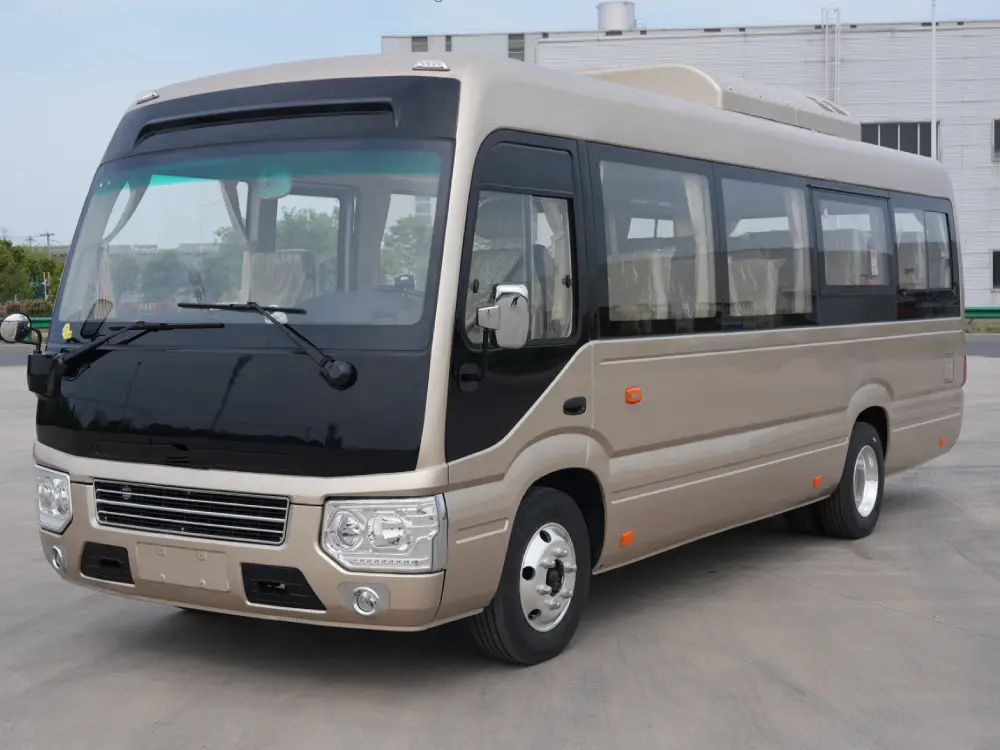
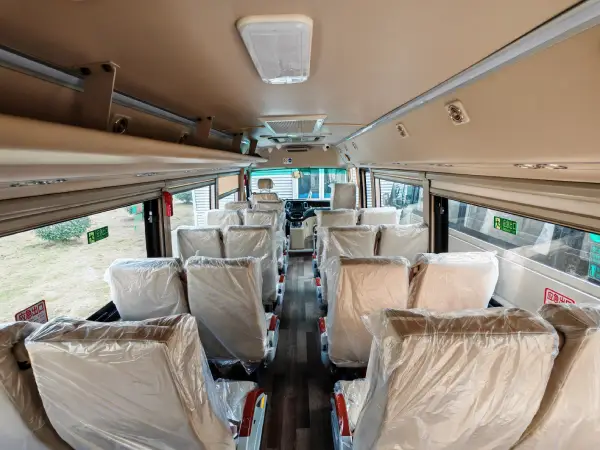
The specific motor, battery, auxiliary systems, and chassis configuration can be matched to the vehicle requirements. For projects with particular body dimensions or mounting interfaces, the chassis layout can be assessed and adapted to the intended application.
Why Choose Jenwyn Tech?
1. EV engineering experience
Jenwyn Tech brings more than 15 years of experience in EV system development, engineering integration, and commercial vehicle applications. Our capabilities cover electric chassis development, powertrain integration, battery systems, and vehicle control systems.
2. Flexible body and chassis integration
Different bus body structures require different mounting interfaces, space arrangements, and chassis layouts. We work with customers to review vehicle requirements and coordinate chassis configurations with the intended body structure, vehicle dimensions, and operating conditions.
3. Coordinated EV system configuration
The electric powertrain, battery, braking, suspension, and thermal management systems need to work together within the available chassis space. Our integrated platform approach helps customers coordinate these systems instead of treating each component as a separate selection task.
4. Standard platforms with project-based adaptation
Customers can start with a 6–9 m or 10–12 m platform and discuss the changes needed for their specific vehicle application. Depending on project requirements, support can cover chassis layout, mounting interfaces, system configuration, technical documentation, and integration assistance.
5. International commercial vehicle experience
Jenwyn Tech’s electric bus chassis solutions have been supplied to international markets, including the Philippines and Ecuador. This experience supports our work with customers developing electric buses for different regional requirements and operating conditions.
Discuss Your Electric Bus Chassis Project
Whether you are developing a new bus body, adapting an existing vehicle design, or evaluating an integrated electric chassis platform, the right starting point is to define the vehicle’s dimensions, body structure, passenger capacity, operating conditions, and performance targets.
Share your project requirements with Jenwyn Tech. Our team can discuss a suitable chassis platform, relevant system configurations, and the technical interfaces needed for your application.
👉You can contact our team at contact@jenwyntech.com or complete the form below.