
Choosing between an electric central drive and an integrated electric axle depends on the vehicle’s existing driveline, chassis layout, load requirements and development objectives. A central drive can suit projects that retain a conventional propeller-shaft layout, while an eAxle integrates the motor and reduction system at the axle to create a more compact drivetrain arrangement. Neither architecture is universally better; the right choice depends on the vehicle and its operating cycle.
What is a central electric drive?
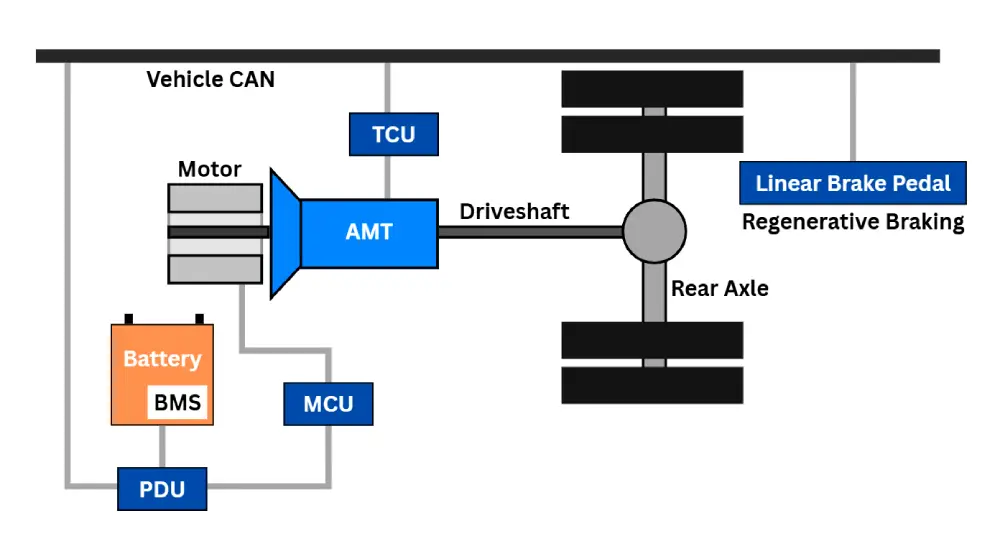
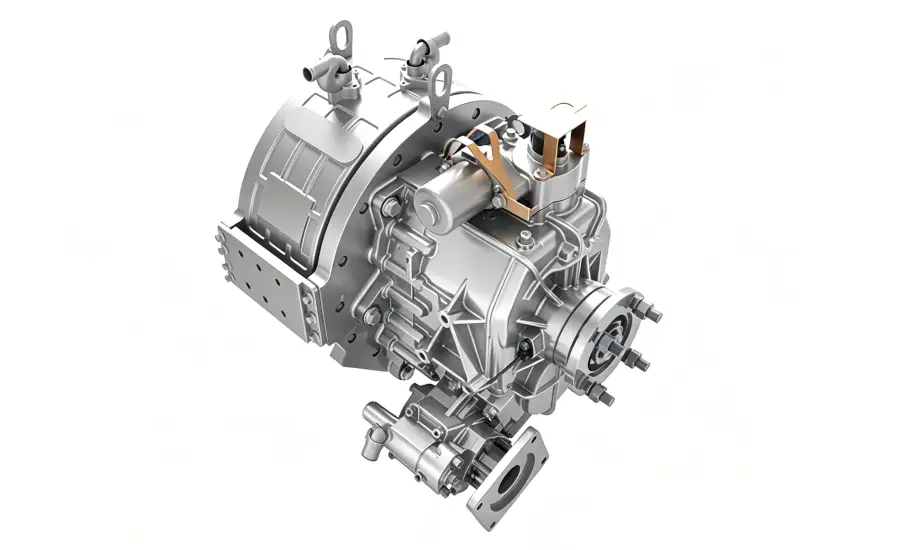
A central electric drive typically combines an electric traction motor with a transmission. It sends torque through a propeller shaft to the driven axle. Depending on the configuration, the system may use a multi-speed automated manual transmission (AMT).
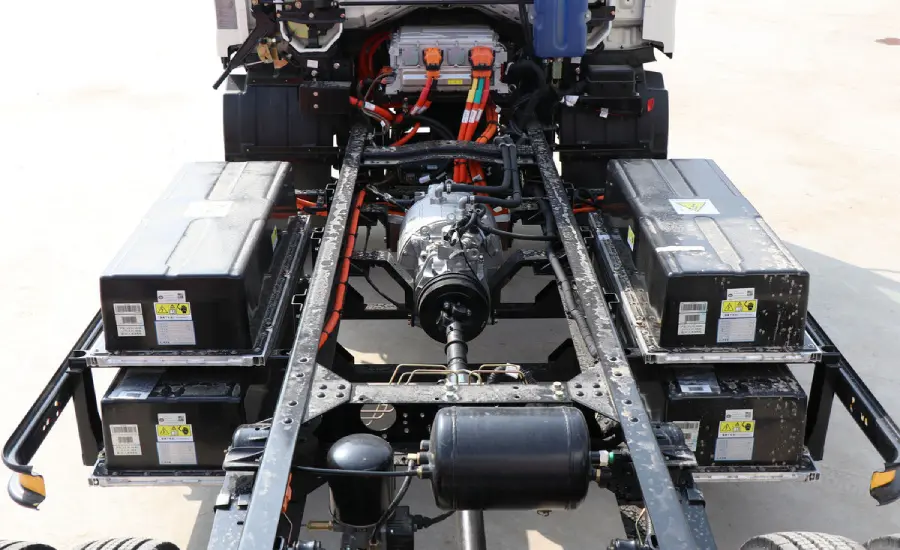
This layout can be considered when a vehicle platform already uses a conventional propeller shaft and driven axle, or when the project needs to retain familiar chassis and driveline interfaces. Multi-speed transmission options can provide additional torque multiplication for loaded operation and gradients. Selected configurations may also support power take-off (PTO) requirements; this should be confirmed for the specific system.
What is an integrated eAxle?
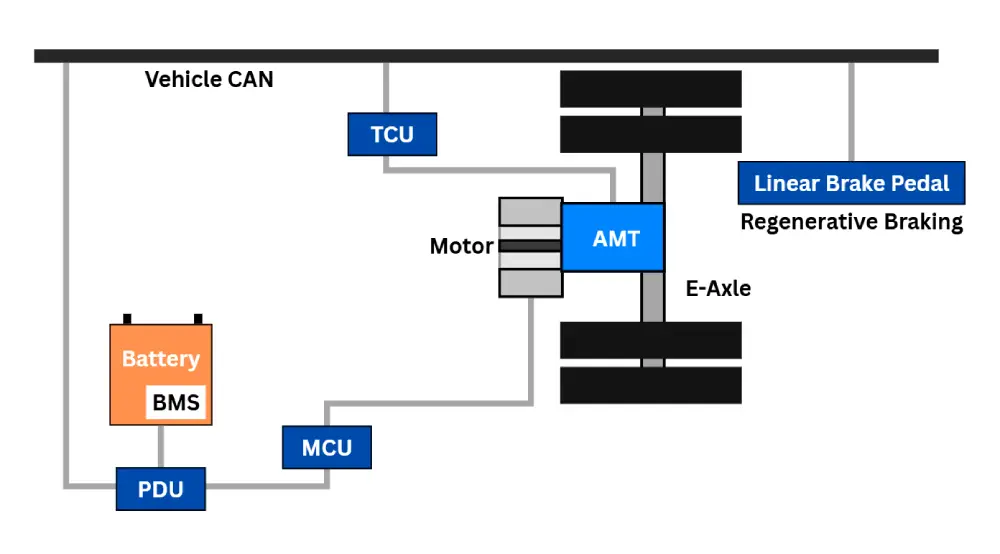
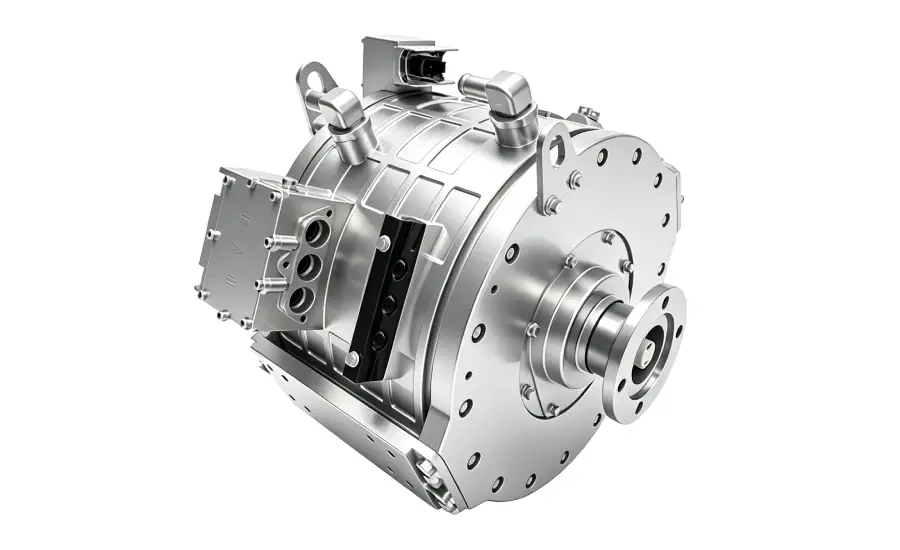
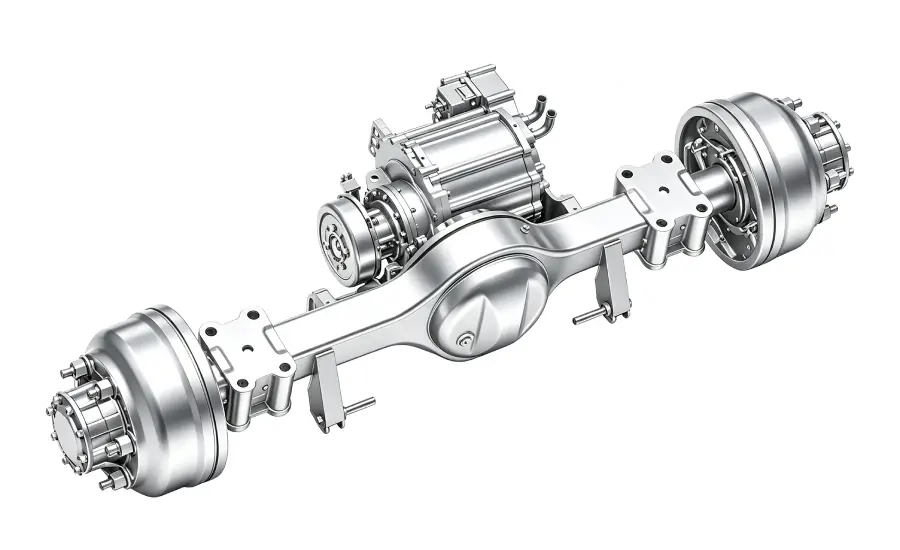
An integrated electric axle combines the electric motor, reduction gearing and axle assembly into a single drivetrain unit. Because the motor drives the axle directly through the integrated reduction system, the conventional propeller shaft can be eliminated.
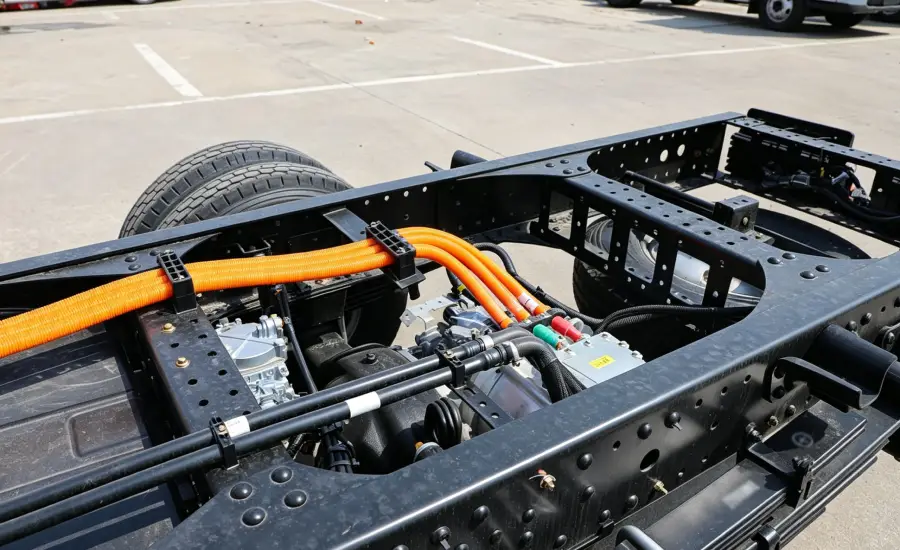
This can reduce the number of mechanical interfaces and provide more flexibility for chassis and battery packaging. An eAxle is often worth evaluating for a dedicated battery-electric chassis, particularly when underbody space and integration of the propulsion system are important design constraints.
Central drive vs. eAxle: key selection factors
The table is a starting point, not a final engineering decision. Vehicle mass, axle loads, wheel torque, gradeability, speed range, cooling, braking, suspension and service access must also be checked.
| Project factor | Central electric drive | Integrated eAxle |
|---|---|---|
| Existing propeller-shaft layout | Can retain the conventional layout | Usually requires an axle and chassis integration review |
| Dedicated electric chassis | Can be suitable | Often attractive for a compact integrated layout |
| Torque multiplication | Depends on motor and transmission configuration | Depends on reduction ratio and axle configuration |
| PTO requirements | Selected configurations may support PTO | Application and configuration dependent |
| Packaging priorities | Requires space for motor, transmission and shaft | Integrates key drivetrain components at the axle |
| Development scope | May preserve more existing driveline interfaces | May require more changes around the driven axle |
A practical selection process
- Define the vehicle and duty cycle. Record gross vehicle weight, payload, target speed, gradients, route profile, annual mileage and expected time under high load.
- Establish the required wheel performance. Calculate the torque and power needed at the wheels across launch, climbing and sustained operation. Do not select a drive system from peak motor power alone.
- Review the chassis layout. Check available installation space, axle location, battery packaging, shaft path, ground clearance, suspension and brake interfaces.
- Confirm system interfaces. Review mechanical mounting, high-voltage requirements, cooling, controller communication and vehicle control strategy.
- Compare the complete integration scope. Include chassis changes, calibration, testing, service access and supplier coordination—not just the price of the drive unit.
How Jenwyn Tech can support architecture evaluation
Jenwyn Tech supplies electric central drive systems and integrated electric axles for commercial vehicle applications. The portfolio covers different power, torque and transmission configurations; suitability must be assessed against the target vehicle and project requirements.
For an initial review, prepare the vehicle weight, axle configuration, target wheel performance, duty cycle, chassis drawings and any PTO or body-equipment requirements. These details help narrow the architecture before detailed specification confirmation.
FAQ
Is an eAxle always more efficient than a central drive?
Not in every vehicle and duty cycle. A shorter mechanical power path can reduce some transmission losses, but overall vehicle efficiency also depends on component sizing, operating points, tires, vehicle mass, control strategy and route conditions.
Can a central drive be used for a heavy commercial vehicle?
Yes, where the motor, transmission, axle and overall system are correctly matched to vehicle load and operating requirements. The specific configuration must be reviewed.
What information is needed for a recommendation?
At minimum: vehicle weight, payload, axle layout, target speed, gradients, operating cycle, installation constraints and required auxiliary functions.
Discuss your application with Jenwyn Tech to review the relevant central drive or eAxle options.
- Contact our team at contact@jenwyntech.com or fill in the form below.