
Project Overview
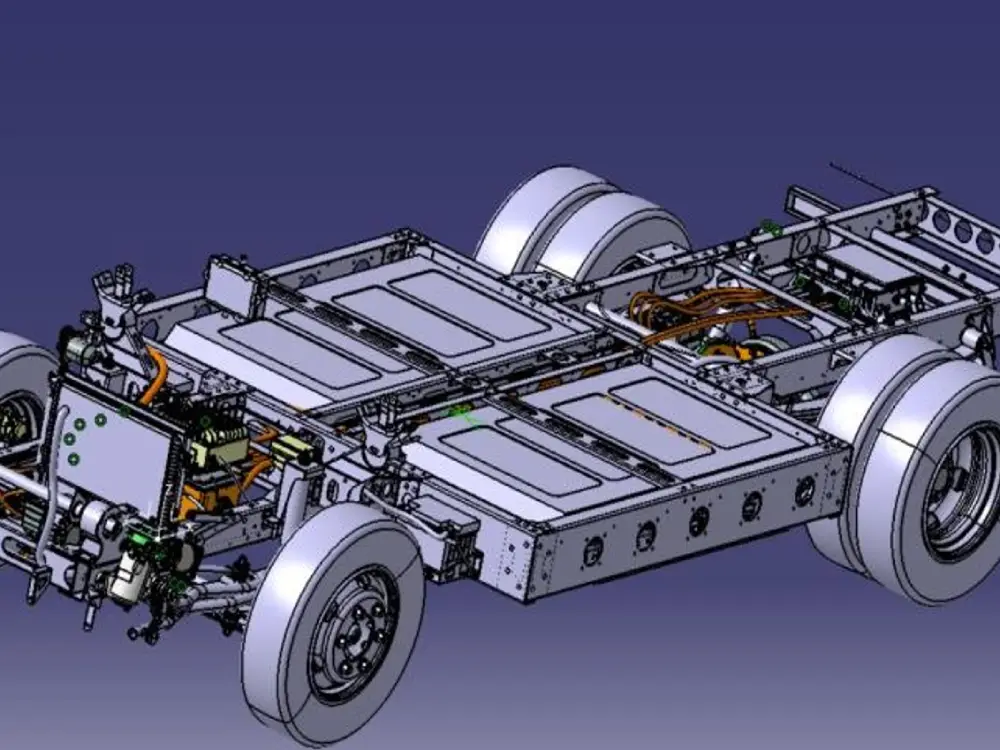
A customer in Thailand was developing a dual-purpose vehicle for both passenger transport and logistics applications. The project required an electric chassis for bus that could support an approximately 6.6 m bus while also providing flexibility for a logistics body configuration.
The key requirements included a low chassis floor, sufficient capacity for approximately 22 passengers, and a driving range of more than 300 km. At the same time, the customer wanted to control development cost by making use of an existing electric commercial vehicle platform rather than developing a completely new chassis architecture.
Jenwyn Tech proposed an adapted electric chassis solution based on an existing platform whose underlying chassis technology had already entered mass production and been exported to global markets. The project therefore focused on adapting a proven electric commercial vehicle chassis to the customer’s specific bus and logistics requirements.
Customer Requirements
The customer’s requirements were defined around the intended vehicle application and operating needs.
1. Dual-Purpose Vehicle
The chassis needed to support two body applications: bus application for passenger transport and logistics application for cargo transportation. The objective was to use a common chassis architecture where practical, rather than developing completely separate chassis platforms for the two applications.
2. Bus Capacity and Vehicle Mass
The bus configuration was designed around approximately 22 passengers. For the initial vehicle mass assessment, a passenger weight of approximately 75 kg per person was used: 22 × 75 kg = 1,650 kg. An estimated 500 kg was then allowed for the bus body structure and interior, resulting in an initial estimated chassis load requirement of approximately 2,150 kg.
Based on this calculation, the initial target was to keep the complete vehicle gross mass at approximately 4.5 tonnes or below. The proposed chassis platform provides additional gross vehicle mass capacity to accommodate different body and configuration requirements.
3. Vehicle Length
The target overall vehicle length was approximately 6.6 m. The length was defined based on the intended bus body and passenger layout.
4. Driving Range
The customer required a driving range of more than 300 km. Based on the project assumptions, including the target vehicle mass and expected operating conditions for the bus, estimated energy consumption was approximately 31–33 kWh/100 km. This led to a battery capacity target of approximately 100 kWh or above.
5. Low Chassis Floor
For the bus application, the upper surface of the chassis needed to be no higher than approximately 650 mm from the ground. This requirement was important for bus body integration and passenger compartment packaging.
6. Cost Control
The customer also emphasized cost control. The development approach therefore focused on reusing proven chassis and electric powertrain technologies where appropriate, while modifying the platform only where required by the new application.
Electric Chassis for Bus Applications
The primary application requirement was to develop an electric chassis for an approximately 6.6 m bus while retaining flexibility for logistics body configurations.
For the bus application, the chassis needed to provide sufficient space for the bus body and passenger compartment while keeping the chassis upper surface at no more than approximately 650 mm from the ground.
This created a packaging challenge. Reducing the chassis floor height had to be balanced against the space and clearance required for the battery pack and other underbody components.
The chassis adaptation therefore focused on several interconnected requirements:
- Low chassis floor height for bus body integration
- Battery packaging within the chassis frame
- Ground clearance for underbody components
- Vehicle mass and payload capacity for the planned passenger load
- Body mounting and integration for the bus structure
- Electric powertrain packaging within the available chassis space
Based on these requirements, the existing electric commercial vehicle chassis platform was adapted for the customer’s bus application through changes to the chassis structure, frame height and battery configuration.
The resulting configuration was designed around the requirements of the approximately 6.6 m bus, while retaining the underlying architecture needed for a dual-purpose passenger and logistics vehicle.
Adapting a Production-Validated Electric Chassis Platform
Rather than developing a completely new electric bus chassis from the ground up, Jenwyn Tech started with an existing electric commercial vehicle chassis platform. The underlying platform had already entered mass production and been exported to overseas markets, providing established experience with its chassis structure, electric powertrain architecture and commercial vehicle application.
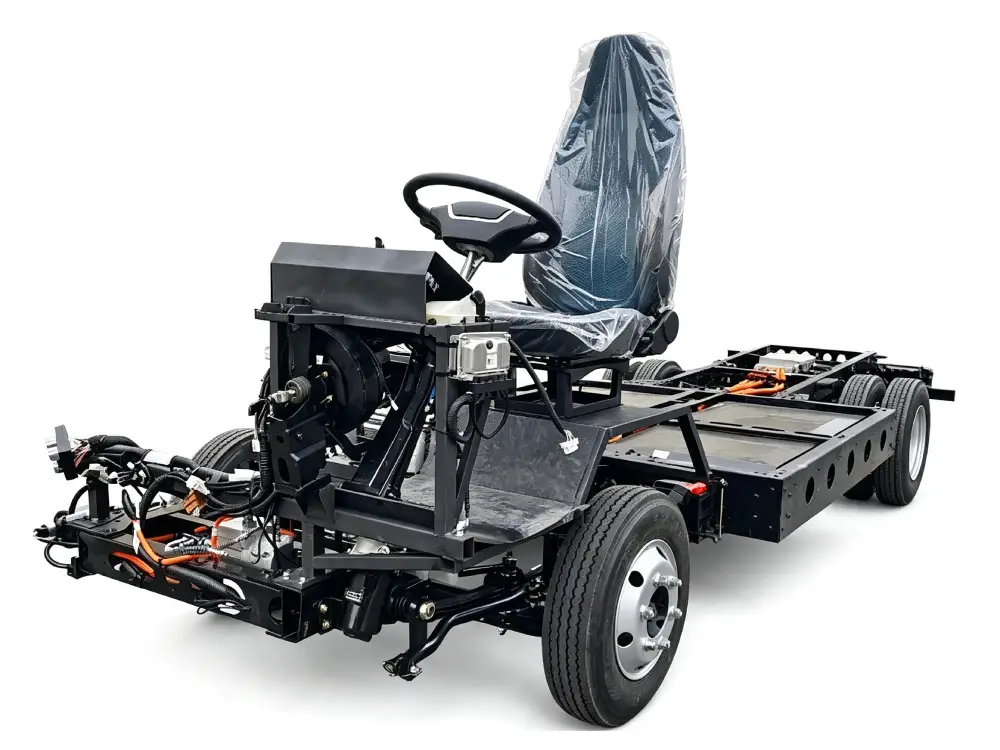
The project therefore followed a platform adaptation approach. The main development areas included:
- Chassis length and frame layout
- Frame upper-surface height
- Battery system selection
- Bus body integration
- Logistics body integration
- Vehicle weight distribution
- Underbody component packaging
This approach allowed the customer requirements to be addressed without redesigning the entire electric chassis architecture from the beginning.
Two Electric Bus Chassis Configurations
To accommodate different body requirements, two configurations were developed from the same technical foundation.
1. Cab-Chassis Configuration
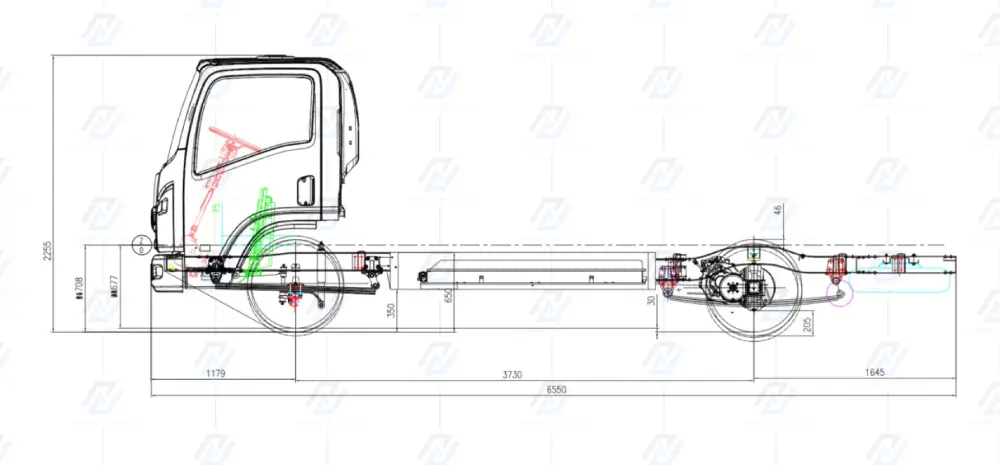
The first configuration adapted the existing electric vehicle chassis for the approximately 6.6 m vehicle concept. The frame structure and floor height were modified to meet the requirements of the bus body while retaining the basic architecture of the existing platform. This configuration can be used for:
- Bus body applications
- Logistics and cargo bodies
- Other dual-purpose commercial vehicle configurations
The main advantage of this approach is the ability to use a common electric chassis architecture for different vehicle body requirements.
2. Cabless Electric Bus Chassis Configuration
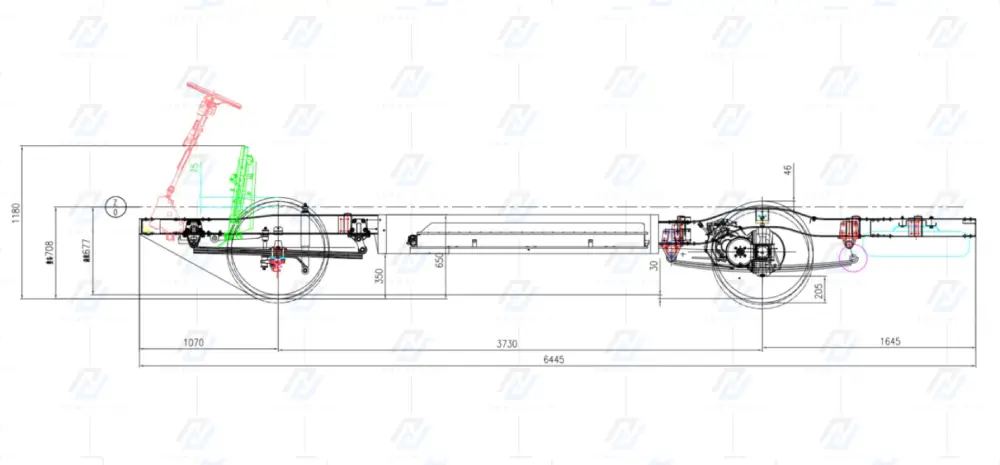
The second configuration was developed for customers requiring a dedicated bus body structure. The cab was removed, and the front section of the chassis was adapted to create a cabless electric bus chassis.
This configuration provides greater freedom for the customer to design the bus body, passenger compartment and front-end structure around the chassis. The configuration is intended for the approximately 6.6 m bus application defined in this project.
The two configurations therefore address different body integration requirements while sharing the same underlying electric chassis development approach.
Platform Reuse for Cost-Controlled Development
One of the main considerations in this project was development cost.
Developing a completely new electric bus chassis would require new work across the structural system, electric powertrain packaging, battery integration and vehicle validation. The platform-based approach allowed the project to reuse an existing electric commercial vehicle chassis architecture where it was technically suitable.
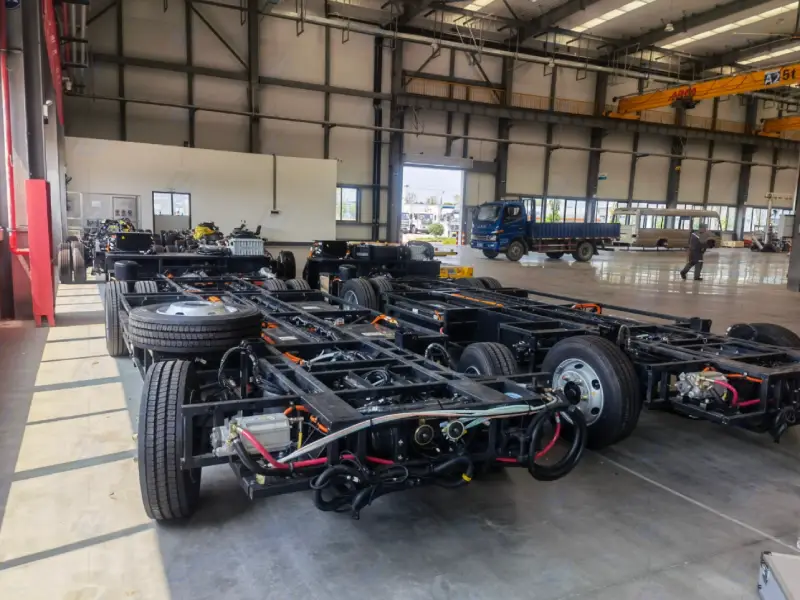
The underlying platform had already been mass-produced and exported overseas, providing a proven foundation for further adaptation. The new development could therefore concentrate on the areas directly affected by the customer’s requirements:
- Vehicle length
- Low-floor configuration
- Battery capacity
- Bus body integration
- Logistics body integration
This approach helped balance application-specific development with reuse of proven technology.
Our Project Development Approach
The project followed a structured platform-adaptation process.
1. Requirement Analysis
The customer’s target vehicle length, passenger capacity, driving range, floor height and dual-purpose application were defined.
2. Vehicle Mass and Energy Assessment
Passenger load, bus body weight and expected energy consumption were evaluated to establish the initial vehicle mass and battery capacity requirements.
3. Existing Platform Assessment
The existing electric commercial vehicle chassis was evaluated to determine which components and architectural elements could be retained.
4. Chassis Adaptation
The frame structure, floor height, battery configuration and body integration interfaces were adapted to the new application.
5. Configuration Development
Two configurations were developed:
- A cab-chassis configuration for flexible bus and logistics applications
- A cabless electric bus chassis configuration for dedicated bus body integration
6. Prototype Development and Validation
The adapted electric chassis for bus was planned for prototype production and subsequent vehicle-level testing based on the final customer configuration.
Key Project Facts
| Project Item | Requirement / Solution |
|---|---|
| Market | Thailand |
| Vehicle application | Bus and logistics |
| Vehicle concept | Dual-purpose commercial vehicle |
| Primary chassis application | Electric bus |
| Target vehicle length | Approx. 6.6 m |
| Passenger capacity | Approx. 22 passengers |
| Initial target vehicle gross mass | Approx. ≤4.5 tonnes |
| Target driving range | More than 300 km |
| Battery capacity | Approx. 100 kWh or above |
| Chassis floor height | ≤650 mm |
| Central battery clearance | ≥350 mm |
| Rear underbody clearance | ≥200 mm |
| Traction motor | 60 kW rated / 120 kW peak |
| Maximum motor torque | 350 N·m |
| Chassis configurations | Cab-chassis and cabless |
| Platform status | Mass-produced and exported overseas |
Looking for an Electric Chassis for Bus?
Jenwyn Tech provides electric bus chassis solutions and electric truck chassis solutions, combining proven EV platforms with application-specific configurations. Share your vehicle dimensions, passenger capacity, payload, range target and operating requirements with our team.
Email us at contact@jenwyntech.com or fill out the form below to discuss your application.