
PTC heaters are widely used in electric vehicles to provide cabin heating and support battery thermal management in cold environments. Depending on the heat transfer medium, electric vehicle PTC heaters are generally classified into two types: air-heated PTC heaters and coolant-heated PTC heaters.
Although both use PTC ceramic heating elements, their structures, heat transfer methods, and applications are different. Understanding these differences helps vehicle manufacturers select a suitable heating solution for their vehicle platforms and thermal management requirements.
1. What Is a PTC Heater?
PTC stands for Positive Temperature Coefficient. A PTC heater uses a ceramic semiconductor heating element whose electrical resistance increases as its temperature rises.
Unlike conventional metal resistance heating elements, PTC ceramics have a self-regulating heating characteristic:
- At lower temperatures, electrical resistance is relatively low, allowing higher heating power.
- As the temperature increases, electrical resistance rises, reducing the heating power.
- This characteristic helps limit excessive temperature rise and provides a degree of inherent temperature regulation.
In electric vehicles, PTC heaters are commonly used for cabin heating and battery heating, particularly when ambient temperatures are low.
2. Main Types of PTC Heaters for Electric Vehicles
Based on the heat transfer medium, PTC heaters can be divided into two main categories:
- Air-Heated PTC: Transfers heat directly to the air.
- Coolant-Heated PTC: Transfers heat to the vehicle coolant, which circulates through the thermal management system.
2.1 Air-Heated PTC Heater: Direct Air Heating
Working Principle
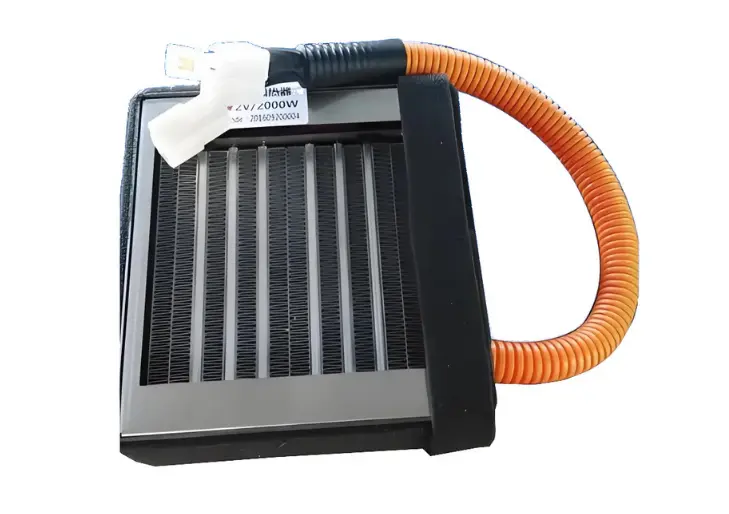
An air-heated PTC heater consists of ceramic heating elements combined with an aluminum fin structure. When the heater is powered on, a blower fan pushes cold air across the heated fins. The air absorbs heat and is then delivered directly into the vehicle cabin through the HVAC system.

Key Characteristics
- Fast Heating Response: The heater can deliver warm air shortly after power-on, making it suitable for applications where quick cabin heating is required.
- Simple System Structure: Air-heated PTC systems do not require a coolant circuit, water pump, or additional coolant piping. Their relatively compact structure can simplify vehicle installation.
- Primarily for Cabin Heating: In typical vehicle configurations, air-heated PTC heaters are used to heat cabin air directly. They do not provide direct heating to a liquid-cooled battery pack.
Typical Applications
Air-heated PTC heaters are suitable for electric vehicles with relatively simple heating requirements, including some low-speed electric vehicles, compact EVs, and entry-level vehicle platforms.
For these applications, cabin heating may be the primary thermal comfort requirement, while battery heating is handled separately or is not included in the thermal management configuration.
Main Consideration
An air-heated PTC heater cannot directly heat the battery coolant in a liquid-cooled battery system. If battery preheating is required, an additional heating solution and corresponding coolant circuit may be needed.
2.2 Coolant-Heated PTC Heater: Liquid Heating
Working Principle
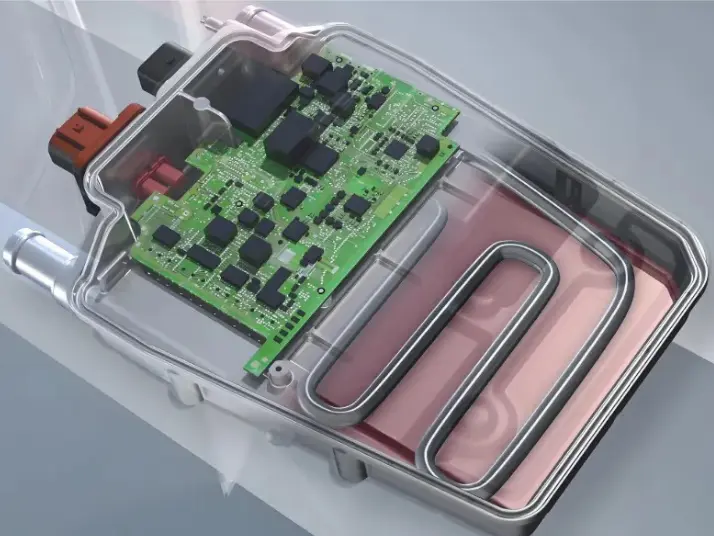
A coolant-heated PTC heater transfers heat to the vehicle’s coolant rather than heating cabin air directly.
A coolant pump circulates the heated liquid through the thermal management circuit. Depending on the system design and valve control strategy, the heated coolant can be directed to the cabin heater core, the battery cooling circuit, or other designated heating branches.
This arrangement allows one heating source to support different thermal management functions when the corresponding coolant circuits are properly configured.

Key Characteristics
- Multiple Heating Applications: A coolant-heated PTC system can support both cabin heating and battery preheating, provided that the vehicle has the required coolant routing, pumps, valves, and control strategy.
- More Uniform Heat Distribution: The circulating coolant transfers heat through the designed liquid circuit. For cabin heating, the heated coolant flows through the heater core, where a blower distributes warm air into the cabin.
- Support for Battery Temperature Conditioning: In cold environments, a coolant-heated PTC can supply heat to the battery thermal management circuit. Bringing the battery into a suitable operating temperature range helps support charging and discharging performance.
- More Complex System Configuration: Compared with direct air heating, coolant-heated PTC systems require additional components, such as coolant pumps, pipes, valves, and control interfaces. The heating response also depends on coolant volume and the overall circuit design.
Typical Applications
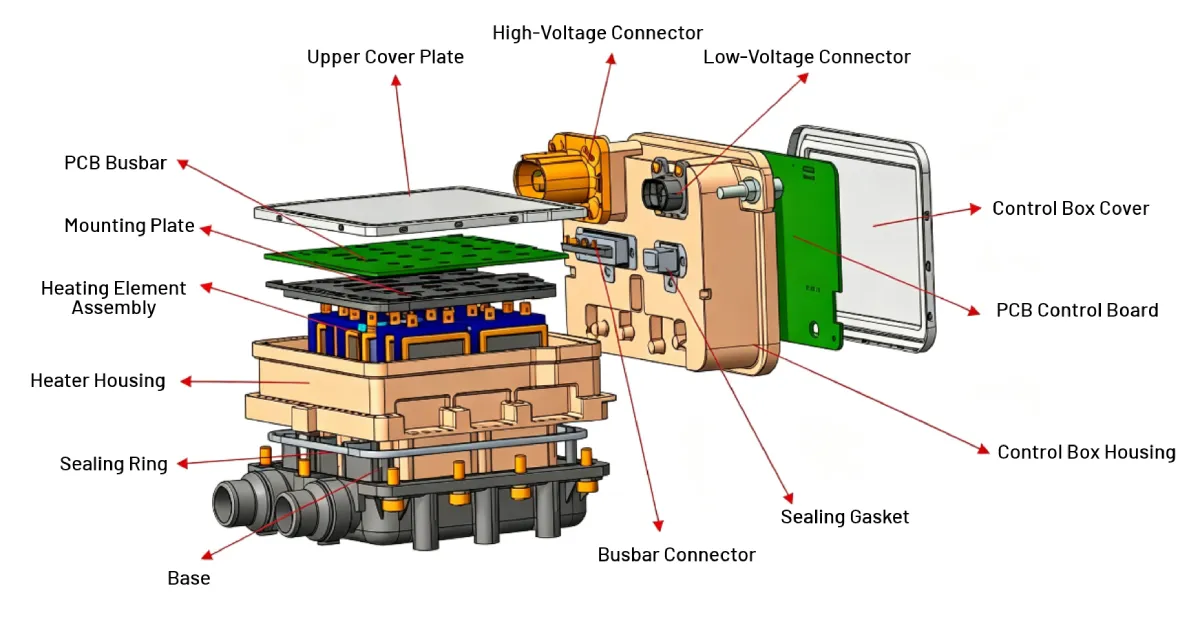
Coolant-heated PTC heaters are commonly used in electric passenger cars and commercial vehicles, including electric delivery vans, buses, and trucks where liquid-based thermal management is required.
They can be configured for different high-voltage vehicle platforms, subject to the heater’s electrical specifications and vehicle integration requirements.
3. Air-Heated PTC vs. Coolant-Heated PTC: Key Differences
| Comparison | Air-Heated PTC | Coolant-Heated PTC |
|---|---|---|
| Heat transfer medium | Air | Coolant |
| Heating method | Direct air heating | Liquid circulation heating |
| Main application | Cabin heating | Cabin and battery heating |
| System structure | Relatively simple | More components and coolant circuits |
| Heating response | Fast direct air heating | Depends on coolant circulation and system volume |
| Battery preheating | Not directly supported in typical configurations | Supported with a properly designed battery coolant circuit |
| Integration requirements | HVAC air duct and blower | Coolant pipes, pumps, valves and control system |
The choice between these two types depends on the vehicle’s heating requirements, battery thermal management architecture, available installation space, and cost targets.
For commercial electric vehicles, where battery capacity, operating hours, charging conditions, and ambient temperatures can vary considerably, coolant-based heating can provide greater flexibility for integrated thermal management.
4. The Role of PTC Heating in Battery Thermal Management
Battery temperature has a direct influence on charging performance, available power, and battery operating conditions.
In low-temperature environments, battery charging and discharging performance can be restricted. Battery preheating helps bring the battery to a suitable temperature before or during operation, depending on the battery manufacturer’s requirements and the vehicle’s control strategy.
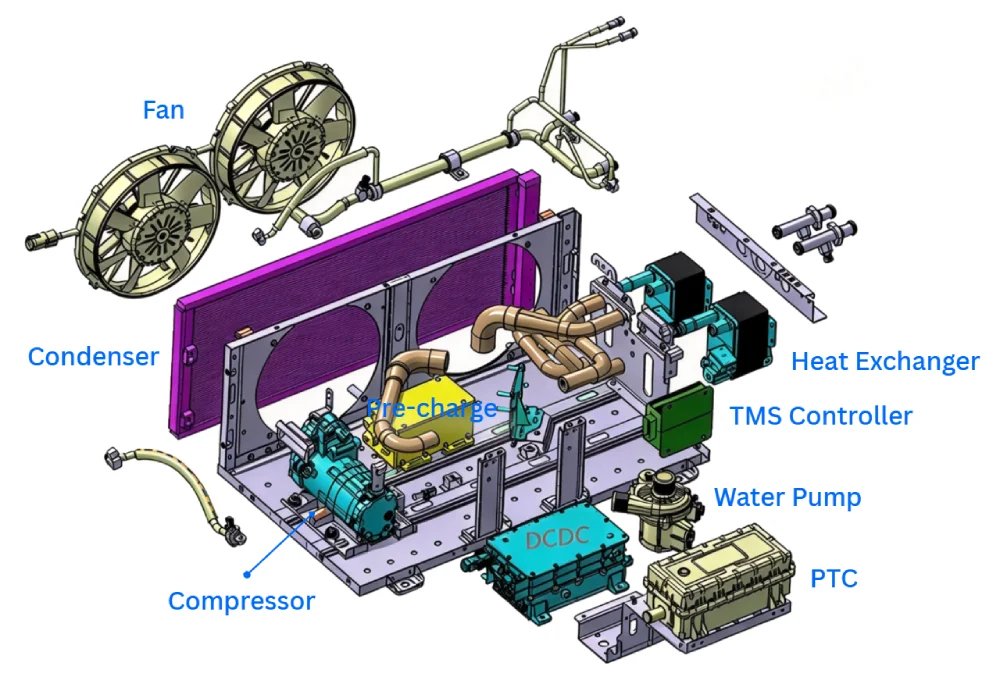
A coolant-heated PTC can be integrated into a liquid-cooled Battery Thermal Management System (BTMS) to provide this heating function.
A typical liquid-based BTMS may combine:
- Cooling circuit: Uses a refrigeration system and coolant circulation to remove heat from the battery.
- Heating function: Uses a PTC heater or another suitable heating source to warm the battery coolant when required.
- Coolant circulation: Distributes heating or cooling capacity through the battery thermal management circuit.
- Electronic control: Coordinates system operation according to battery temperature, operating conditions, and vehicle control requirements.
The PTC heater is one component within this architecture. The BTMS coordinates the heating and cooling functions to maintain suitable battery temperature conditions.
5. Jenwyn Tech BTMS Solutions for Commercial Electric Vehicles
For electric buses, trucks, delivery vehicles, and specialty EVs, battery thermal management needs to match the vehicle’s battery configuration and operating conditions.
Jenwyn Tech provides independent liquid-cooled Battery Thermal Management Systems (BTMS) for commercial electric vehicles. Our solutions integrate refrigeration, coolant circulation, electronic control, and optional heating functions within a modular system architecture.
Key solution features include:
- Cooling capacity options: Liquid-cooled BTMS products with cooling capacities from 2 kW to 12 kW in the roof-mounted product range.
- Flexible installation: Roof-mounted and skirt-mounted configurations for different vehicle layouts.
- Optional heating: PTC auxiliary heating can be configured for applicable BTMS models to support battery heating in low-temperature environments.
- CAN-based communication: The integrated control system communicates with the vehicle BMS for coordinated battery thermal management.
- Platform adaptation: Configurations can be discussed according to battery capacity, voltage range, installation space, and vehicle application.
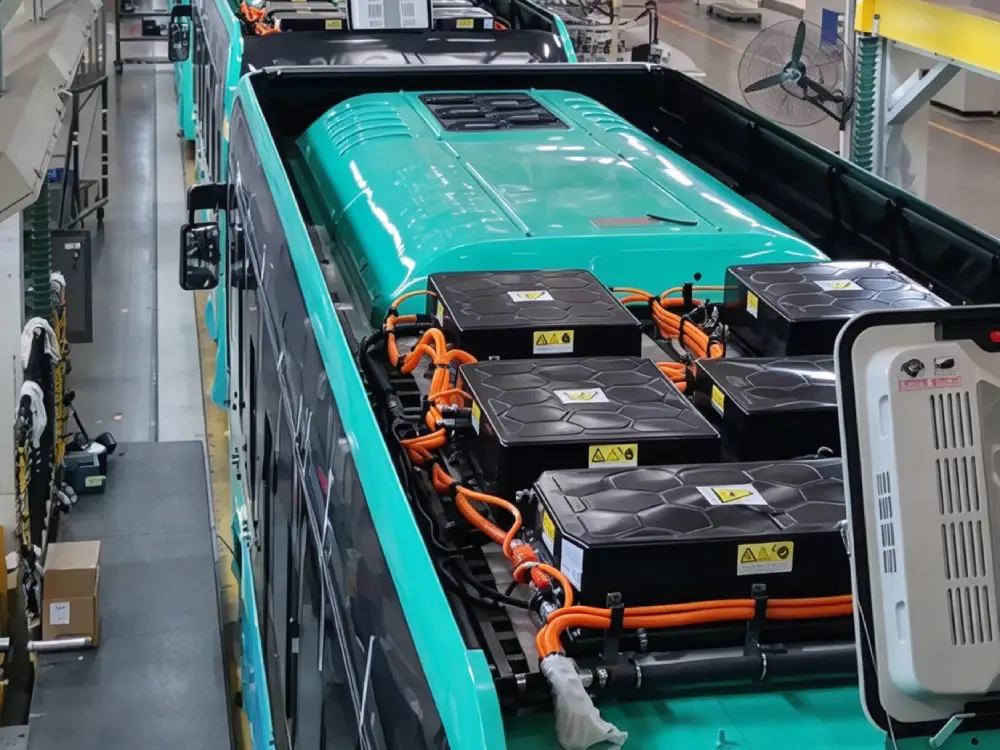
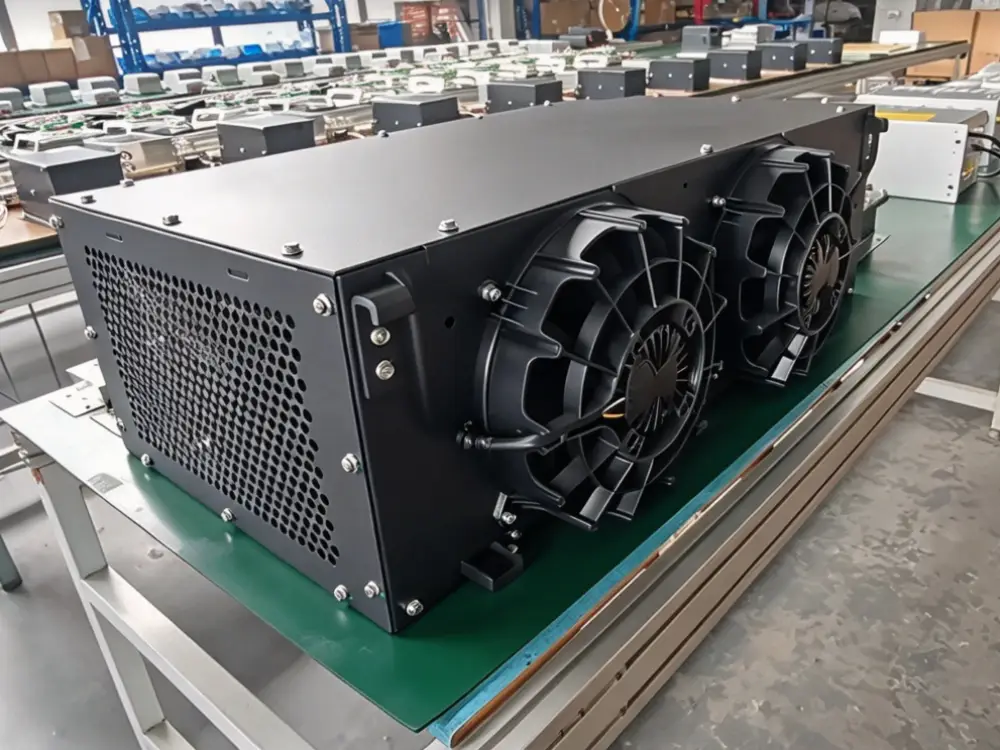
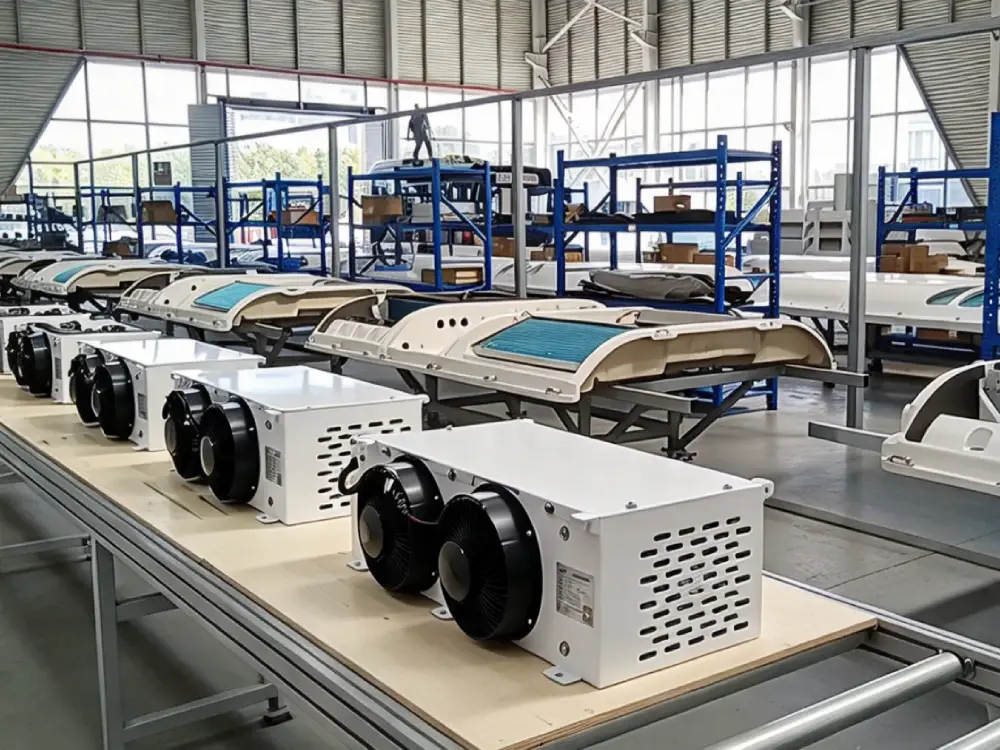
Whether your project requires battery cooling only or a combined heating and cooling configuration, selecting the appropriate BTMS depends on the battery requirements and the vehicle’s operating conditions.
Looking for a BTMS solution for your electric vehicle project?
Explore Jenwyn Tech’s Battery Thermal Management Systems (BTMS) for commercial electric buses, trucks, logistics vehicles, and specialty EVs.
Contact our team to discuss your battery thermal management requirements and system integration needs. You can get in touch with our team at contact@jenwyntech.com or fill in the form below.