
Can electric axles for heavy-duty trucks meet the demands of real-world port transport?
Port logistics is one of the applications where electric heavy-duty trucks are being put into intensive daily operation. Short transport distances, frequent stops and starts, heavy loads and high daily utilization all place specific demands on the vehicle’s powertrain.
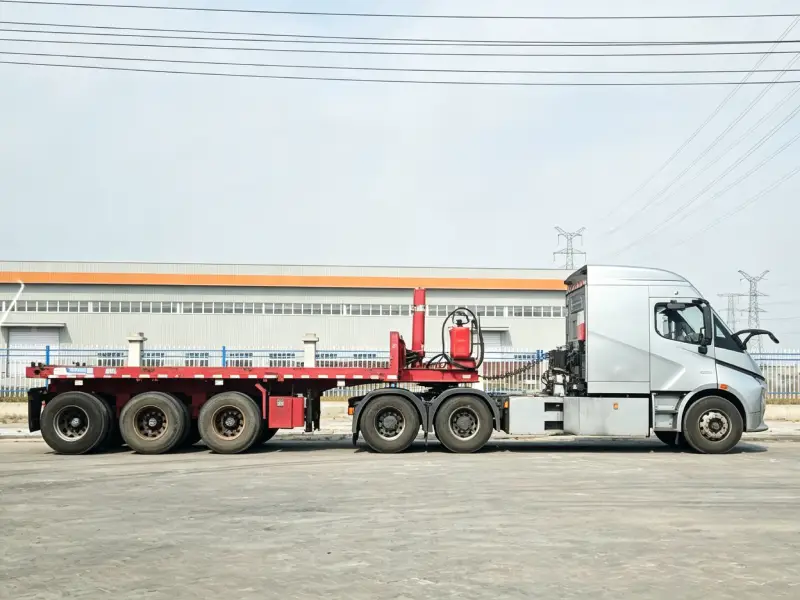
To understand how electric axles for heavy-duty trucks perform under these conditions, two electric heavy-duty trucks equipped with different electric axle specifications were examined across two typical operating conditions: short-distance closed-loop transport within a port and high-frequency short- to medium-distance transport around the port.
Case 1: Short-Distance Closed-Loop Port Transport
The first truck was equipped with a 500 kWh battery pack and two electric axles. Each electric motor had a rated power of 112 kW and a peak power of 246 kW.
The vehicle had been in operation for approximately 11 months, with accumulated mileage of around 8,000 km. It was mainly used for closed-loop transport within a domestic port, carrying standard-load containers and bulk cargo.
The average operating speed was only around 30 km/h, while the truck completed approximately 15–20 trips per day.
| Parameter | Operating Data |
|---|---|
| Battery capacity | 500 kWh |
| Electric axle configuration | Dual electric axles |
| Motor rated power | 112 kW per motor |
| Motor peak power | 246 kW per motor |
| Operating period | Approx. 11 months |
| Accumulated mileage | Approx. 8,000 km |
| Average operating speed | Approx. 30 km/h |
| Daily trips | 15–20 |
| Energy consumption | Approx. 1.4 kWh/km |
| Charging frequency | Once per day |
According to the driver, the truck responded quickly when starting from a standstill and maintained relatively low energy consumption throughout its daily operation.
Energy consumption was approximately 1.4 kWh/km, and the vehicle generally required only one charging session per day to complete its operating schedule.
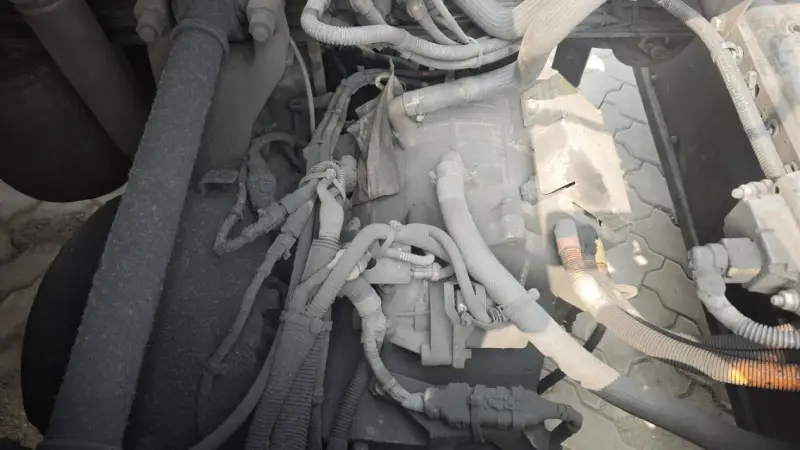
Reliability was also satisfactory. During approximately 11 months of operation, no quality issues were reported with the electric axle system or other major vehicle components, allowing the truck to maintain its regular operating schedule.
The operating conditions are well suited to the characteristics of electric axles for heavy-duty trucks. With frequent starts and stops at relatively low speeds, the vehicle needs strong low-speed torque and a quick response rather than sustained high-speed operation.
Compared with a conventional central-drive configuration, the electric axle also eliminates the need for several traditional drivetrain components, such as the transmission and driveshaft. This shortens the mechanical power transmission path, reducing mechanical losses and contributing to overall drivetrain efficiency.
Case 2: High-Frequency Short- and Medium-Distance Transport
The second truck was equipped with a 405 kWh battery pack and two electric axles. Each electric motor had a rated power of 138 kW and a peak power of 290 kW.
The vehicle had been in operation for approximately four months, but had already accumulated more than 30,000 km.
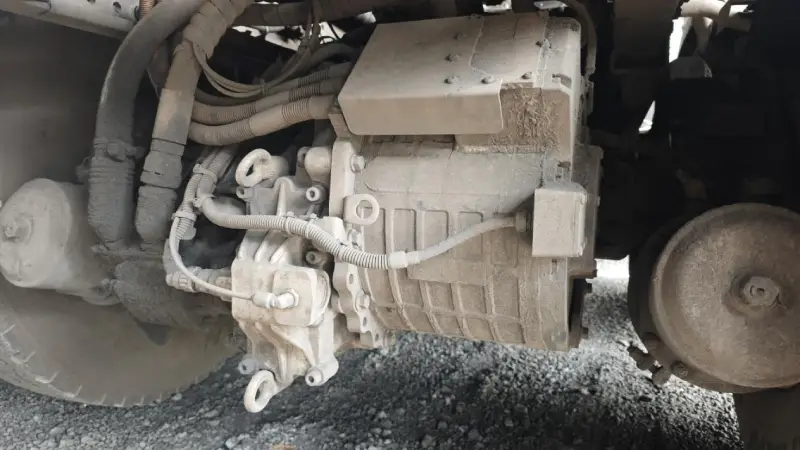
Its daily operation mainly covered routes within 5–30 km of the port, with occasional heavy-load trips extending to 60–70 km. Unlike the first truck, it operated both inside the port and on surrounding national roads.
| Parameter | Operating Data |
|---|---|
| Battery capacity | 405 kWh |
| Electric axle configuration | Dual electric axles |
| Motor rated power | 138 kW per motor |
| Motor peak power | 290 kW per motor |
| Operating period | Approx. 4 months |
| Accumulated mileage | 30,000+ km |
| Typical operating distance | 5–30 km |
| Occasional heavy-load distance | 60–70 km |
| Heavy-load energy consumption | Approx. 1.8 kWh/km |
| Operating environment | Port + public roads |
Under heavy-load operation, the truck’s energy consumption was approximately 1.8 kWh/km.
Although the vehicle had been in operation for only four months, its accumulated mileage had already exceeded 30,000 km. No major vehicle failures were reported during this period.
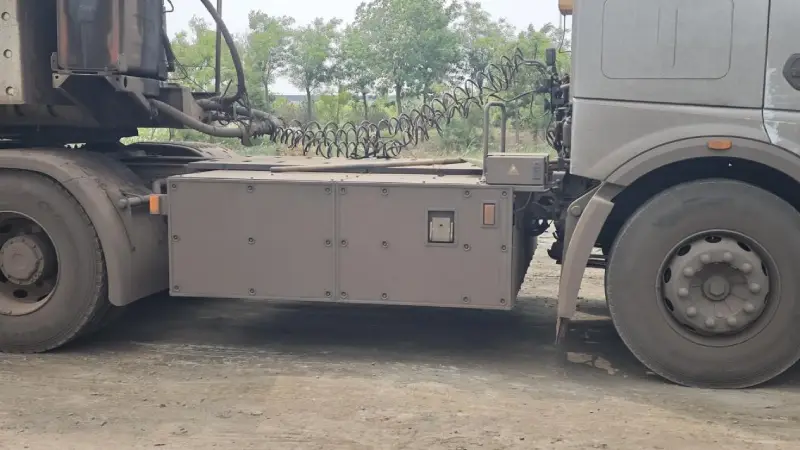
The driver also reported that brake pad wear was lower than on other vehicles in the same fleet using conventional central-drive systems.
Compared with the first operating case, this application placed greater demands on the electric powertrain. In addition to frequent low-speed operation inside the port, the truck also had to handle national-road driving, acceleration, overtaking and occasional longer-distance heavy-load transport.
Electric Axles for Heavy-Duty Trucks in Stop-and-Go Operation
The two operating cases show why electric axles for heavy-duty trucks can be well matched to port transport.
Inside the port, trucks typically operate at relatively low speeds but start and stop repeatedly throughout the day. In the first case, the vehicle averaged only around 30 km/h while completing 15–20 trips per day. Under these conditions, low-speed torque and response are particularly important.
An electric motor can provide high torque from low speed, allowing the truck to respond quickly when launching with a heavy load. The electric axle integrates the motor and axle drive system into a more compact drivetrain, avoiding the conventional gear-shifting process of a multi-speed transmission.
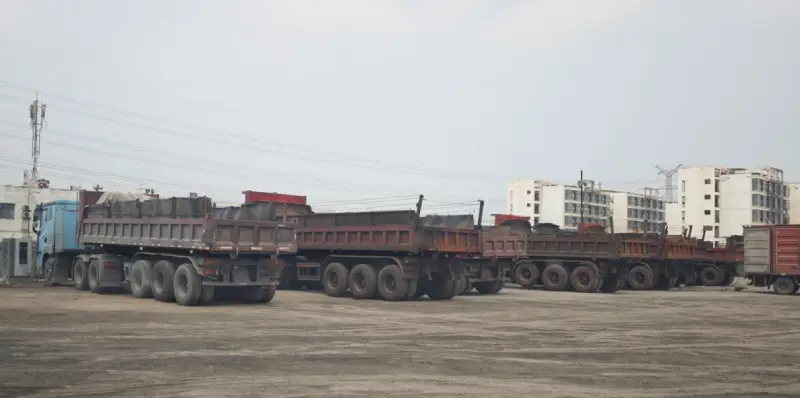
For the second truck, the wider operating range created additional requirements. When driving on national roads, the vehicle needed stronger acceleration performance for overtaking and greater power capability for uphill sections. The 138 kW rated / 290 kW peak motor configuration provided a higher power level than the first vehicle, reflecting the different operating requirements.
Regenerative Braking and Brake Wear
Frequent acceleration and deceleration also make regenerative braking particularly relevant to port transport.
During deceleration, the traction motor can operate as a generator and recover part of the vehicle’s kinetic energy back into the battery. This allows some of the energy used during acceleration to be recovered during subsequent braking events. For a truck operating through 15–20 cycles per day, these repeated braking events provide regular opportunities for energy recovery.
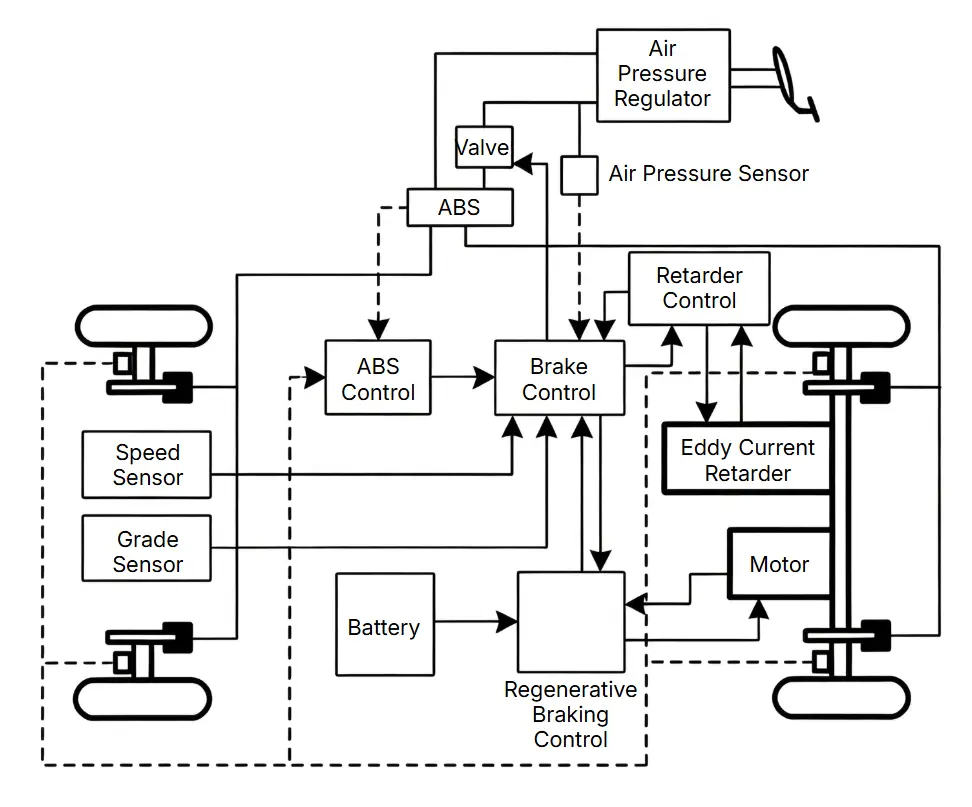
Regenerative braking can also reduce the workload on the friction brakes. In the second operating case, the driver reported less brake pad wear compared with other central-drive vehicles operating in the same fleet.
For vehicles operating on downhill sections, regenerative braking can additionally help control vehicle speed while reducing reliance on the friction braking system.
The actual energy recovery and brake wear performance depend on the vehicle configuration, driving conditions and regenerative braking calibration.
Electric Axle Packaging and Battery Layout
The packaging characteristics of electric axles for heavy-duty trucks can also affect the overall vehicle layout.
Compared with a conventional central-drive system, an electric axle reduces the need for drivetrain components such as a transmission and driveshaft along the chassis. This creates additional flexibility for battery installation.
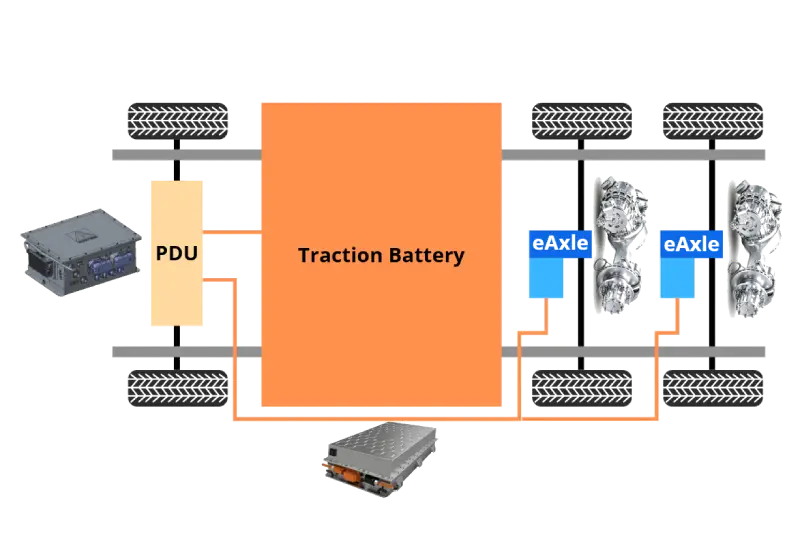
For electric heavy-duty trucks, battery position has a direct influence on the vehicle’s center of gravity and overall weight distribution. A lower battery position can help reduce the center of gravity, which is beneficial for heavy-load operation and frequent turning.
This is particularly relevant in port applications, where trucks may repeatedly maneuver and turn while carrying substantial loads.
Comparing the Two Operating Cases
The two trucks used different battery capacities and electric axle specifications and operated under different conditions.
| Parameter | Case 1 | Case 2 |
|---|---|---|
| Battery capacity | 500 kWh | 405 kWh |
| Electric axle configuration | Dual electric axles | Dual electric axles |
| Motor rated power | 112 kW/motor | 138 kW/motor |
| Motor peak power | 246 kW/motor | 290 kW/motor |
| Operating period | Approx. 11 months | Approx. 4 months |
| Accumulated mileage | Approx. 8,000 km | 30,000+ km |
| Typical operation | Closed-loop port transport | Port + public roads |
| Energy consumption | Approx. 1.4 kWh/km | Approx. 1.8 kWh/km under heavy load |
| Reported major failures | None reported | None reported |
| Brake wear observation | — | Lower than comparable central-drive vehicles |
The energy consumption figures should not be treated as a direct comparison between the two vehicles. Their battery capacities, motor specifications, loads, routes and operating patterns were different.
What the two cases provide is a practical reference for how electric axle-equipped heavy-duty trucks perform under different port-related operating conditions.
The first case demonstrates the suitability of the system for low-speed, high-frequency closed-loop transport, while the second reflects a more demanding combination of port operation and short- to medium-distance heavy-load transport.
Electric Axles for Heavy-Duty Trucks from Jenwyn Tech
At Jenwyn Tech, we provide electric axles for heavy-duty trucks and commercial electric vehicles, with configurations matched to different vehicle platforms and operating requirements.
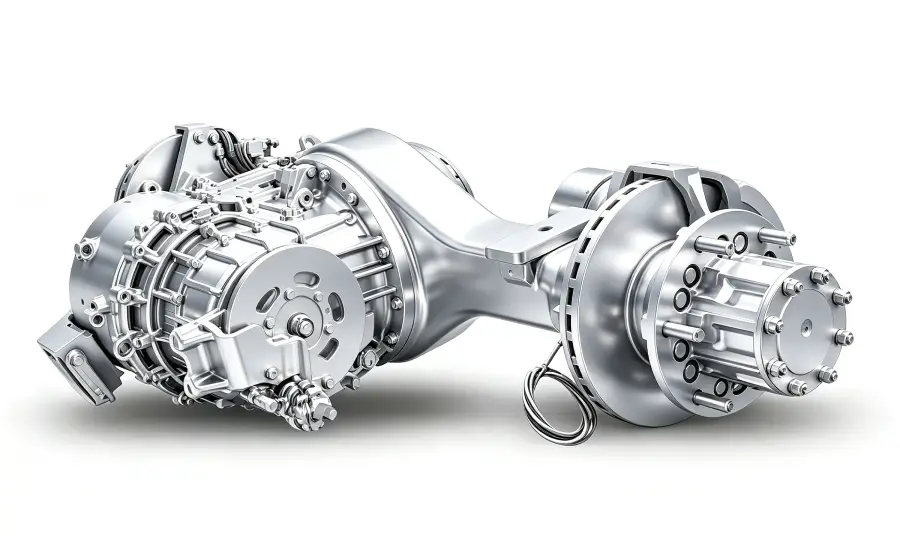
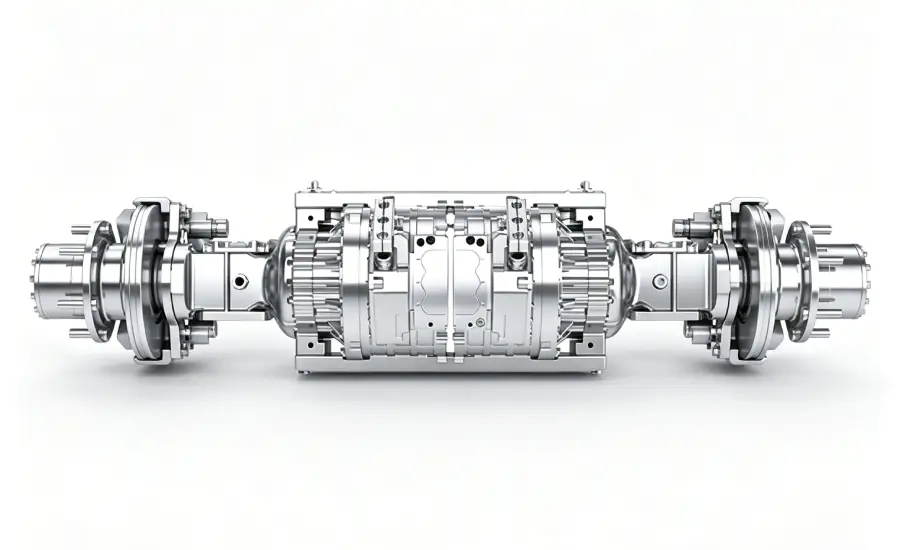
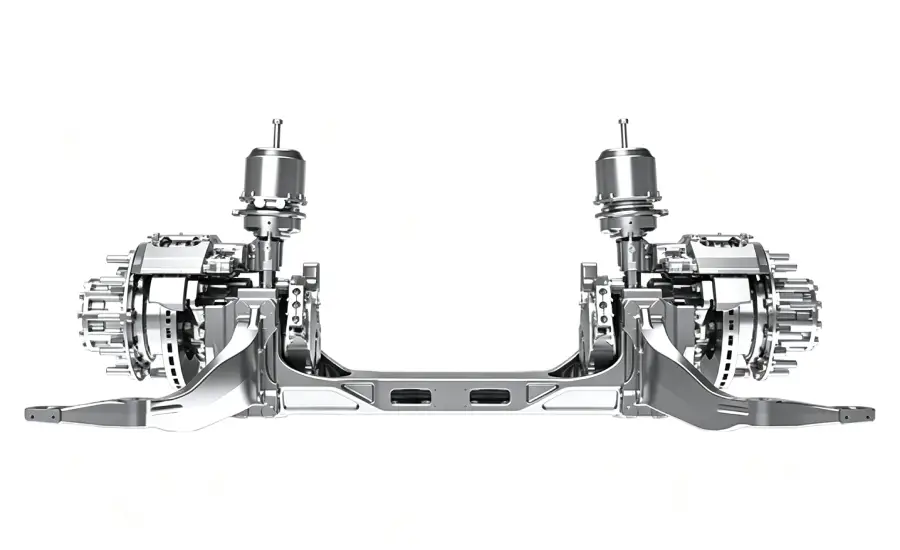
Our electric axle systems can be specified according to key requirements such as axle load, motor power and torque, vehicle speed, gradeability, battery voltage, regenerative braking and chassis packaging.

For OEMs, commercial EV manufacturers and system integrators, we support the selection and integration of electric axle systems for heavy-duty electric vehicle applications.
Explore ePowertrain Solutions for HCVs →
Discover electric powertrain solutions designed for heavy commercial vehicles and demanding operating conditions.
Explore Electric Axle Systems for Commercial Vehicles →
Learn more about our electric axle systems for heavy-duty trucks and other commercial EV applications.
Have a specific vehicle or electric axle requirement?
Email us at contact@jenwyntech.com or fill out the inquiry form below to discuss your project requirements.