
Battery placement is becoming an increasingly important consideration in electric heavy truck development. Different electric heavy truck battery layouts can affect vehicle range, payload capacity, handling, charging or battery-swapping options, ground clearance, and overall vehicle packaging.
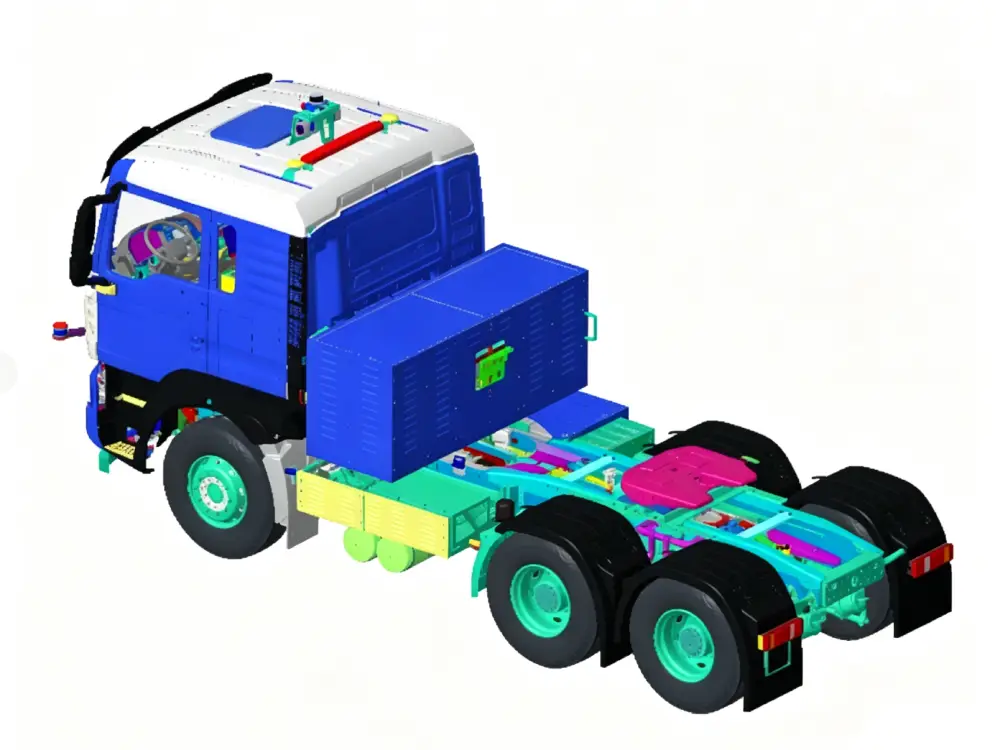
Three battery configurations are currently commonly used for electric heavy trucks:
Each layout has its own advantages and limitations. The right choice depends largely on the vehicle’s operating environment and duty cycle.
How Electric Heavy Truck Battery Layouts Affect Vehicle Design
Although battery layouts primarily describe where the battery system is installed, the choice can have a direct impact on several vehicle-level requirements.
| Consideration | Why Battery Layout Matters |
|---|---|
| Range | Determines how much battery capacity can be packaged on the vehicle |
| Vehicle handling | Battery position affects the vehicle’s center of gravity |
| Payload | Battery packaging influences available vehicle weight and cargo space |
| Ground clearance | Important for vehicles operating on rough or uneven roads |
| Battery protection | Particularly important in mining, construction, and other demanding applications |
| Energy replenishment | Battery location can influence compatibility with battery-swapping solutions |
| Vehicle packaging | Affects chassis, cab, wheelbase, and cargo space |
For this reason, battery layout should be considered together with the vehicle’s intended application rather than as an isolated packaging decision.
1. Rear-Mounted Electric Heavy Truck Battery Layouts
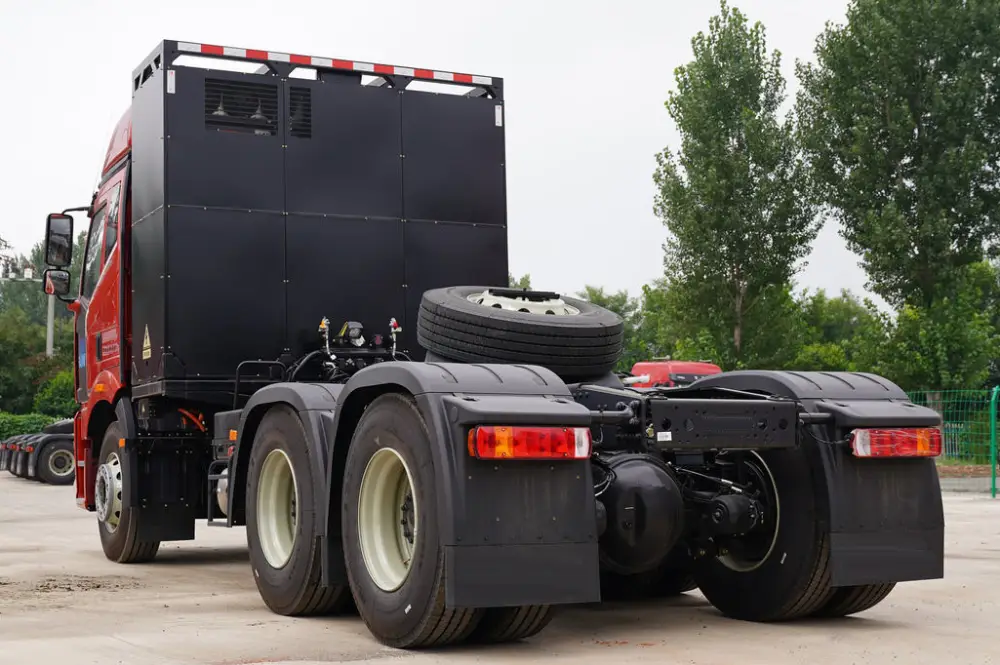
The rear-mounted configuration places the battery system behind the cab. It has been one of the most widely used layouts for electric heavy trucks, particularly in applications where battery swapping and ground clearance are important.
Key Advantages
The main advantage is its compatibility with established battery-swapping applications. Vehicles can be designed for both charging and battery swapping, which can be particularly useful for operations with high vehicle utilization requirements.
The rear-mounted configuration also provides good ground clearance and helps protect the battery from road impacts. This makes it well suited to applications such as mining, construction, aggregate transportation, and urban construction operations.
Rear-mounted battery vehicles also currently have relatively good circulation in the used-vehicle market.
Key Limitations
The main limitation is the relatively high battery position.
A higher battery position raises the vehicle’s center of gravity, which can affect vehicle behavior during cornering and braking. The rear-mounted battery can also obstruct rearward visibility and occupy space behind the cab.
In addition, the packaging configuration can increase wheelbase and turning radius. Battery capacity may also be more limited compared with configurations that make greater use of underfloor space.
Typical Applications
Rear-mounted battery layouts are particularly suitable for:
- Ports
- Mining operations
- Steel plants
- Urban construction and short-haul heavy-load operations
- Applications requiring convenient battery swapping
2. Rear-Mounted + Underfloor Electric Heavy Truck Battery Layouts
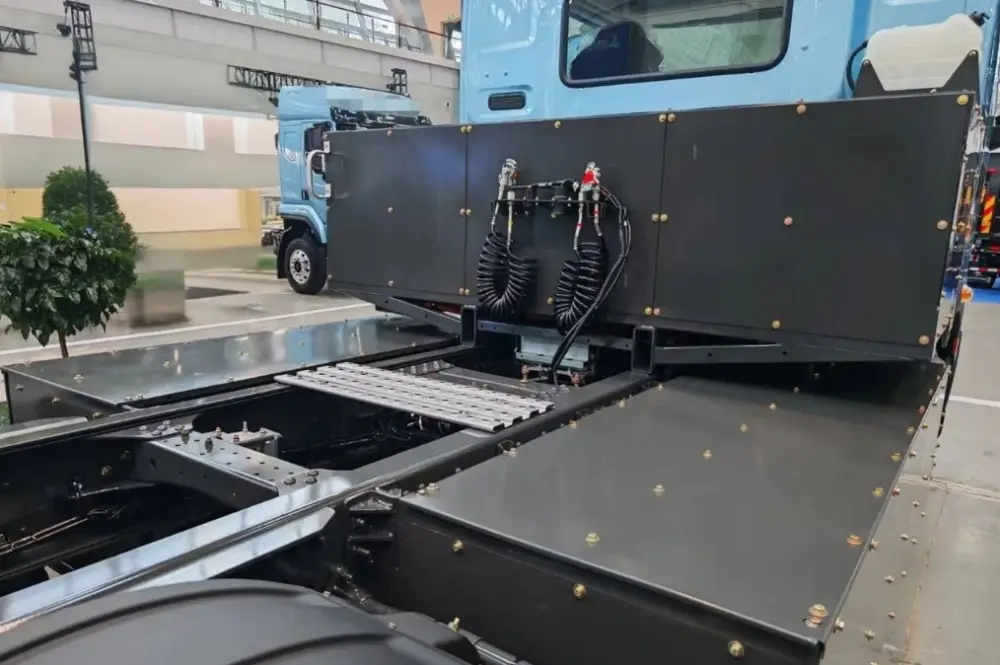
The combined rear-mounted and underfloor configuration uses underfloor battery space to increase battery capacity while retaining additional battery capacity behind the cab. Compared with a rear-only configuration, this layout provides more flexibility for applications requiring both greater battery capacity and a lower center of gravity.
Key Advantages
The main benefit is the ability to increase the vehicle’s total battery capacity while using the underfloor space available within the chassis.
For operating environments where both range and vehicle stability are important, this configuration can provide a compromise between rear-mounted and fully underfloor battery layouts.
Key Limitations
The main challenge is system integration.
Using both rear-mounted and underfloor battery systems makes the vehicle architecture more complex and increases the requirements for vehicle-level integration. It can also increase overall vehicle cost.
Therefore, the additional battery capacity needs to be evaluated against the actual operating requirements of the vehicle.
Typical Applications
This configuration can be considered for applications with more complex operating conditions, particularly mountainous areas where vehicles may require both a lower center of gravity and greater battery capacity for longer operating distances.
3. Underfloor Electric Heavy Truck Battery Layouts
Underfloor battery placement positions the battery system along the chassis, such as on both sides of the frame or beneath the vehicle.
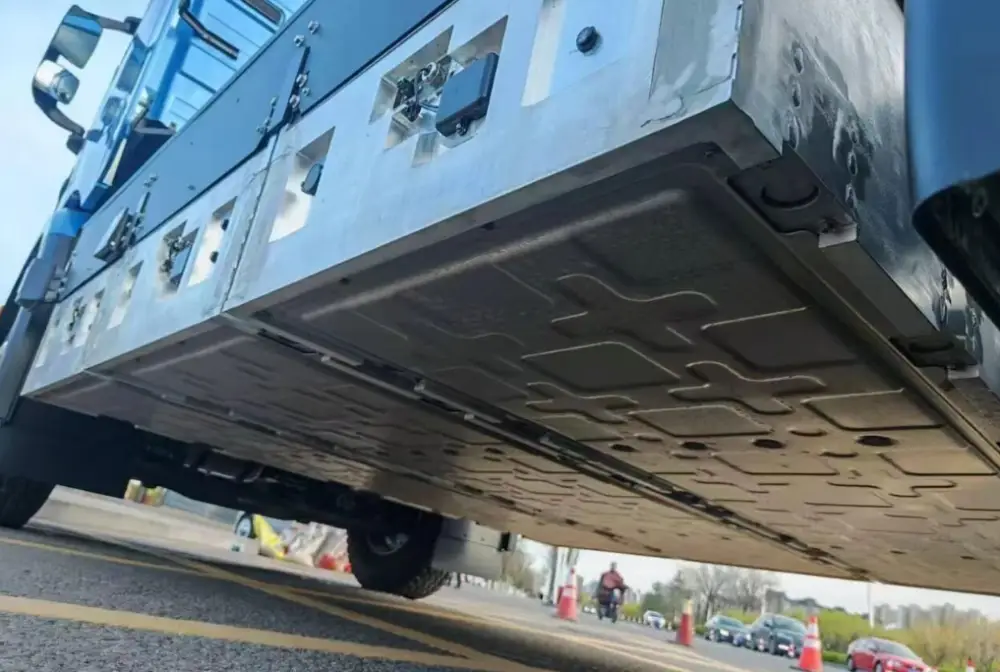
Among the three electric heavy truck battery layouts, the underfloor configuration is increasingly regarded as an important direction for applications requiring greater range, improved handling, and better vehicle packaging.
Key Advantages
The most significant advantage is the lower center of gravity. A lower battery position can improve vehicle stability during cornering and braking, which is particularly relevant for long-distance driving. Underfloor battery packaging can also provide advantages in:
- Vehicle energy efficiency
- Vehicle curb weight optimization
- Available cargo space
- Battery capacity
- Driving stability
These characteristics make the configuration particularly attractive for long-haul and trunk-line transportation. Large-capacity underfloor battery vehicles are already being developed, giving electric heavy trucks greater potential for long-distance operation.
Key Limitations
The main consideration is road condition.
Because the battery is positioned underneath the vehicle, ground clearance and battery protection become more important. The suitability of an underfloor configuration therefore depends strongly on the road conditions and operating environment.
For vehicles regularly operating on rough roads, mining sites, construction areas, or other demanding terrain, the underfloor battery position requires careful vehicle-level evaluation.
Typical Applications
Underfloor battery layouts are particularly suitable for:
- Long-haul transportation
- Trunk-line logistics
- Applications with high range requirements
- Applications where handling and cargo efficiency are important
Comparing Electric Heavy Truck Battery Layouts by Application
There is no single battery layout that is optimal for every electric heavy truck.
| Battery Layout | Main Advantages | Main Limitations | Suitable Applications |
|---|---|---|---|
| Rear-mounted | Battery swapping compatibility, good ground clearance, good battery protection | Higher center of gravity, limited packaging space for battery capacity | Ports, mines, steel plants, urban construction |
| Rear-mounted + underfloor | Higher battery capacity, lower center of gravity than rear-only layouts | More complex integration and higher cost | Mountainous and mixed operating conditions |
| Underfloor | Lower center of gravity, greater battery capacity, better cargo-space utilization | Greater requirements for ground clearance and road conditions | Long-haul and trunk-line transportation |
The selection should therefore start with the vehicle’s duty cycle, road conditions, range requirements, payload requirements, and energy replenishment strategy.
Choosing Electric Heavy Truck Battery Layouts by Duty Cycle
The three electric heavy truck battery layouts can be broadly matched to different operating requirements.
Short-Haul Heavy-Load Operations
For ports, mines, steel plants, and urban construction applications, rear-mounted batteries remain highly practical where ground clearance, battery protection, and battery swapping are important.
Mountainous and Mixed Operations
For applications involving mountainous roads and longer operating distances, a rear-mounted + underfloor configuration can provide additional battery capacity while also lowering the battery position compared with a rear-only layout.
However, the additional system cost and integration complexity should be evaluated against the actual operating requirements.
Long-Haul Transportation
For long-haul and trunk-line applications, underfloor battery layouts offer clear packaging advantages for high-capacity battery systems while lowering the vehicle’s center of gravity.
As large-capacity underfloor battery systems continue to be adopted, this configuration is becoming increasingly suitable for long-distance electric heavy truck applications.
Jenwyn Tech Electric Heavy Truck Solutions
If you are developing an electric heavy truck and evaluating battery packaging, chassis architecture, or e-powertrain configuration, Jenwyn Tech provides electric truck chassis and electric heavy truck powertrain solutions for different vehicle applications.
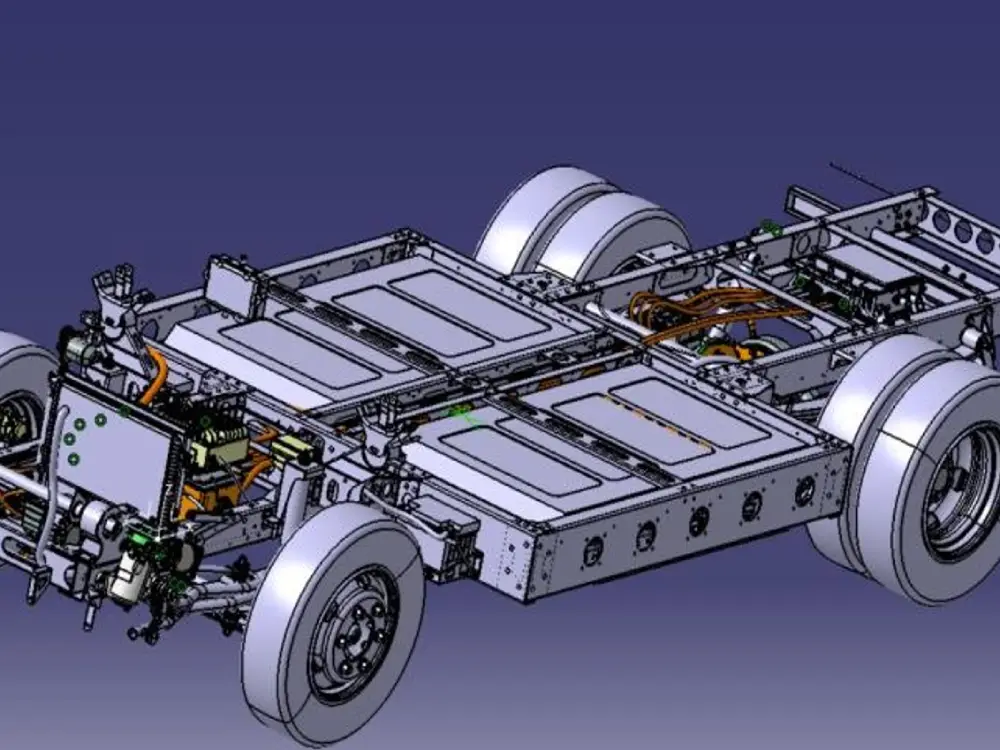
Our engineering team can support system selection and technical integration based on your vehicle requirements.
Email us at contact@jenwyntech.com or fill out the inquiry form below to discuss your project requirements.