
When discussing electric vehicle charging, attention is often focused on DC fast-charging power, charging infrastructure and battery charging rates. However, an important component inside the vehicle plays a critical role during AC charging: the on-board charger, commonly known as an OBC.
An on-board charger serves as a key energy interface between an electric vehicle and the electrical grid. During AC charging, it converts alternating current (AC) supplied by the external power source into the direct current (DC) required by the vehicle’s high-voltage battery.
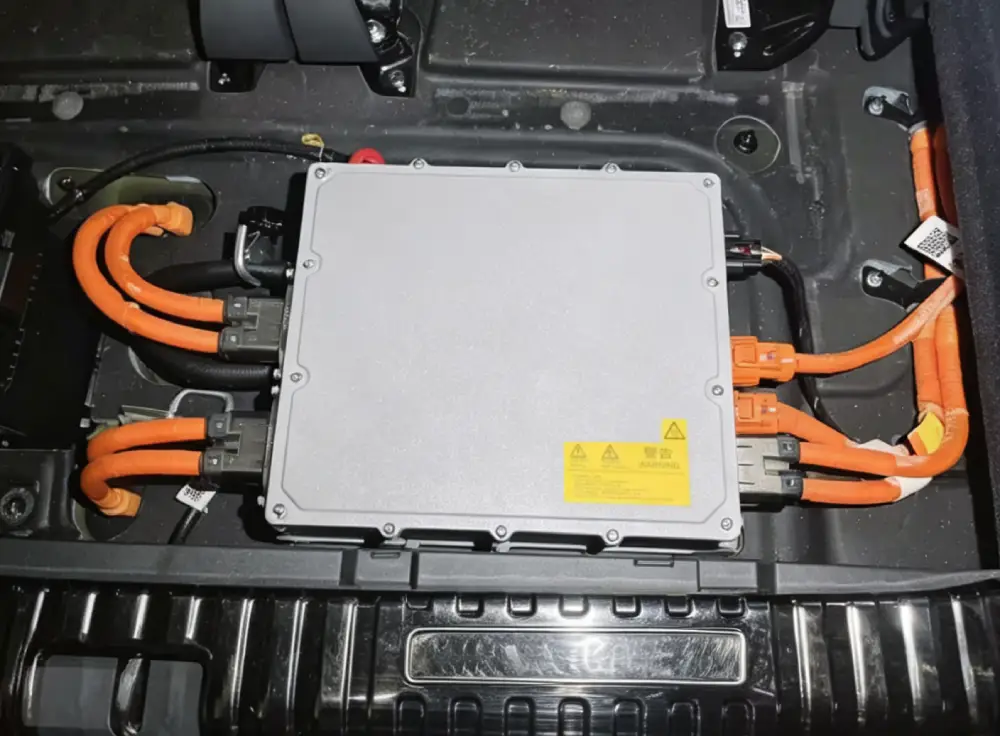
While its primary function may sound straightforward, an EV on-board charger must operate within a compact automotive package while meeting demanding requirements for efficiency, power density, voltage compatibility, electromagnetic compatibility and long-term reliability.
For this reason, an on-board charger is far more than a conventional AC/DC power converter.
What Does an On-Board Charger Do?
The basic charging path can be simplified as: AC Grid → On-Board Charger → Regulated DC Power → High-Voltage Battery.
During AC charging, the OBC receives AC power through the vehicle’s charging inlet and converts it into DC power that can be accepted by the battery.
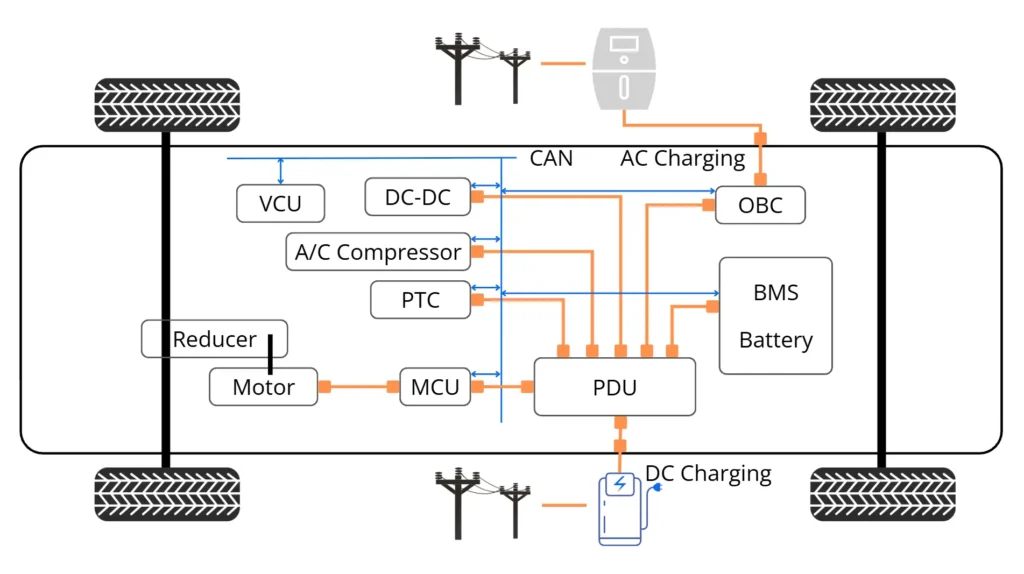
Depending on the system architecture, an on-board charger typically performs several functions:
- AC-to-DC power conversion – converts the incoming AC power into DC power.
- Power factor correction (PFC) – controls the input current to improve power factor and reduce unwanted harmonic currents.
- Voltage and current regulation – adjusts the DC output according to the battery’s operating conditions and charging requirements.
- Electrical isolation – provides the required isolation between the AC input and the battery-side circuit where applicable.
- Protection and control – monitors electrical and thermal conditions and coordinates charging operation with the vehicle and battery management system.
The OBC therefore acts as an important interface between the external electrical grid and the vehicle’s high-voltage system.
What Are the Main Design Requirements for an OBC?
An on-board charger has to satisfy requirements on both the input and output sides of the power conversion process, while also operating reliably inside the vehicle.
1. AC Input Compatibility
AC charging systems vary between markets. Typical nominal supplies include:
| Region | Typical Nominal Voltage | Frequency |
|---|---|---|
| North America | 120 / 240 V | 60 Hz |
| Europe | 230 V | 50 Hz |
| China | 220 V | 50 Hz |
| Japan | 100 V | 50 / 60 Hz |
For vehicles designed for different markets, an OBC may therefore need a relatively wide AC input range. Depending on the product and application, ranges around 85–260 VAC can be used.
The input stage must also handle voltage variations and disturbances while maintaining stable charging operation. But supporting different AC sources is only one side of the design. The OBC must also deliver the correct DC output for the vehicle’s battery.
2. Battery Voltage and Charging Range
The OBC must regulate its output across the battery’s operating voltage range rather than provide one fixed DC voltage.
Earlier EV platforms commonly used 400 V-class battery systems, with some OBC designs covering operating ranges of roughly 250–450 V. Higher-voltage vehicle architectures are increasingly moving toward 800 V-class systems.
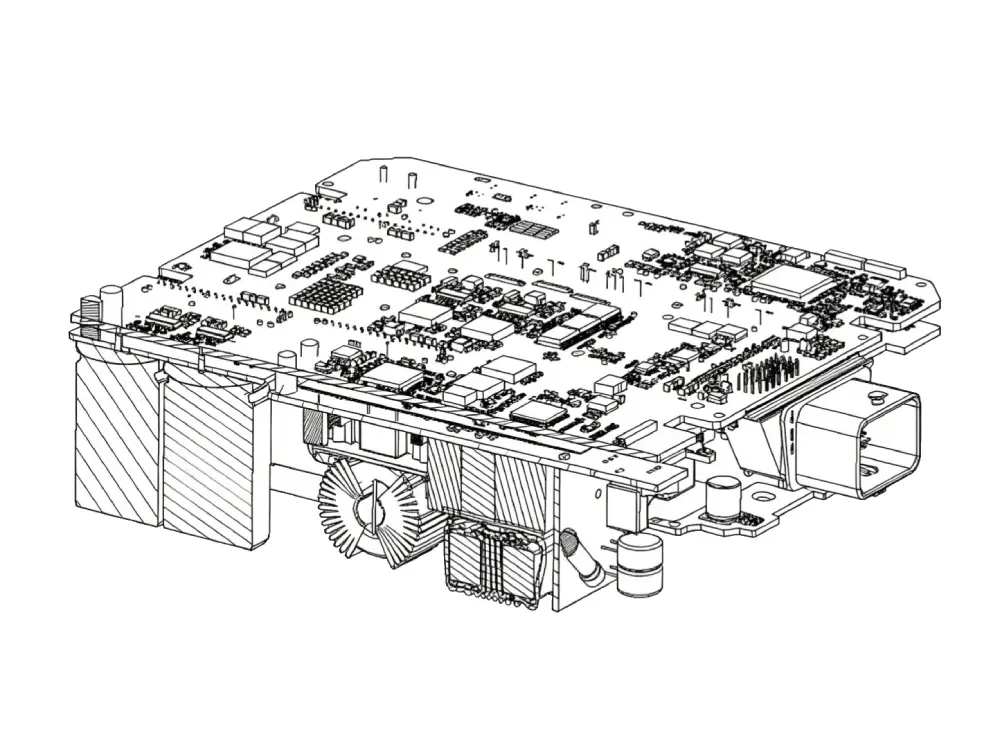
A wider or higher output voltage range affects the selection of power semiconductors, conversion topology, magnetic components, insulation, thermal management and control strategy.
The required charging power is another important factor. Higher charging power generally increases current, switching losses and thermal requirements, making efficiency and cooling increasingly important in OBC design.
3. Power Quality at the AC Interface
An OBC is a power electronic load connected to the AC charging supply. Its input current therefore needs to be controlled to maintain appropriate power quality.
Power factor correction (PFC) shapes the input current so that it follows the AC voltage waveform more closely. This improves the power factor and helps reduce harmonic current distortion.
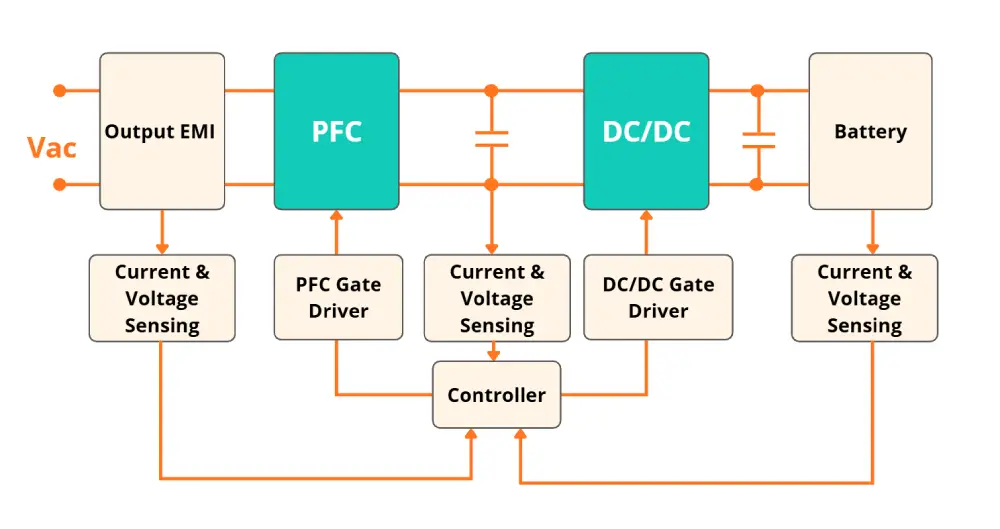
Depending on the application and applicable standards, OBC designers may target a power factor ≥0.99 and THD below 5%. Common PFC approaches include boost, interleaved and bridgeless topologies, with totem-pole PFC increasingly used in higher-efficiency designs.
4. Automotive Operating Conditions
An on-board charger must operate inside a vehicle rather than in a controlled stationary environment. Depending on the vehicle and installation location, the OBC may be exposed to:
- Low and high temperatures
- Repeated thermal cycling
- Vibration and mechanical shock
- Humidity and moisture
- Electrical transients
- Long-term electrical and thermal stress
Automotive power electronics may need to operate across temperature ranges from approximately -40°C to +105°C, although the actual requirement depends on the application, installation location and component specifications. These operating conditions place additional requirements on the OBC’s:
- Power semiconductor devices
- Capacitors and magnetic components
- Cooling system
- PCB and electrical layout
- Mechanical structure
- Monitoring and protection systems
The OBC must maintain reliable electrical and thermal performance throughout the expected service life of the vehicle. For this reason, designing an automotive on-board charger involves much more than achieving a required charging power level.
Our EV On-Board Charger Solutions
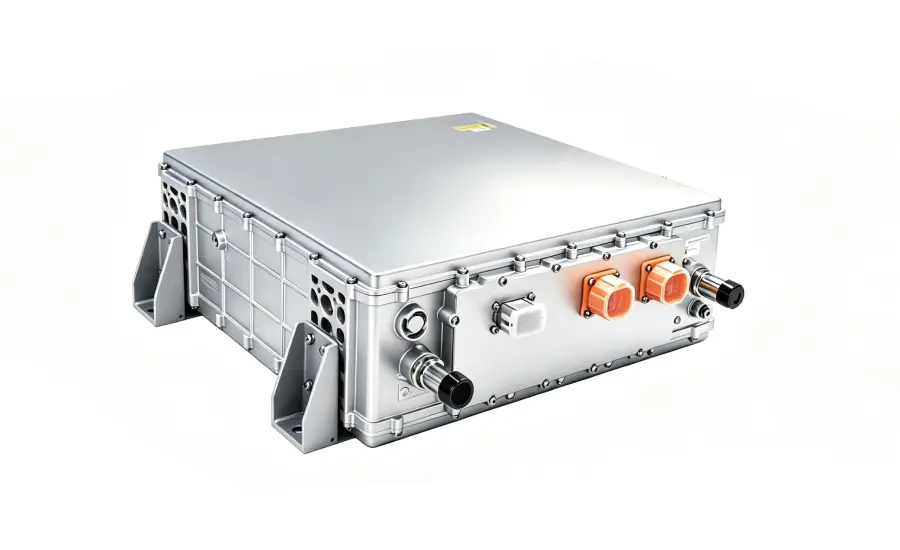
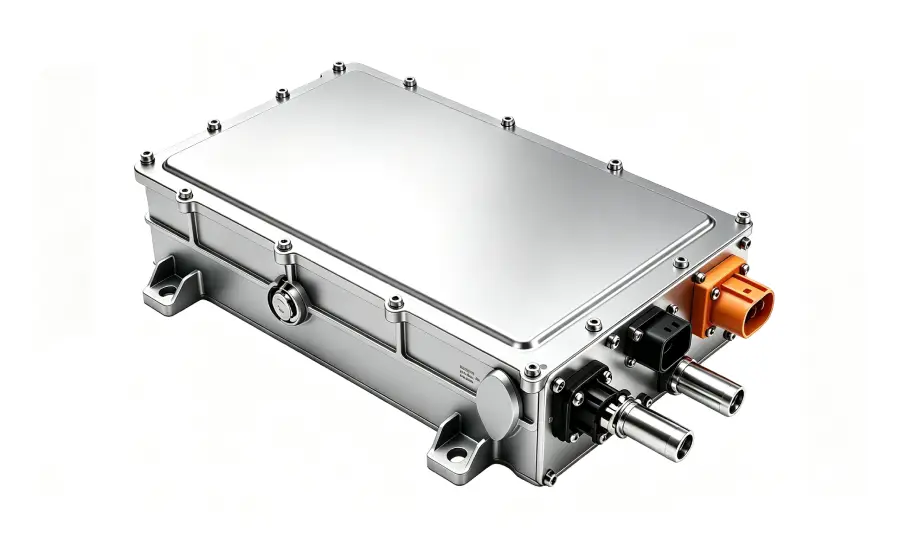
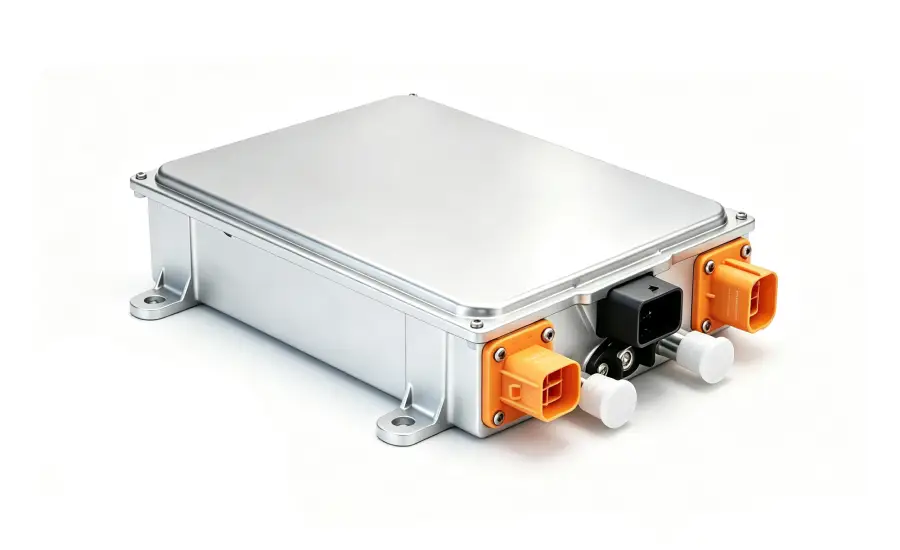
Jenwyn Tech provides mature on-board charger solutions for commercial electric vehicle applications.
Our OBC products have been developed for production applications and have undergone a range of testing and validation processes. They are already in mass production and have been supplied for volume vehicle applications.

Our on-board chargers are designed to support efficient AC charging, with a power factor of ≥0.99 in applicable operating conditions.
Depending on the vehicle platform and application requirements, OBC selection can also involve factors such as charging power, battery voltage, AC input requirements and cooling configuration.
Integrated OBC + DC/DC Solutions
In addition to standalone on-board chargers, we also provide integrated OBC + DC/DC converter solutions.
By combining the on-board charger and DC/DC converter into a single unit, the system can help simplify vehicle-level packaging and integration while reducing the number of separate power electronics components.
Our integrated solutions are available for different vehicle electrical architectures and application requirements.
Looking for an EV On-Board Charger?
If you are looking for an on-board charger solution for an electric vehicle project, share your vehicle and system requirements with our team. Email us at contact@jenwyntech.com or fill out the form below to discuss your application.