
The on-board charger (OBC) is undergoing a fundamental shift in vehicle electrical architectures. Rather than serving purely as a one-way battery charger, the modern bidirectional on-board charger is evolving into a bidirectional energy interface between the electric vehicle and the external power grid.
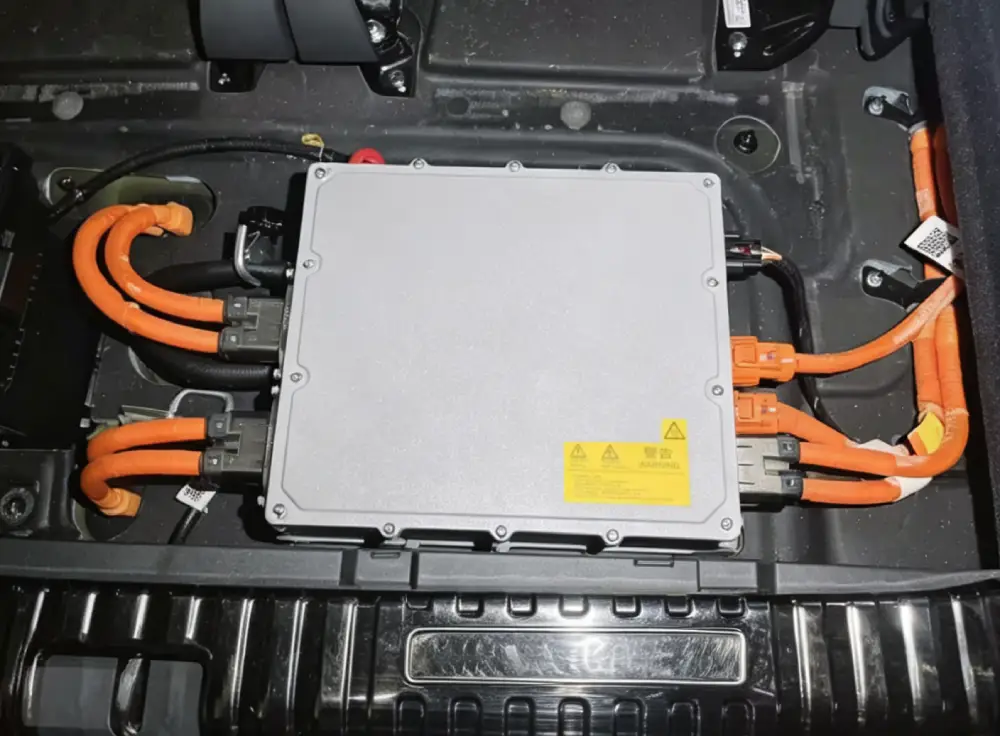
This evolution expands vehicle utility through Vehicle-to-Grid (V2G) and Vehicle-to-Load (V2L) capabilities while driving deeper hardware integration across vehicle power electronics.
1. Vehicle-to-Grid (V2G): Electric Vehicles as Mobile Energy Storage
V2G technology enables an electric vehicle to discharge energy back to the grid during peak demand periods and recharge during off-peak hours. By providing peak shaving and valley filling, this bidirectional exchange supports grid stability and facilitates the absorption of renewable energy.
From an engineering perspective, V2G requires a bidirectional on-board charger capable of reverse power flow. This introduces specific architectural and control demands:
- PFC Stage: Must transition from conventional rectification mode to inversion mode, converting DC power from the high-voltage battery into AC power that complies with grid standards.
- DC/DC Stage: Must support bidirectional power transfer between the high-voltage DC bus and the traction battery.
- Control System: Must execute precise grid synchronization—matching frequency, phase, and voltage amplitude—while incorporating safety functions such as anti-islanding protection.
From a circuit topology standpoint, Dual Active Bridge (DAB) and resonant LLC topologies both support bidirectional power flow, making them primary architectures for the secondary isolated DC/DC stage. On the front end, the totem-pole PFC topology utilizes a symmetrical half-bridge arrangement, allowing smooth transitions between rectification and inversion modes through modified control algorithms.
2. Vehicle-to-Load (V2L): High-Capacity Mobile Power
While V2G addresses utility-scale power balance, Vehicle-to-Load (V2L) directly serves user-side power needs. V2L allows the vehicle to operate as a high-capacity AC power source, supplying electricity for household appliances, worksite tools, camping equipment, or emergency vehicle-to-vehicle charging.
The technical architecture required for a V2L-capable bidirectional on-board charger is similar to that of V2G. However, because V2L operates in off-grid (standalone) mode, it does not require strict grid phase synchronization. This flexibility lowers overall control implementation complexity compared to full grid-tied V2G systems.
3. Power Electronics Integration: The Path Toward Combined Systems
Alongside bidirectional operation, on-board chargers are undergoing significant physical and functional integration with other high-voltage power electronic assemblies:
Combined Charging Unit (CCU)
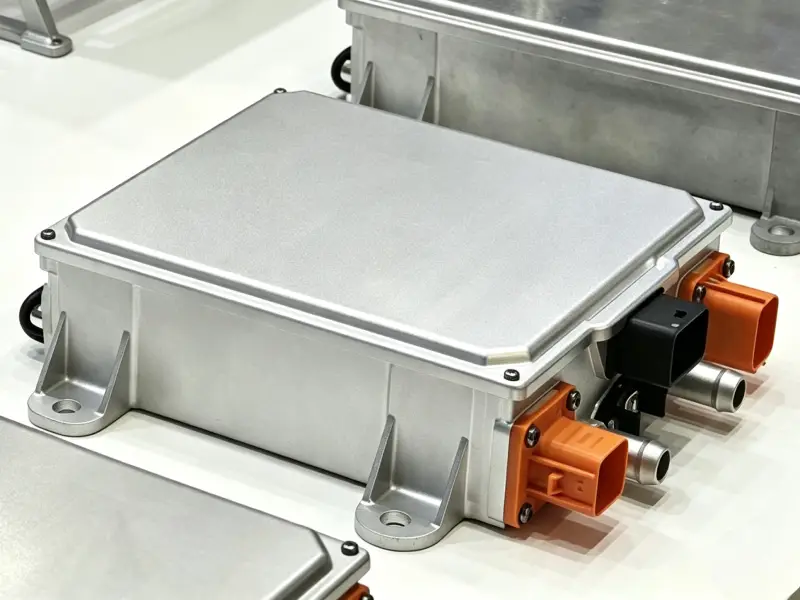
The most common production architecture is the Combined Charging Unit (CCU). A CCU packages the bidirectional on-board charger and the high-to-low voltage (HV-to-LV) DC/DC converter into a single system.
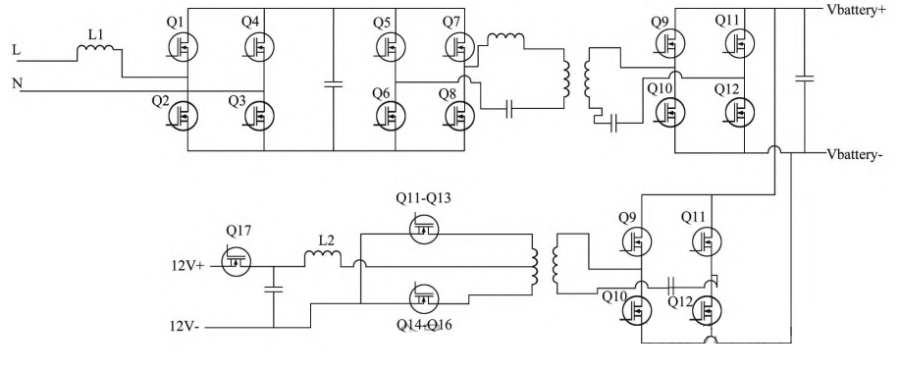
By sharing thermal cooling circuits, digital control boards, and structural enclosures, the CCU reduces packaging volume, eliminates external high-voltage cabling, and lowers component costs.
OBC and Electric Drive Integration
A more compact approach integrates the bidirectional on-board charger directly with the traction motor inverter:
- Hardware Sharing: In charging mode, the system reuses the inverter’s power semiconductor switches and the stator windings of the traction motor to form part of the PFC boost circuit.
- Engineering Trade-Offs: While this approach significantly reduces the total count of dedicated power switches, it introduces high software and control complexity. Additionally, running charging current through the motor windings generates torque ripple, which requires specialized motor winding designs to suppress.
Summary
The transition toward the bidirectional on-board charger redefines the role of on-board power electronics. By combining bidirectional topologies like totem-pole PFC and DAB stages with higher physical integration—such as CCUs and integrated drive systems—the OBC is moving from an isolated charging component to a central energy conversion hub for modern electric vehicles.
OBC, DC-DC and Integrated OBC + DC-DC Solutions
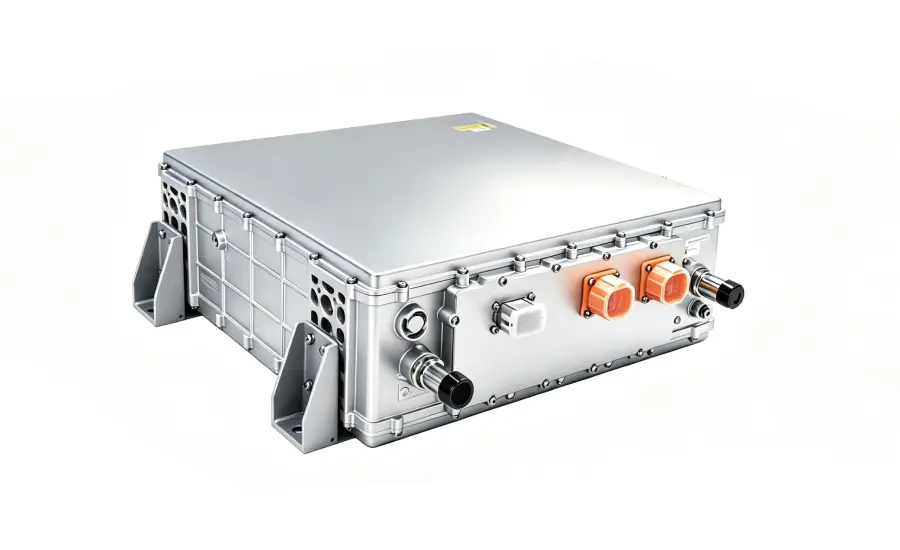
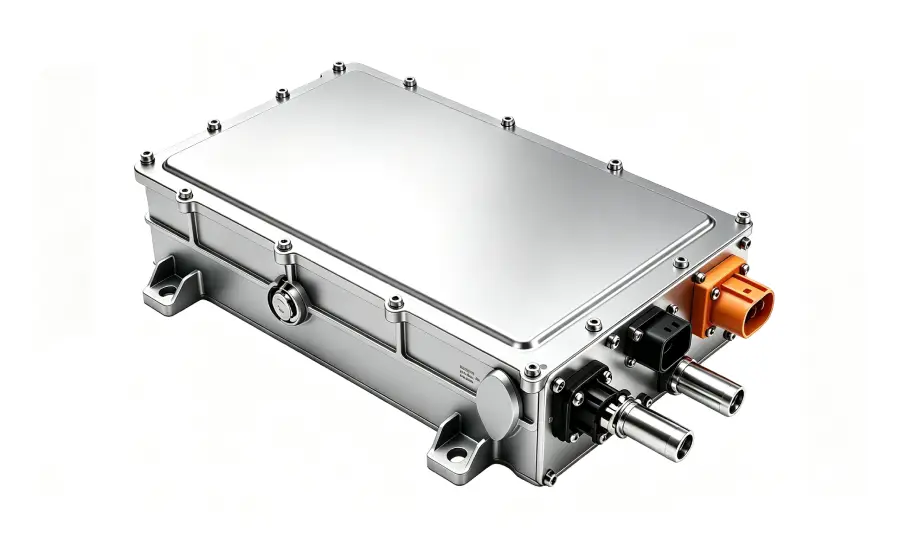
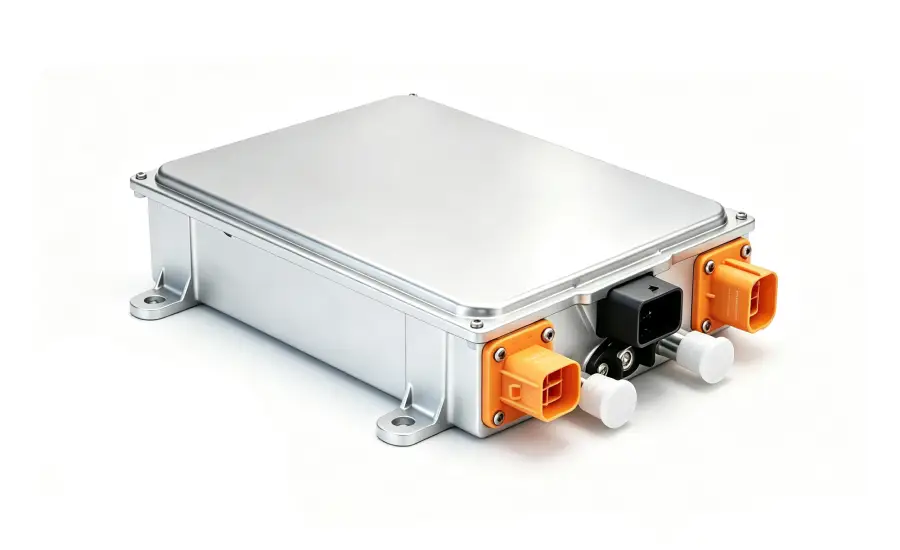
Jenwyn Tech provides OBCs, DC-DC converters and integrated OBC + DC-DC solutions for commercial EVs and off-highway applications. Our solutions are available in different power and voltage configurations to meet different vehicle electrical architectures and application requirements.
Have a specific requirement? Email us at contact@jenwyntech.com or fill out the form below to discuss your application.