
Project Overview
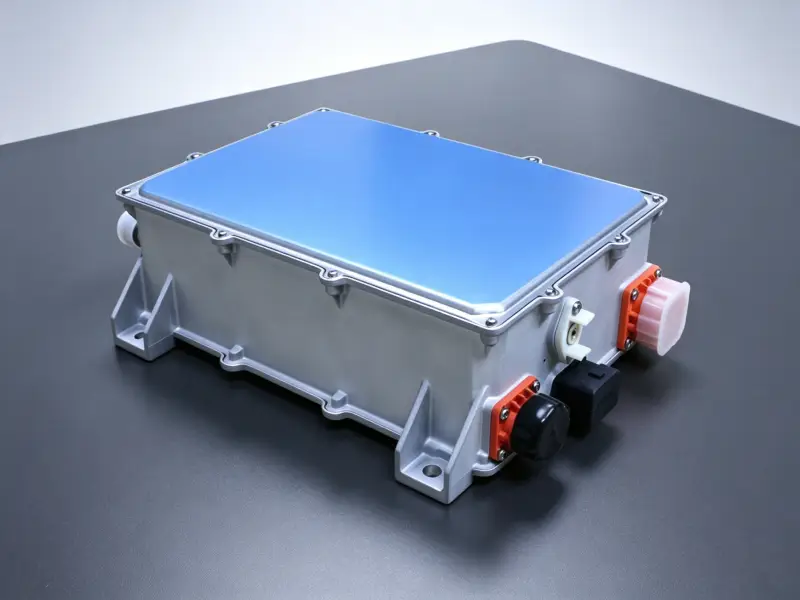
We provided an 800V bidirectional OBC + DC/DC system for a premium EV SUV project, supporting the customer through prototype testing, vehicle integration and CAN communication. The selected product combines three operating modes in one system: AC charging, HV-to-AC inverter operation for V2L, and HV-to-LV DC/DC conversion.
The product supports a high-voltage range of 350–800 Vdc across charging, inverter and DC/DC operation. Following prototype testing and vehicle integration, the product entered mass production, and the corresponding SUV entered the batch rollout stage.
Project at a Glance
| Item | Specification |
|---|---|
| Vehicle type | Premium SUV |
| High-voltage platform | 800V-class |
| Product | Bidirectional OBC + DC/DC |
| Charging power | 6.6 kW max. single-phase / 9.9 kW max. three-phase |
| HV operating range | 350–800 Vdc |
| V2L output | 220 Vac, 50 Hz |
| V2L power | 3.3 kVA rated |
| DC/DC output | 11–16 Vdc |
| DC/DC rated voltage | 14 Vdc |
| DC/DC output current | 215 A continuous |
| DC/DC continuous power | 3 kW |
| Communication | CAN 2.0 |
| Cooling | Liquid cooling |
| Protection | IP67 |
| Project outcome | Mass production and batch vehicle rollout |
The Project Requirement
The customer was developing a premium EV SUV based on an 800V-class high-voltage platform and was evaluating an OBC solution suitable for prototype development and subsequent production. The initial requirement focused on a 6.6 kW OBC. We proposed an 800V OBC solution that had already been supplied to large domestic OEM customers.
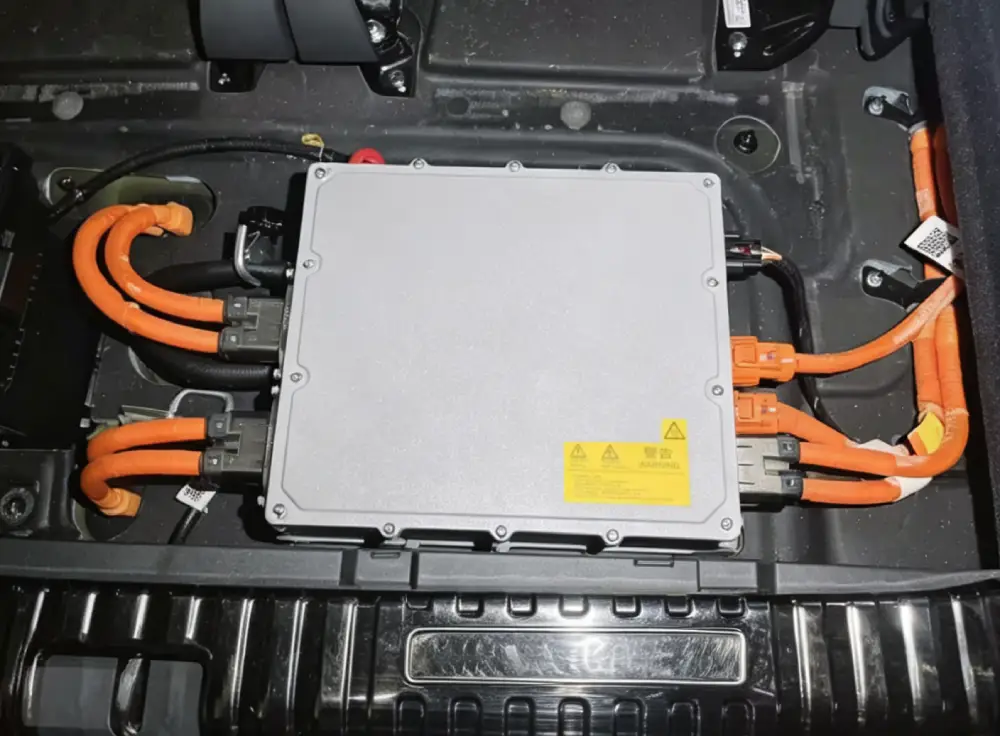
As the project progressed, the customer’s engineering team conducted vehicle-level testing and raised questions regarding the interaction between the OBC, DC/DC converter and the vehicle control system. The main areas requiring clarification included:
- DC/DC output voltage under high-current load
- OBC and DC/DC CAN communication
- Charging enable conditions
- V2L control
- Charging interface signals
- BMS communication timeout
- CAN message timing and rolling counter
- OBC startup and recovery behavior
- Mechanical and electrical integration
The project therefore involved not only supplying the product, but also supporting the customer’s engineers during prototype integration.
01. 800V Bidirectional OBC for the Vehicle Platform
The project required an OBC compatible with the vehicle’s 800V-class high-voltage platform. Our 800V Bidirectional OBC supports a wide HV range of 350–800 Vdc and provides up to 6.6 kW single-phase or 9.9 kW three-phase charging power.
| Key Parameter | Specification |
|---|---|
| HV operating range | 350–800 Vdc |
| AC input | 90–264 Vac single-phase / 185–456 Vac three-phase |
| Charging power | 6.6 kW max. single-phase / 9.9 kW max. three-phase |
| Output voltage accuracy | ≤ ±1% |
| Power factor | ≥ 0.99 |
The OBC had already been supplied to domestic OEM customers, providing the customer with an established product for prototype evaluation on its 800V vehicle platform.
02. High-Current DC/DC Validation
The same unit integrates a high-current DC/DC converter, converting the 350–800 Vdc high-voltage input to an 11–16 Vdc low-voltage output. The converter is rated for 14 Vdc, 215 A continuous output, with up to 3 kW continuous power.
| Key Parameter | Specification |
|---|---|
| HV input | 350–800 Vdc |
| LV output | 11–16 Vdc |
| Rated output | 14 Vdc |
| Continuous current | 215 A |
| Continuous power | 3 kW |
| Maximum efficiency | ≥95% |
| Output voltage accuracy | ≤ ±1% |
During prototype testing, the customer evaluated the DC/DC converter at a 160 A load and observed a difference between the requested and measured output voltage.
| Requested Voltage | Load | Measured Voltage |
|---|---|---|
| 14.0 V | 160 A | 13.3 V |
| 14.7 V | 160 A | 14.0 V |
The engineering team reviewed the measurement conditions and identified the voltage measurement point as an important factor. The CAN-reported voltage corresponds to the voltage at the 14 V+ output port, while measurements taken elsewhere in the vehicle’s low-voltage circuit may differ.
The customer was therefore advised to repeat the measurement directly at the 14 V+ connector to ensure that the converter output was being evaluated at the correct reference point.
03. Bidirectional Operation and V2L Integration
The OBC also supports bidirectional power conversion, including V2L operation.
In charging mode, the system converts AC power into high-voltage DC power. In V2L mode, it uses the vehicle’s 350–800 Vdc battery system as the input and provides 220 Vac / 50 Hz AC output for external electrical equipment.
| V2L Parameter | Specification |
|---|---|
| HV input | 350–800 Vdc |
| AC output | 220 Vac ±5% |
| Output frequency | 50 Hz ±1% |
| Rated output power | 3.3 kVA |
During vehicle integration, the customer’s engineering team also reviewed the CAN communication required to control charging and V2L functions. The VCU sends the corresponding control request, while the OBC executes the requested function when the required operating conditions are satisfied. The communication details, including message timing and BMS communication timeout behavior, were clarified during the integration process.
Project Outcome
Following prototype evaluation and vehicle integration, the 800V bidirectional OBC + DC/DC system entered mass production, and the corresponding SUV progressed to the batch rollout stage.
Throughout the project, our engineering team supported the customer with technical integration, including DC/DC testing, CAN communication, charging control, V2L, and BMS communication.
800V Bidirectional OBC for Your EV Project
Looking for an 800V bidirectional OBC for a new EV platform?
Jenwyn Tech provides an integrated 800V bidirectional OBC + DC/DC system supporting AC charging, V2L, and high-current low-voltage power conversion. The system is designed for 800V vehicle platforms and can support prototype evaluation, vehicle integration, and production applications.
Email us at contact@jenwyntech.com or fill out the inquiry form below to discuss your project requirements.