
Selecting the right EV traction motors for electric light trucks is not simply a matter of choosing the highest peak power or torque rating. Motor voltage, maximum speed, cooling method, winding design, rated output, peak output and vehicle duty cycle all affect how the motor performs in real-world operation.
For OEMs and EV engineering teams developing electric light trucks, these parameters need to be evaluated together with vehicle weight, payload, target speed, road conditions and grade requirements.
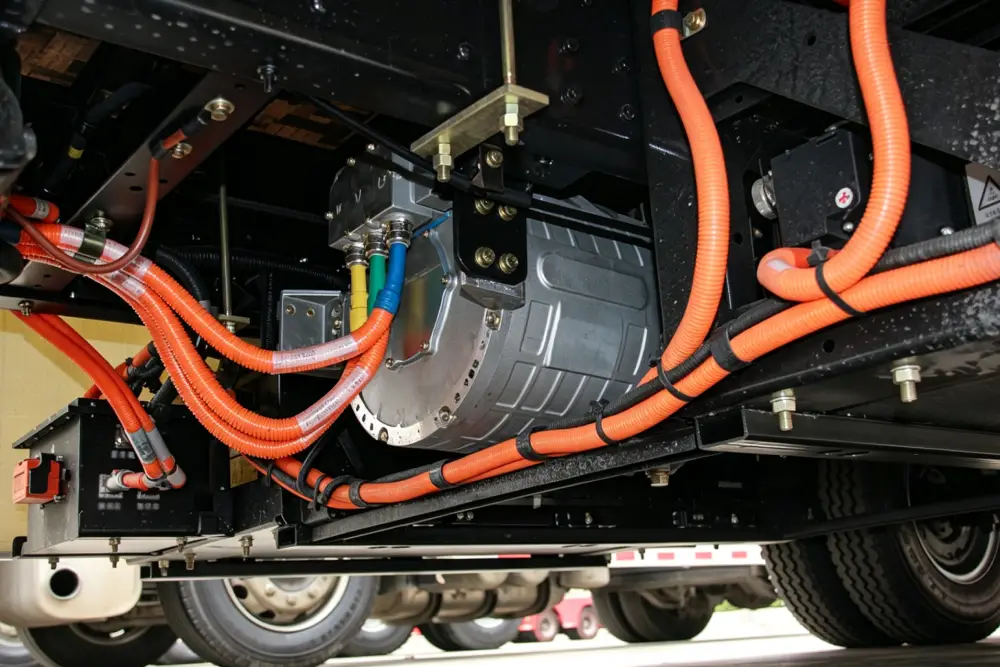
This guide explains the key motor parameters and configurations that should be considered when selecting EV traction motors for electric light trucks.
1. Start with Voltage Platform and Maximum Speed
Two important technical parameters for evaluating EV traction motors for electric light trucks are their voltage platform and maximum rotational speed.
Electric light trucks currently use 400V and 600V-class electrical platforms, while higher-voltage platforms such as 800V and 1000V are also being developed. A voltage platform generally refers to the rated voltage range of the vehicle’s battery, motor and power electronics. Typical ranges include:
| Voltage Platform | Typical Rated Voltage Range |
|---|---|
| 400V class | Approx. 350–420V |
| 600V class | Approx. 560–640V |
| 800V class | Higher-voltage architecture |
| 1000V class | Higher-voltage architecture |
The basic relationship between power, voltage and current is: Power = Voltage × Current
At the same power output, a higher voltage means lower current. Lower current can reduce current-related losses and heat generation, helping improve system efficiency. At the same time, moving to a higher-voltage platform requires the motor, inverter and related electrical components to provide the required voltage-withstand capability.
Maximum speed is another important motor parameter. Mechanical power is proportional to torque and rotational speed: P = T × ω
At the same torque, increasing rotational speed allows higher mechanical power output and can contribute to higher motor power density. A higher-speed motor can therefore achieve greater output from a relatively compact package. However, increasing maximum speed also places greater requirements on bearings, rotating components, manufacturing precision and overall mechanical design.
For electric light truck applications, the voltage platform and maximum speed should therefore be evaluated together with the motor’s rated and peak power and torque.
2. Water-Cooled vs. Oil-Cooled EV Traction Motors for Electric Light Trucks
Thermal management is critical for EV traction motors for electric light trucks because motor operation generates significant heat. Excessive temperature can affect motor performance, durability and the long-term reliability of components. Two common cooling approaches are water cooling and oil cooling.
Water-Cooled Motors
A water-cooled motor typically uses a cooling jacket around the stator. Coolant circulates through the jacket to remove heat from the stator. Because the rotor rotates relative to the stator, the external cooling jacket has limited direct cooling capability for the rotor.
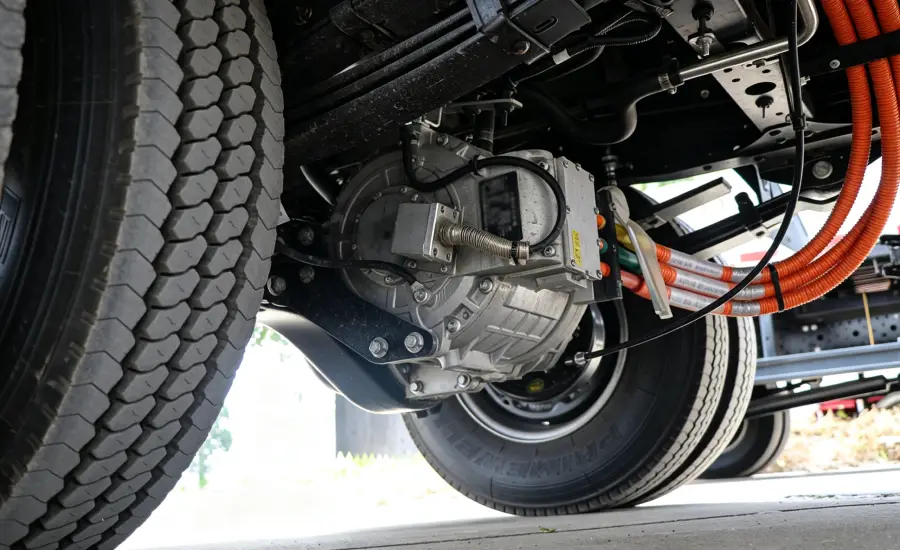
Water cooling can be suitable for applications where the thermal load and continuous operating requirements are relatively moderate.
Oil-Cooled Motors
Oil cooling can provide more direct thermal management of the motor’s internal components.
In an oil-cooled design, cooling oil can be circulated through the motor to remove heat from both the stator and rotor. The oil is then cooled through a heat-exchange system. Because heat can be removed from both rotating and stationary components, oil cooling can provide higher cooling capability and support higher power output within a similar motor package.
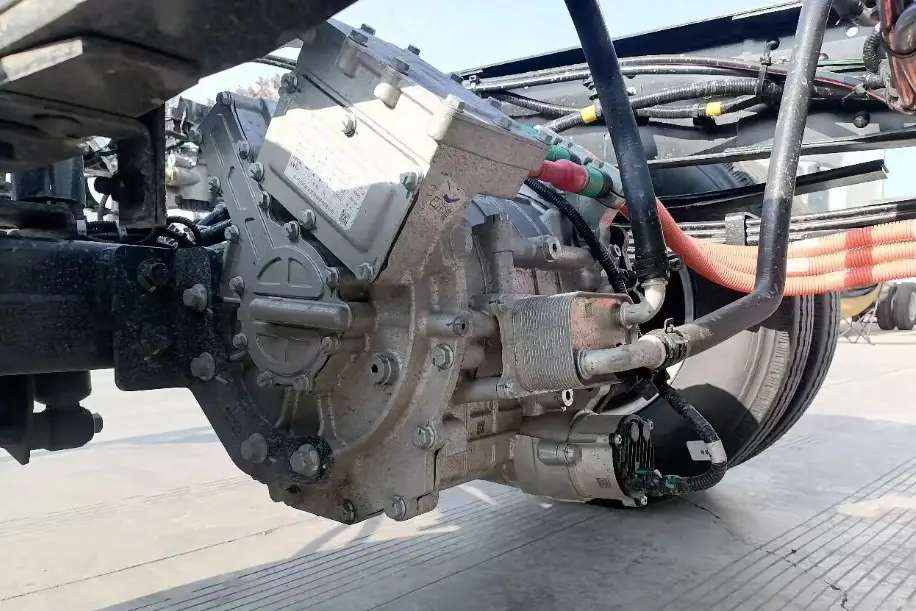
The trade-off is that oil-cooled systems generally have greater system complexity and higher cost than conventional water-cooled designs.
Matching Cooling to the Duty Cycle
The appropriate cooling configuration depends on the vehicle’s actual duty cycle.
For an electric light truck operating primarily on relatively flat roads, with a payload of around 5 tonnes and without frequent heavy-load climbing, a water-cooled motor may be sufficient.
For vehicles operating with payloads above 6 tonnes and frequent long climbs, particularly where continuous high motor output is required, an oil-cooled motor can provide greater thermal capacity.
The key consideration is not simply the cooling method itself, but whether the motor’s thermal management system can support the required continuous power and operating cycle.
For example, the original application guidance can be summarized as:
| Application | Suggested Consideration |
|---|---|
| Flat-road operation, around 5-ton payload, without frequent heavy-load climbing | Water cooling can be considered |
| Mountain operation, above 6-ton payload, with frequent heavy-load climbing | Oil cooling can be considered |
For electric light truck OEMs, cooling architecture should be evaluated together with payload, road conditions and continuous operating requirements.
3. Rated Power Matters as Much as Peak Power
Motor specifications often emphasize peak power and peak torque, but these figures do not tell the complete story. For electric light truck applications, rated power and rated torque are particularly important because they represent the motor’s ability to deliver sustained output.
Peak power and peak torque are generally available for shorter periods and are more relevant to conditions such as vehicle launch, acceleration, short climbs, and other transient high-load conditions. Rated power and rated torque are more relevant to sustained operation, such as heavy-load transportation, continuous high-speed driving and long uphill sections.
The relationship between rated and peak power should also be considered. A motor may, for example, have 70 kW rated power / 140 kW peak power. Increasing the peak rating does not automatically mean that the motor can sustain that output for longer. For example, a motor calibrated at 70 kW rated power / 170 kW peak power may have a shorter available peak-power duration.
Therefore, when comparing motors, OEMs should look beyond the peak number and consider how long the motor can sustain the required output under the intended operating conditions.
4. Match Motor Output to the Vehicle Duty Cycle
Motor selection should ultimately be based on the vehicle’s actual operating requirements. Payload, vehicle speed, road conditions, grade and transmission ratio all affect the required motor output.
Example: Around 5-Tonne Payload
For an electric light truck operating on relatively flat roads with a payload of around 5 tonnes and a target speed of approximately 75 km/h, a EV traction motor configuration around:
| Parameter | Example Value |
|---|---|
| Rated power | 70 kW |
| Rated torque | 150 Nm |
| Peak power | 150 kW |
| Peak torque | 340 Nm |
| Single-speed axle ratio | 16.5:1 |
The 150 kW peak power and 340 Nm peak torque are intended to support short-duration high-load conditions such as vehicle acceleration. For a fully loaded electric light truck, this output can support acceleration from approximately 50 km/h to 80 km/h, such as when merging from a highway ramp into the main road.
Example: Heavy-Load and Long-Climb Operation
For an electric light truck carrying more than 6 tonnes and operating on long uphill sections, a higher continuous motor output may be required. An example configuration is:
| Parameter | Example Value |
|---|---|
| Rated power | 92 kW |
| Rated torque | 220 Nm |
| Peak power | 200 kW |
| Peak torque | 460 Nm |
| Two-speed axle maximum ratio | 25.5:1 |
With a maximum axle reduction ratio of 25.5:1, the motor’s rated torque of 220 Nm corresponds to a theoretical wheel-end torque of approximately 220 Nm × 25.5 = 5,610 Nm.
Under peak operating conditions, the 460 Nm peak torque corresponds to 460 Nm × 25.5 = 11,730 Nm.
This combination of rated and peak torque provides the continuous and short-duration torque required for more demanding conditions, such as heavy-load operation and prolonged or steep uphill sections.
These examples show why traction motor selection should consider the vehicle’s payload, speed, grade requirements and duty cycle, rather than peak power or torque alone.
5. What OEMs Should Consider When Selecting a Motor
When choosing EV traction motors for electric light trucks, the following parameters should be evaluated together:
| Selection Factor | Why It Matters |
|---|---|
| Voltage platform | Determines electrical architecture and current requirements |
| Maximum speed | Influences power output and motor power density |
| Rated power | Determines sustained output capability |
| Rated torque | Important for continuous load and gradeability |
| Peak power | Supports short-duration high-load conditions |
| Peak torque | Supports launch and acceleration |
| Cooling method | Determines thermal capability |
| Winding design | Affects packaging and power density |
| Gear ratio | Determines wheel-end torque |
| Vehicle duty cycle | Determines the required balance between continuous and peak output |
There is no single motor specification that is optimal for every electric light truck.
A motor designed for relatively flat-road logistics operation may have different requirements from one designed for heavy-load transportation and prolonged climbing. The motor, electric drive axle, inverter and vehicle operating strategy therefore need to be considered as part of the same propulsion system.
Jenwyn Tech EV Traction Motors for Electric Light Trucks
Jenwyn Tech provides EV traction motors for electric light trucks, covering different power, torque and drivetrain requirements. Our standard traction motor portfolio covers 30–330 kW rated power and 60–450 kW peak power, with configurations available for different vehicle architectures and application requirements.
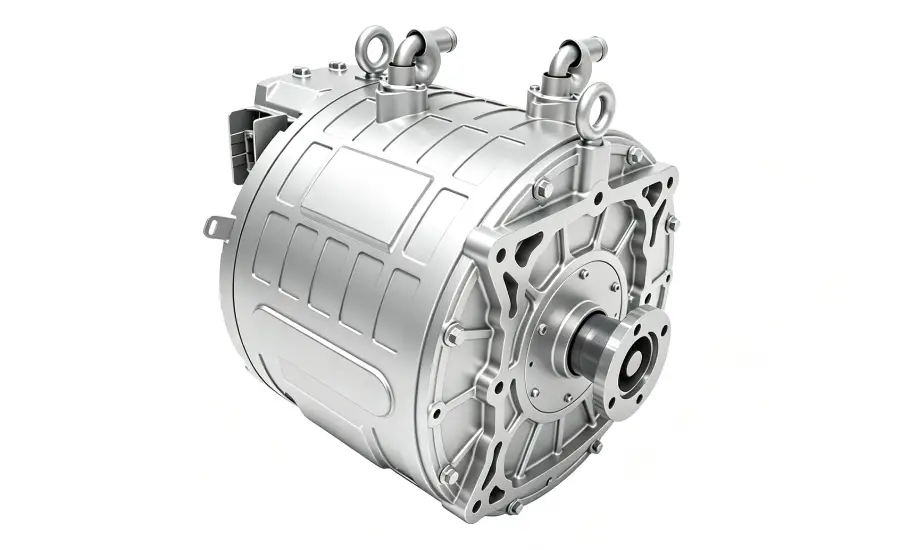
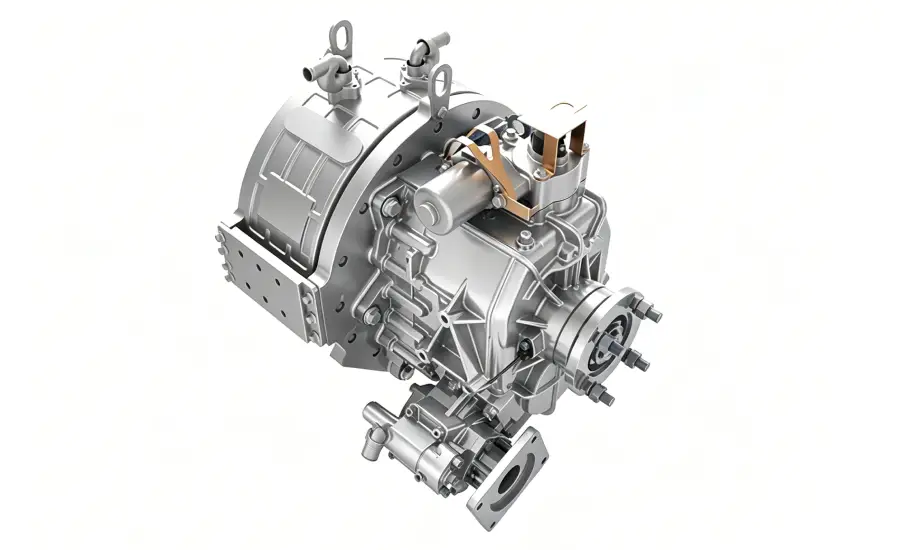
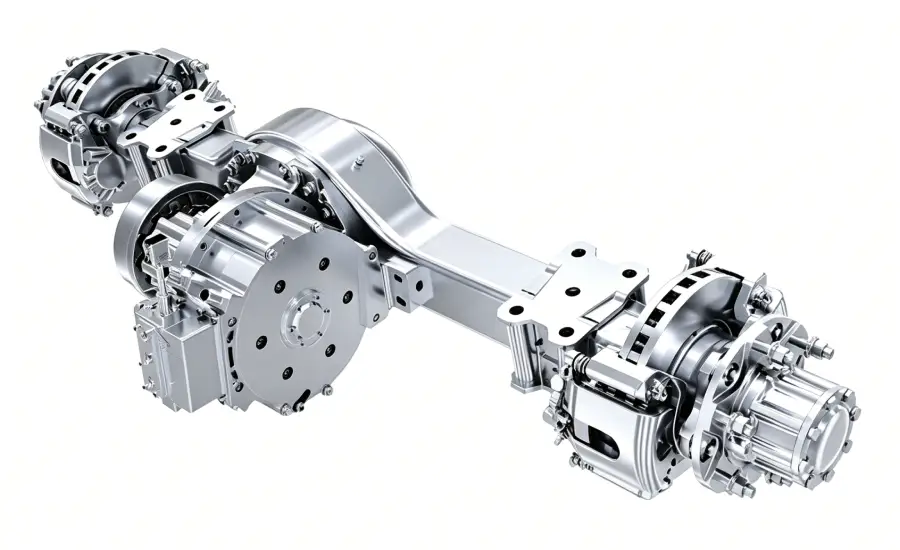
The motors are designed for reliable propulsion performance across applications where launch capability, gradeability, sustained output and thermal performance need to be balanced according to the vehicle duty cycle.
Looking for EV traction motors for electric light trucks project?
Email us at contact@jenwyntech.com or fill out the inquiry form below to discuss your project requirements.