
An onboard charger (OBC) converts AC electricity from an external power source into DC power for an EV’s high-voltage battery. The basic function is straightforward, but the requirements placed on the OBC are changing as EV electrical architectures become more advanced.
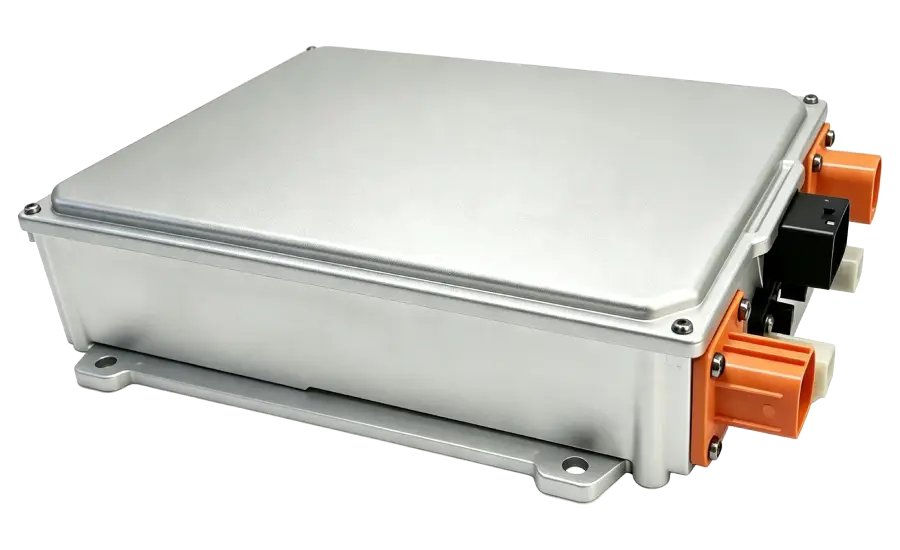
Higher-voltage battery systems, higher power density, tighter packaging requirements, greater system integration and bidirectional power flow are all influencing OBC design. For commercial EVs, these changes need to be considered alongside battery capacity, charging infrastructure, operating schedules, thermal management and vehicle packaging.
So, what are the key onboard charger trends in 2026, and what should EV manufacturers consider when selecting an OBC?
What Is an Onboard Charger?
An onboard charger (OBC) converts AC power from an external charging source into DC power for charging an EV’s high-voltage battery. During AC charging, the basic power flow is: AC Charging Source → Charging Port → OBC → High-Voltage Battery
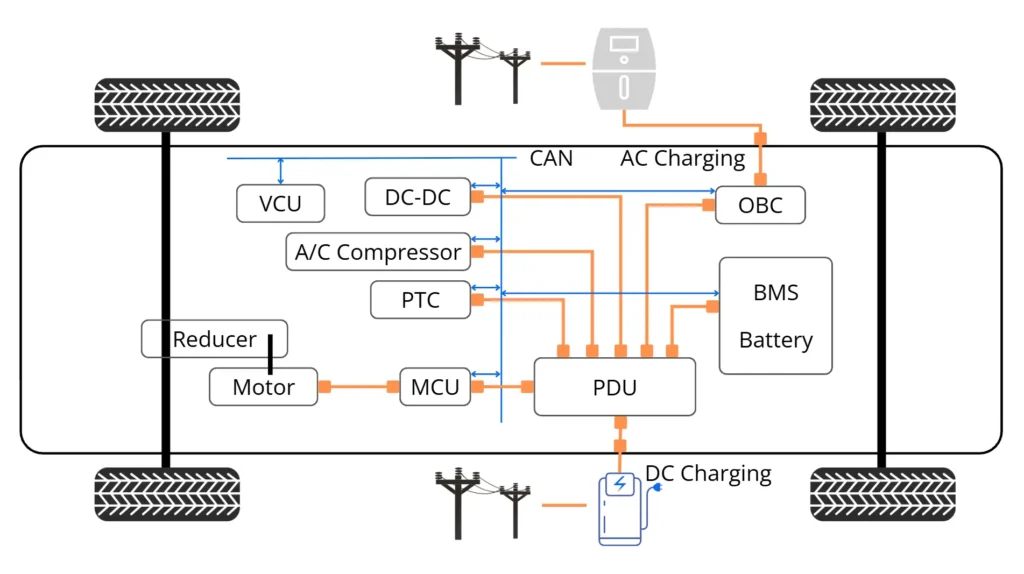
The OBC regulates the charging voltage and current and typically incorporates power factor correction (PFC) to improve charging efficiency and power quality. It also works with the vehicle’s charging and battery-management systems to ensure safe and controlled charging.
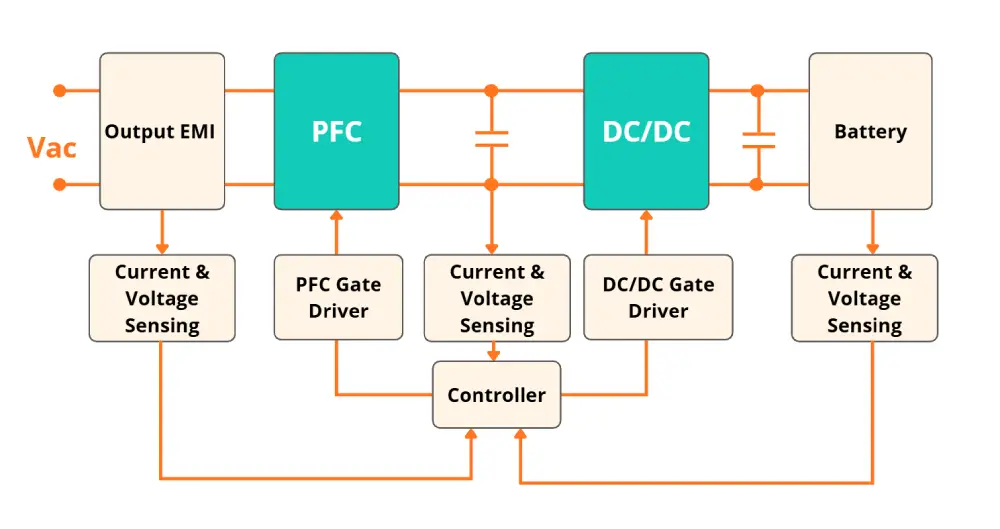
In an EV’s electrical architecture, the OBC, DC/DC converter and PDU serve different functions:
- OBC: Converts AC power into DC power for high-voltage battery charging.
- DC/DC Converter: Converts high-voltage DC into low-voltage DC for vehicle electrical systems.
- PDU: Distributes and protects high-voltage power for different vehicle loads.
In simple terms, the OBC is the vehicle-side power converter for AC charging, while the DC/DC converter and PDU handle low-voltage power conversion and high-voltage power distribution.
Key Onboard Charger Trends in 2026
OBC technology is evolving alongside changes in EV electrical architectures. In 2026, several trends are particularly relevant to EV manufacturers and power-electronics suppliers:
- Higher-voltage charging systems
- Higher power density and efficiency
- Greater integration with other power-electronics functions
- Bidirectional charging
These trends are closely related, but they address different requirements in vehicle design.
1. Higher-Voltage Systems and Faster AC Charging
Higher-voltage electrical architectures are becoming more common in EVs, particularly as manufacturers look for higher charging power and improved electrical efficiency. Moving from a 400 V-class system toward an 800 V-class architecture allows the same power level to be achieved at a lower current. This can help reduce:
- Cable losses
- Heat generation
- Voltage drop
- The size of some electrical components
For the OBC, higher-voltage operation also brings higher requirements for insulation, electrical protection, power semiconductors, thermal management and EMC performance. As a result, an OBC designed for a higher-voltage vehicle architecture needs to be considered together with the battery and overall high-voltage system.
2. Higher Power Density and Efficiency
As EV packaging becomes tighter, manufacturers are looking for OBCs that can deliver more power without significantly increasing size or weight. This makes power density and conversion efficiency important design considerations.
Higher efficiency reduces energy losses during charging and also lowers the amount of heat that needs to be managed. At the same time, a more compact design can make it easier to package the OBC alongside the battery and other vehicle components. Achieving this balance involves improvements in power semiconductors, circuit topology, thermal management and control technology.
3. SiC and GaN Power Devices
Wide-bandgap semiconductors such as silicon carbide (SiC) and gallium nitride (GaN) are also being adopted in EV power electronics. SiC is particularly suitable for higher-voltage applications, while GaN can support high-frequency switching and compact power-conversion designs. The choice of semiconductor technology depends on the OBC’s voltage, power level, efficiency target, thermal requirements and cost.
4. More Integrated Power Electronics
Packaging and system integration are also influencing OBC design.
Instead of using completely separate power-electronics units, some EV architectures combine functions such as the OBC and DC/DC converter into a more integrated system. This can reduce: packaging space, wiring, component count, and system weight.
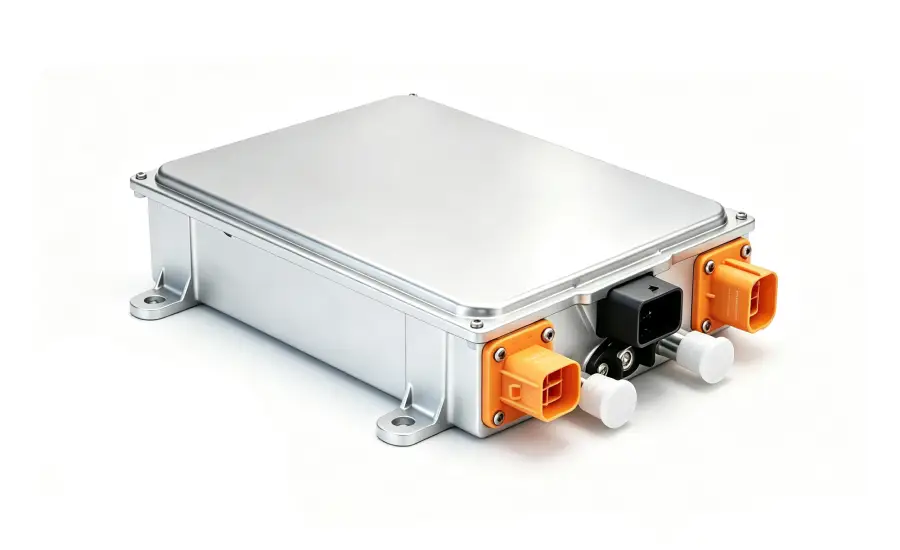
However, higher integration also increases the requirements for thermal management, EMC, electrical protection and serviceability. The right level of integration therefore depends on the vehicle architecture and application rather than simply maximizing the number of functions in one unit.
5. Bidirectional Charging
Traditional OBCs are designed for one-way power flow: Grid → Vehicle
A bidirectional OBC can support power flow in both directions: Grid ↔ Vehicle
This enables applications such as:
- V2L (Vehicle-to-Load): supplying power to external equipment
- V2H (Vehicle-to-Home): supplying power to a home or building
- V2G (Vehicle-to-Grid): exchanging power with the electrical grid
Bidirectional charging gives the vehicle a more active role in energy management. However, implementing these functions requires coordination between the OBC, battery system, vehicle controls, charging infrastructure and applicable regulations.
Jenwyn Tech Onboard Charger Solutions
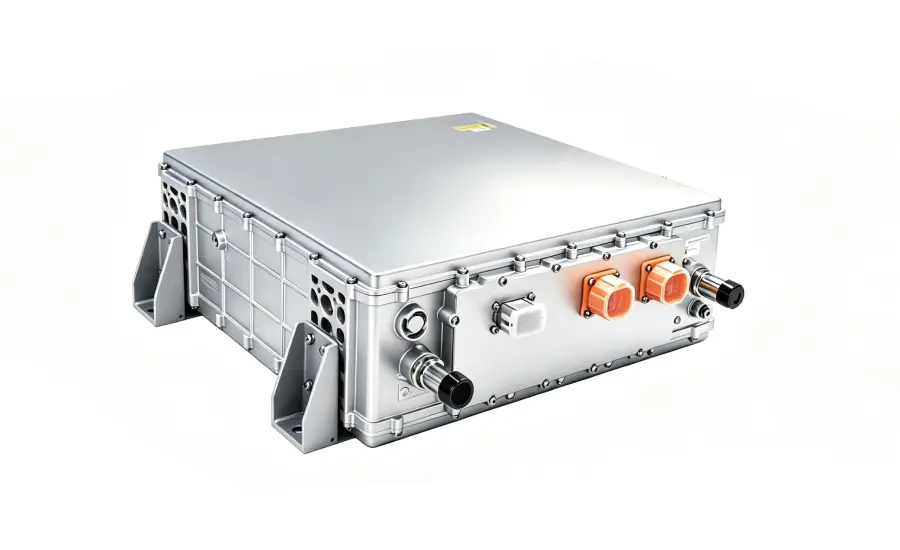
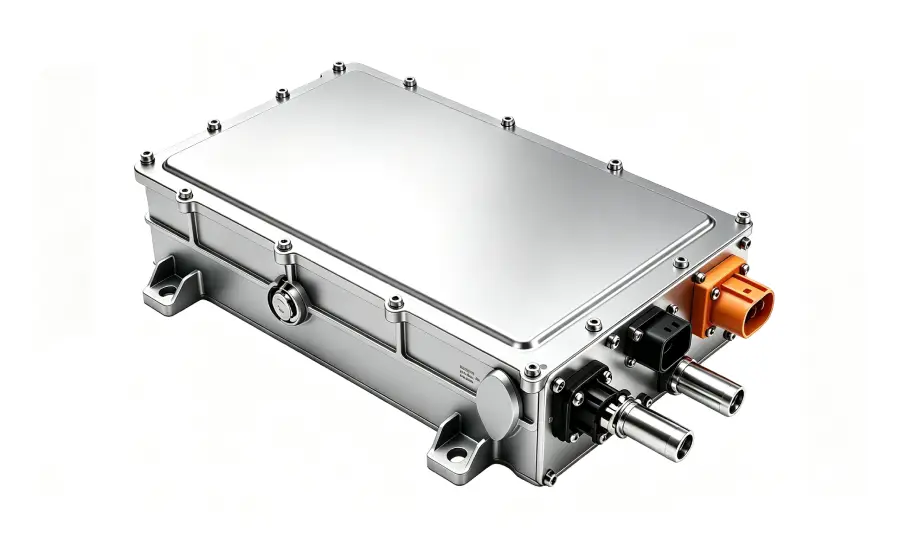
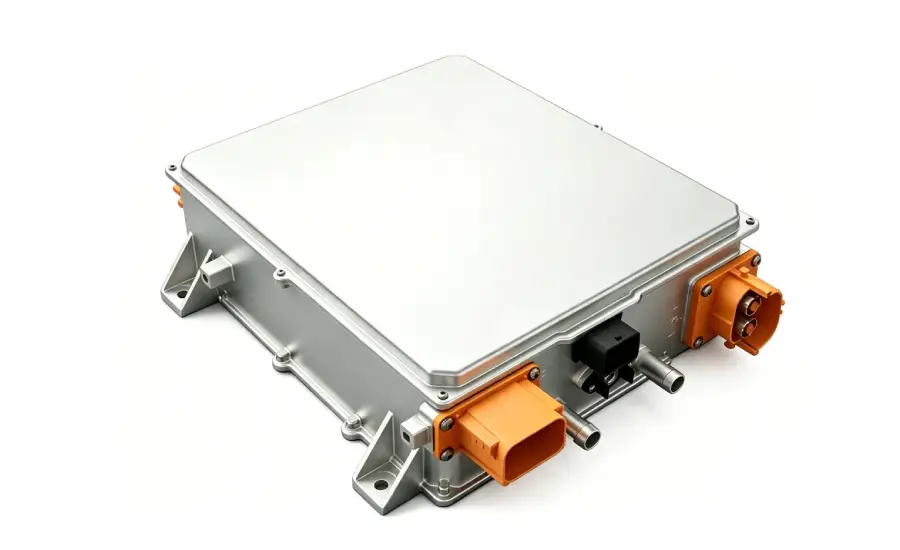
Jenwyn Tech provides onboard charger solutions for commercial EV applications, with charging power options from 3.3 kW to 22 kW. Our OBC solutions have already been adopted in volume-production EV applications and are supporting real-world vehicle projects.
Our OBC solutions are designed for integration into EV high-voltage electrical systems and feature options such as:
- 3.3 kW, 6.6 kW, 11 kW and 22 kW power ratings
- Liquid-cooled die-cast housing
- Integrated 3D cooling channel
- CAN 2.0B communication
- UDS diagnostics
- LV auxiliary interfaces
Looking for an Onboard Charger for Your EV Project?
If you are looking for an onboard charger for your electric SUV, bus, truck, LCV or other commercial EV projects, share your vehicle and charging requirements with our team.
Email us at contact@jenwyntech.com or fill out the inquiry form below to discuss your requirements.